
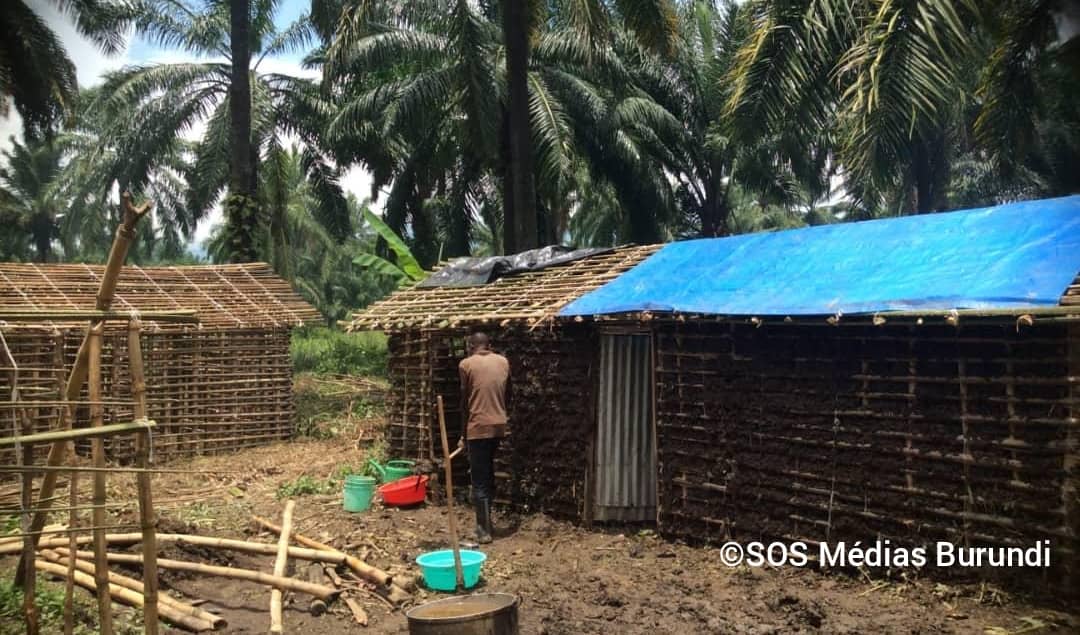
Fizi : houses of Burundian refugees from 1972 threatened by the waters of Lake Tanganyika
In the province of South Kivu, in the east of the Democratic Republic of Congo, more than 800 families, made up mostly of Burundians who fled the massacres of 1972 which killed more Hutus than Tutsis, are threatened by the rising waters of Lake Tanganyika. Those affected also say they are exposed to diseases caused by uncleanness, including cholera. INFO SOS Médias Burundi
The waters of Lake Tanganyika in this part of the DRC began to rise last January. The damage is enormous.
In the villages, some residents and Burundian refugees from 1972 who have since settled there have left their homes, others are sleeping in flooded houses, while still others are building temporary shelters.
“All our land was flooded and our fields completely destroyed,” laments Emmanuel N., descendant of a Burundian refugee.
Balange André, father of eight children whose house was destroyed by water, is now building a grass hut using bamboo branches.
“We risk dying of hunger if nothing is done as soon as possible. It’s truly a catastrophic situation,” laments this father of eight children.
Fears of catching diseases
Residents, especially schoolchildren and pupils, fear catching diseases from uncleanness, including cholera. Hygiene has been poor everywhere in this region bordering Lake Tanganyika in recent times.
In Uvira, Fizi, Kalemie and Moba in the province of South Kivu, the water in Lake Tanganyika has risen significantly over the last three months, causing a lot of damage including the destruction of public infrastructure.
The king of the Babungwe groupment in the Tanganyika sector, Fizi territory, inhabited by the Babembe, the Bafulero and Burundian refugees, Charles Simbi, says that “for the moment our priority is to look for a place to settle these 800 affected families by the waters of Lake Tanganyika.
You might also like
Tanzania : more than 30 refugees pushed back and 2 women arrested
Burundian refugees, most of whom lived in Nyarugusu camp in Tanzania, were returned to Burundi. They were turned away because they did not have identification documents. In the Nduta camp,

Tanzania : nearly 4,750 Burundian refugees arrested trying to reach other countries in the region in four months
Statistics were revealed by the immigration services in Kakonko district, in the Kigoma region (northwest Tanzania) where the concerned pass. It was this Thursday. According to testimonies of refugees, they


Forced repatriation of more than 80,000 Burundian refugees : concerns and disagreements within Burundian institutions
SOS Médias Burundi Ngozi, November 30, 2025 – The announcement of the forced repatriation of more than 80,000 Burundian refugees living in Tanzania continues to raise serious concerns among human