
Gasorwe : households benefit from the presence of Congolese refugees
At the Kinama Congolese refugee camp, located in the district of Gasorwe in the province of Muyinga (northeast Burundi), Burundians from the surrounding villages run small businesses. Thanks to their sale of vegetables, fruits and other products, they manage to meet the family’s food needs and even save for the luckiest.
INFO SOS Médias Burundi
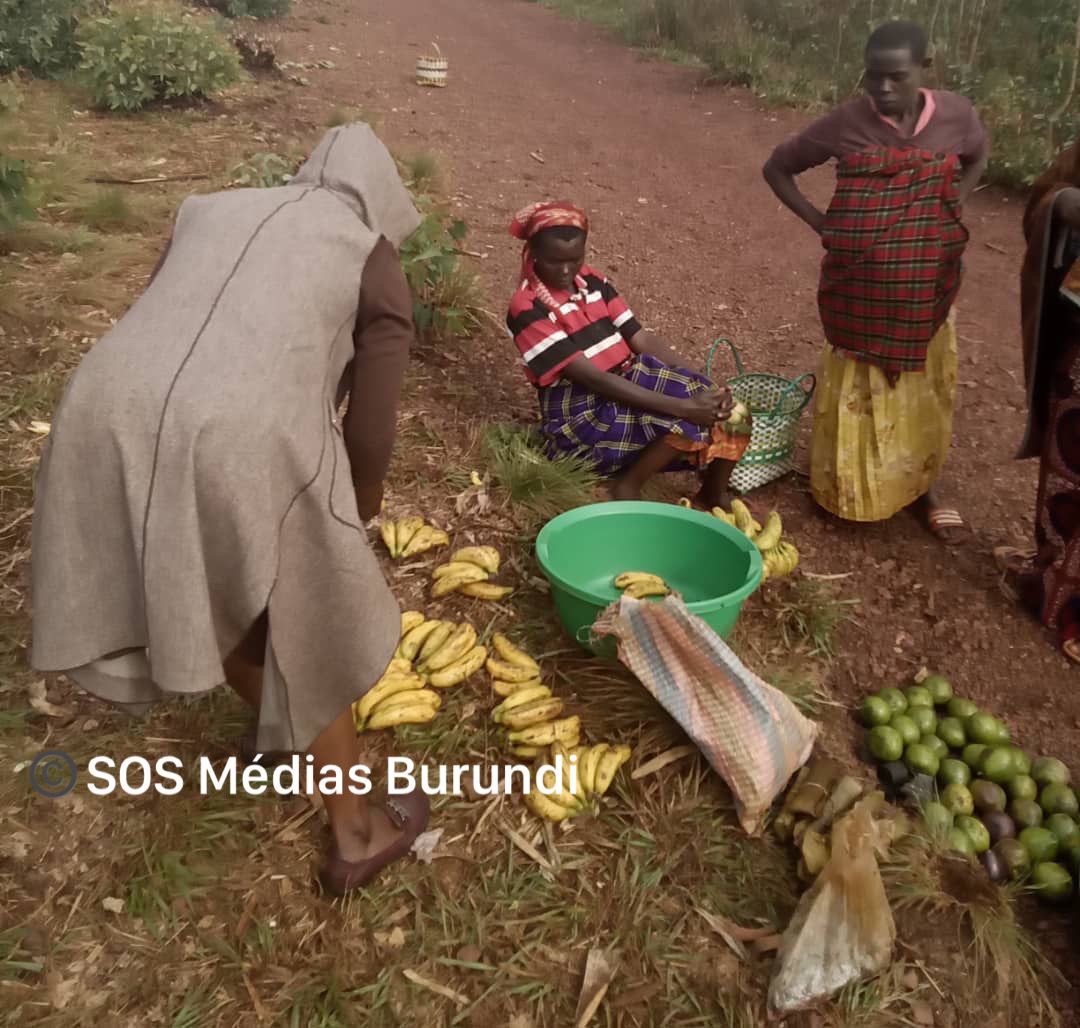
Anastasia Nikwigize, a banana and avocado seller, explains that every morning, she wakes up early to buy bananas and avocados from local suppliers before going to sell her goods at the Kinama camp.
“I am going to sell in the camp. Thanks to this small business, I am able to feed my four children,” she says.
She manages her small business carefully, managing to save about five thousand Burundi francs each week.
“My goal is to buy a plot of land in three years thanks to this small fruit business and to ensure the education of my children,” she reveals with determination.
Marie Rose Kabagabire, who has chosen to sell amaranth, says that she started this business four years ago.
“It has become an essential source of income for my family. Sometimes, I have to exchange my amaranth for flour, beans or rice and resell these essential products in the community,” she says.
The amaranth she sells is very popular in the camp for its nutritional value.
She explains that she often goes door-to-door to attract customers to the site.
“Thanks to the sale of amaranths, I cannot only feed my children but also put some money aside for unpredictable needs,” she says, adding that she tries to make a profit of at least four thousand Burundi francs per day.
Cyprien Shabani, a member of the indigenous Batwa minority community, sells clay for painting houses.
“I have been doing this for several years. I often have to travel all over the camp to find customers. The periods when food aid has not yet arrived are particularly difficult because many people have no food or money to spend on my product. I do my best to support myself and my family,” he explains.
In his business, he sometimes makes exchanges with refugees who need clay to beautify their homes.
“I exchange the clay for beans, rice or flour.” Then, I resell these products to earn a little money,” he assures.
This business is not only part of his daily life but also helps him preserve his culture.
Despite their determination, these traders face many challenges. The increase in prices from suppliers weighs on vegetable and fruit traders.
The period when the refugees have not yet received food assistance provided by the World Food Programme (WFP) results in a decrease in the number of customers.
The Kinama camp located in northeastern Burundi was built in 2002. Most of its occupants have already been resettled in the United States, Canada and Australia.
Currently, Kinama is home to more than 7,000 Congolese refugees, mainly members of the Banyamulenge community and originally from the South Kivu province in eastern Congo.
——
Fruit sellers not far from the Kinama camp in northeastern Burundi, November 2024 (SOS Médias Burundi)
You might also like
Tanzania: Malnutrition-related diseases threaten under five children in Burundian refugee camps
Nearly two thousand children suffer from malnutrition associated diseases in the Burundian refugee camps in Tanzania. This limits their mental and physical development, according to specialists. INFO SOS Médias Burundi
Rwanda: Burundians in exile undertake to survive
Refugee life requires working to survive. The Burundian refugees of kigali have understood it. Some make small shops and others small jobs. Info SOS Media Burundi Annick Iriwacu is a

Kakuma (Kenya): more than 450 Sudanese refugees return to the camp
Sudanese refugees had fled clashes between two Sudanese communities that occurred in Kalobeyei last July. Several of them had found refuge at the Kakuma camp, others in villages surrounding the