

Kinama : Burundian women share their solidarity with refugees
INFO SOS Médias Burundi
Around the Kinama refugee camp, located in the district of Gasorwe, in northeastern Burundi, Burundian women have turned a difficult situation into an opportunity. Living alongside refugees from the Democratic Republic of Congo (DRC), they have found ways to provide for their families while developing solidarity with their refugee neighbors.
Info SOS Médias
The Kinama camp, established in 2004, now hosts more than 7,000 refugees. Despite an increasingly difficult context marked by reduced food aid, Burundian women have managed to create economic opportunities within the camp, notably by offering laundry services for refugees. On the Women’s Rights Day, several of them shared their experiences and the benefits of this collaboration with SOS Médias Burundi.
An essential source of income for Burundian families
Among the testimonies collected, that of Jusline, a mother of five, particularly stood out. At 40 years of age, she has been supporting her children alone since her husband abandoned her. To cope with this situation, Jusline found a source of income by washing clothes for refugees. This activity allows her to earn around 100,000 Burundi francs per month, an amount that ensures her family’s financial stability.
“This job is a real source of support. With these 100,000 francs, I can buy food, pay for my children’s school supplies, and even save in a savings and loan association,” she explains.
“When my husband left me, I didn’t know how to get by. But thanks to this job, I can offer my children a decent life.”
A job that changes lives
Lucie, 38 years old, lives near the camp and has worked for five years as a laundry worker for refugees. Thanks to her work, she earns around 40,000 Burundi francs each week. This source of income has allowed her to acquire a plot of land to build a house and provide her children with a stable home.
“This job has allowed me to become independent,” she says. “Today, I can meet my family’s needs without too much anxiety. I am proud to be able to invest in my children’s future and ensure their education and health.”
Alternative solutions for a better life
Anisette, another woman who has found refuge in this activity, testifies to the tangible benefits she has derived from her income. A single mother of two, she was able to buy two goats, whose manure enriches her farmland, thus ensuring better production and a more stable diet for her children.
“The goats are a great help. They allow me to have better agricultural production, which guarantees my children a more stable diet,” she explains with a hopeful smile. “It’s not easy, but I fight for them every day.”
A situation complicated by the reduction in aid
However, despite these successes, Burundian women around the Kinama camp are facing new challenges. The reduction in food aid to refugees has led to a shortage of resources and a decrease in job opportunities for hosts.
“Since this reduction, it has become more difficult to find work. The refugees receive fewer rations and can no longer employ us as before,” laments Anisette.
This phenomenon has complicated the lives of women who, to continue providing for their families, must redouble their efforts to adapt to this new, precarious reality.
A relationship of solidarity and mutual aid
The Kinama camp, although facing challenges, remains a genuine source of opportunity for the local community. Many Burundian families, particularly women, have forged bonds of solidarity with the refugees. In addition to laundry services, other income-generating activities have emerged, such as small shops, food sales, and crafts.
Far from being a simple place of welcome, the Kinama camp has enabled many Burundian women to gain independence while maintaining a harmonious relationship with the refugees. These women face daily challenges, but their resilience and solidarity show that, even in difficult situations, it is possible to turn adversity into strength.
An evolution of the camp
Beyond the economic aspect, the presence of the camp has enabled the host population to diversify into its commercial and agricultural activities. However, with recent cuts in food aid and growing economic hardship, there remains hope that sustainable solutions will be put in place to ensure the safety of both refugees and Burundian families.
As the Kinama camp continues to evolve and grow, it is essential to maintain the spirit of solidarity that has made these Burundian women so strong. They are an example of courage and determination in an environment marked by constant challenges.
——-
Fruit sellers near the Kinama camp in northeastern Burundi, November 2024 (SOS Médias Burundi)
You might also like
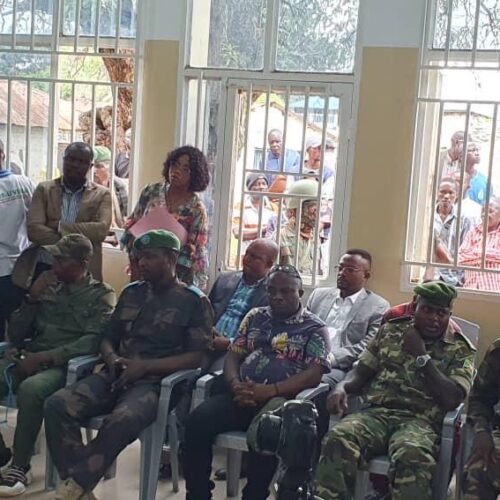
South Kivu : deadly clashes between Wazalendo factions, eastern Congo on the brink of implosion
SOS Médias Burundi Bukavu, October 30, 2025 – The Fizi territory in South Kivu province, in eastern Democratic Republic of Congo, has been rocked for a week by violent clashes
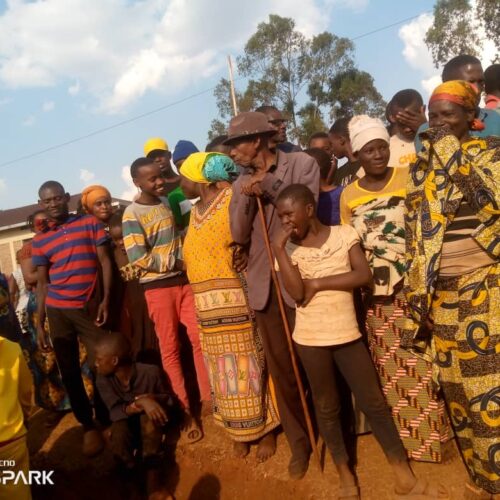
Musasa – Kinama : refugees elect their representatives in a context of crisis
In the Musasa and Kinama refugee camps, respectively in the Ngozi and Muyinga provinces (north and northeast Burundi), refugees, mostly Congolese, elected their representatives on September 26, 2024. These elections

Nyarugusu (Tanzania): Kampeni dhidi ya Malaria
Shirika la HCR kwa ushirikiano na serikali ya Tanzania imeandaa Kampeni ya kunyunyizia dawa katika majumba, maeneo ya maji taka yaliyoganda pamoja pia na maeneo ya wazi yaliyo karibu na