

Kiremba : fertilizer delays and government inaction threaten farmers’ food security
SOS Médias Burundi
Kiremba, February 26, 2026 – In the district of Kiremba, in Butanyerera province, northern Burundi, farmers are experiencing a particularly anxious season. As the second major agricultural season, known as season B, approaches the end of the planting period—scheduled for no later than mid-March—many farmers have not received the mineral fertilizers that they have already ordered and, in some cases, paid for.
This season is crucial for crops like beans and potatoes, which depend on the late-year rains extending into the beginning of the following year.
Orders left unfulfilled
The delays affect farmers who ordered through the national fertilizer subsidy program (Tubura) as well as those who paid directly at local distribution points.
Manariyo, a farmer in the Musasa zone, laments :
“We paid on time, hoping to receive the fertilizer before the end of the planting period. To this day, we are still waiting.”
In mountainous areas with clay soils mixed with pebbles, the agricultural calendar is strict : planting late can jeopardize the entire harvest.
Sowing without fertilizers : a risky gamble
Faced with a shortage of inputs, some farmers have chosen to plant without mineral fertilizers.
Claver, also a farmer in Musasa, explains :
“I sowed my beans without fertilizer because I couldn’t wait any longer. But I’m afraid the rains will stop early. Even at the beginning of season A, the rains weren’t abundant. If this happens again, my crops will yield almost nothing. We’re working in fear.”
Sky price increases on the local market
Some farmers are turning to private retailers to obtain fertilizers, but prices remain prohibitive. A kilo of organo-mineral fertilizer sells for between 4,000 and 4,500 FBu, while a subsidized 25 kg bag under the Tubura program would cost around 31,000 Bif. For many rural households already struggling with the rising cost of living, this difference represents a major obstacle.
The importance of adhering to the agricultural calendar
A private agronomist in the province, speaking on condition of anonymity, emphasizes :
“The start of sowing depends on the crop’s growth cycle and the actual arrival of rainfall. For climbing beans, sowing should ideally begin in early February to ensure good flowering and ripening before the rains stop. Potatoes require appropriate fertilization from the time of planting to ensure tuber development.”
Sowing on time allows crops to better withstand water stress and optimize yields.
Awaiting official communication
To date, the Ministry of Environment, Agriculture, and Livestock, through the district offices responsible for agriculture and livestock, has not officially announced the distribution dates for organo-mineral fertilizers.
As the sowing period draws to a close, concern is growing. Delivery delays, rising prices, and unpredictable weather are signaling a particularly challenging second season. Rapid access to inputs remains crucial to prevent significant crop losses and ensure household food security.
The situation in Kiremba is not unique. In several other regions of this small east African nation, farmers are reporting similar delays, threatening harvests and livelihoods.
You might also like
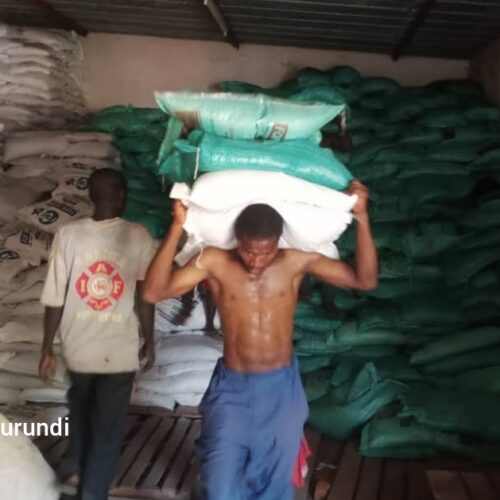
Bujumbura : FOMI fertilizer shortage, Bubanza farmers cry out for abandonment
SOS Médias Burundi Bubanza, February 11, 2026 – The distribution of FOMI (Industrial Organo-Mineral Fertilizers) organo-mineral fertilizers, organized on Wednesday in Bubanza district, in Bujumbura province in western Burundi, is

Goma : mandamano ya mashirika ya kiraia kwa ajili ya kupinga vurugu zinazofanyika katika vituo vya kuandika wapiga kura
Mandamano hayo yaliyoandaliwa na vuguvugu la wananchi la génération positive yalifanyika alhamisi hii. Shirika hilo linapinga rushwa, ushawishi na vurugu katika vituo vingi vya kuorodhesha wapiga kura katika mji wa

Bujumbura : residents denounce a “scam” surrounding social housing
SOS Médias Burundi Bujumbura, June 4, 2026 – Faced with a prolonged wait, many residents of Burundi’s commercial capital are expressing growing skepticism about the social housing project initiated by