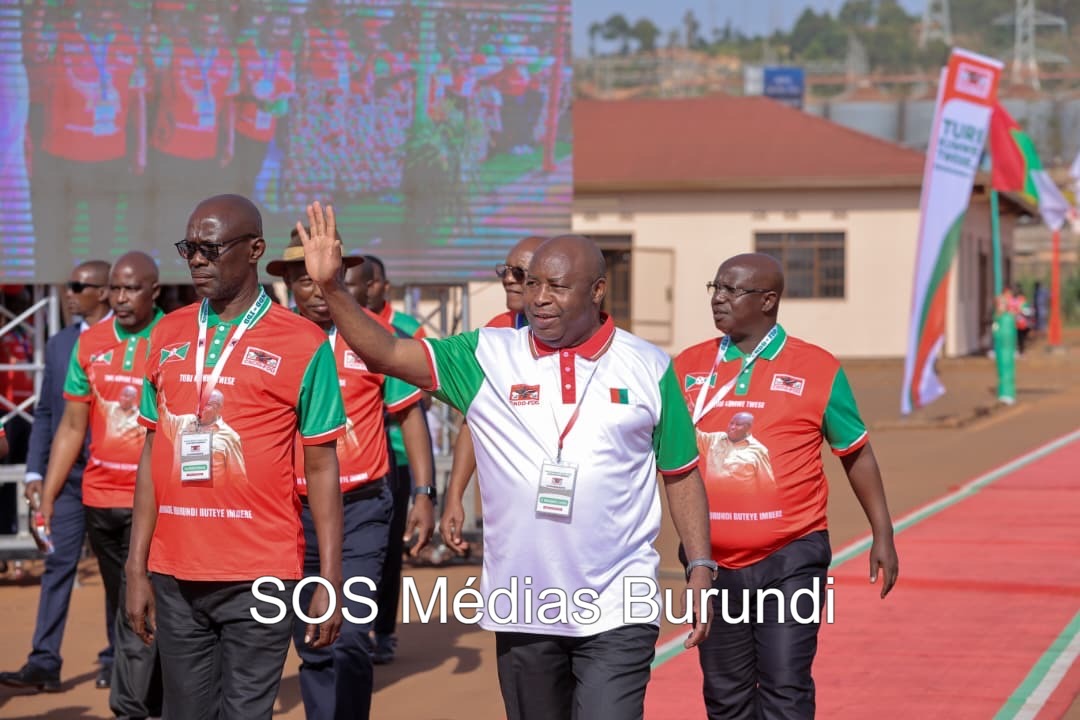
Kiremba : the CNDD-FDD forces residents to finance a cow for its Secretary General
SOS Médias Burundi
Kiremba, March 30, 2026 — In the district of Kiremba, in Butanyerera province, northern Burundi, the population is caught between anger and resignation. Just days before the visit of the CNDD-FDD Secretary General, Révérien Ndikuriyo, so-called “mandatory” contributions are being demanded from households, merchants, and civil servants. Exorbitant amounts for some, the lack of receipts, and forced passage by the Imbonerakure, members of the CNDD-FDD youth league often feared for their coercive methods, are sparking widespread outrage.
A contribution imposed on all segments of the population
According to several consistent accounts, each household must pay 2,000 Burundi francs, under threat of “problems with local officials.” Civil servants are required to pay between 3,000 and 5,000 Bif, while traders are even more heavily taxed : each individual must contribute 10,000 Bif, or even more depending on the size of their business.
“We traders are always the most targeted. Whether the business is good or bad, we have to pay,” laments a vendor in the center of Kiremba.
Even higher amounts for senior officials
For citizens holding important positions or benefiting from presidential decrees and orders, the financial demands can reach between 100,000 and 500,000 Bif.
“It is assumed that those in important positions should pay much more.” “Some are paying up to 500,000 francs without any official explanation,” confides a general manager on condition of anonymity. This categorization fuels a sense of injustice among the population, already exasperated by repeated financial pressure.
A collection intended for a symbolic donation
According to information gathered, the money collected is intended to buy a cow, to be given to the Secretary General of the CNDD-FDD, Révérien Ndikuriyo, during his visit in early April 2026.
“We are told it’s to honor the Secretary General’s visit, but for us, it’s a disguised obligation,” denounces a resident.
A mobilization ensured by the Imbonerakure
The collection is coordinated locally by Juvénal Sindayigaya, the party leader in the district, who relies on the Imbonerakure to conduct door-to-door canvassing.
“They come to your home, write down your name and the amount given, but don’t give you a receipt,” reports a resident. The names of those who contribute are recorded in notebooks intended for the local area or district, without any official documentation being provided to the citizens.
A population at its wit’s end
The increasing number of these collections is causing widespread frustration, especially among shopkeepers. Some point out that they have already contributed recently for other official events.
“Just a month ago, we were asked for between 50,000 and 100,000 francs to host the governor. Now it’s yet another contribution. It’s too much,” complains a shopkeeper.
Concerns about transparency and legality
The lack of receipts and the mandatory nature of these contributions raise questions about transparency and the actual destination of the funds.
“When there’s no receipt, how can you prove you’ve paid? And where does this money actually go?” “Why?” asks a citizen. Many believe these practices should be regulated to guarantee respect for residents’ rights and ensure better traceability of contributions.
Since the CNDD-FDD came to power in 2005, following the Arusha Agreement of August 2000, these forced collection practices, orchestrated by party structures and its Imbonerakure (youth wing), have become commonplace, sparking criticism and mistrust among the local population.
You might also like
Révérien Ndikuriyo, Secretary General of the CNDD-FDD, suspends exams in Makamba for a political meeting
SOS Médias Burundi Makamba, July 3, 2025 – The resit exams scheduled to take place on Thursday in several schools in Makamba district, southern Burundi, were unable to proceed normally.
Rugombo : two Imbonerakure seriously beaten up by residents
The incident took place on the night of Sunday to Monday in the locality of Rusiga. It is in the district of Rugombo in the province of Cibitoke (northwest Burundi).

Ndayishimiye and the CNDD-FDD impose their order and intimidation in Gitega
SOS Médias Burundi Gitega, August 30, 2025 – In a locked-down capital under heavy security, the Burundian government celebrated the 9th Imbonerakure Day, coupled with the CNDD-FDD’s 20th anniversary of