Burundi : the controversy erupts over the transfer of Melchior Ndadaye’s remains
SOS Médias Burundi
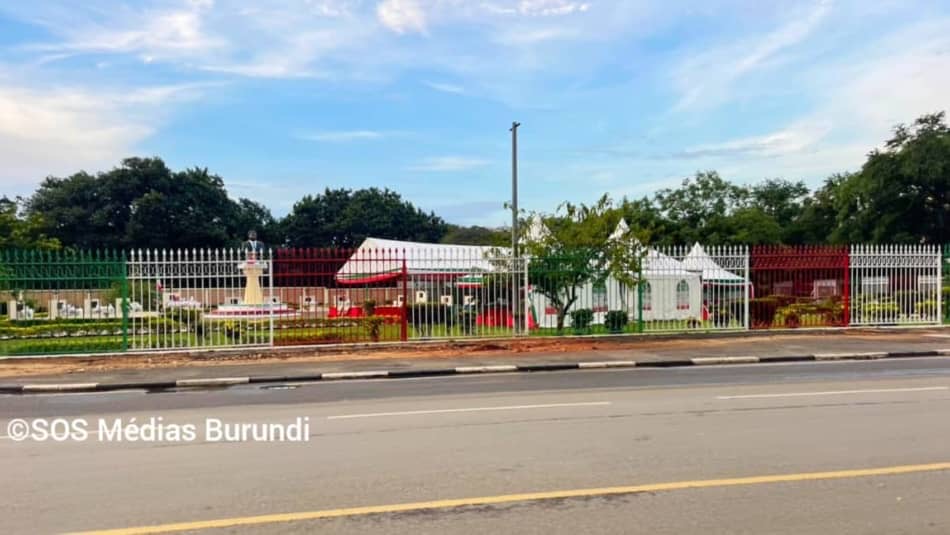
Bujumbura, June 18, 2026 – The Burundian government’s plan to transfer the remains of several historical figures to a future national memorial in Kiriri is already sparking strong reactions. At the heart of the controversy is the announced transfer of the remains of former president Melchior Ndadaye to this site, where Prince Louis Rwagasore, a hero of Burundi’s independence, is already buried. The Sahwanya-Frodebu party, founded by Ndadaye, denounces the decision as being made without prior consultation and is demanding a national dialogue before any implementation of the project.
The announcement was made last week in the National Assembly during the adoption of the budget law for the 2026-2027 fiscal year. In presenting the budget outline, Finance Minister Alain Ndikumana indicated that one billion Burundian francs will be allocated to developing the Kiriri site into a national historical memorial.
According to the government, this project includes the transfer of the remains of several prominent figures currently buried in downtown Bujumbura, Burundi’s commercial capital. Among them are the remains of Melchior Ndadaye, the country’s first democratically elected Hutu president, which are slated to be moved to the Kiriri site where Prince Louis Rwagasore, a hero of Burundi’s independence, is already laid to rest.
In a statement released on June 16, the Sahwanya-Frodebu party asserted that it learned of this decision through official channels without having been involved in any prior discussions. The political party maintains that such a step cannot be taken without consulting the deceased’s family and the relevant political actors.
For Frodebu, Melchior Ndadaye remains an emblematic figure in Burundi’s history. The party presents him as “the democratic hope of the Burundian people and the ultimate sacrifice for freedom, justice, and peaceful coexistence.”
The party also questions the legitimacy of such an initiative and asks who authorized a few officials to decide unilaterally on the future of the memory of a president elected by the people and assassinated because of his political convictions.
Faced with this situation, Frodebu calls on the government to suspend the project and initiate an inclusive dialogue bringing together public authorities, the political parties concerned, the former president’s family, and other national stakeholders. According to this political group, any decision regarding the burial of this hero of democracy should be based on broad consensus.
The authorities, for their part, present the project as an initiative aimed at promoting the national historical heritage and preserving the memory of the great figures who have shaped Burundi’s history.
A memory still sensitive
The remains of Melchior Ndadaye currently rest in downtown Bujumbura. The first democratically elected Hutu president of Burundi, he was assassinated on October 21, 1993, during an attempted coup, less than four months after taking office. He is considered by a significant portion of the Burundian society to be a hero of democracy.
Founder of the Sahwanya-Frodebu party, Melchior Ndadaye remains one of the most prominent figures in the country’s contemporary political history. His assassination was followed by massacres of Tutsis across Burundi, which some minority rights organizations describe as genocide.
His death also marked the beginning of a long period of violence that fostered the emergence of several Hutu rebel movements, including the CNDD-FDD. Now in power, this party has governed Burundi since 2005 following the implementation of the Arusha Peace and Reconciliation Agreement for Burundi, signed in August 2000 and considered one of the key instruments that brought an end to the civil war.
According to the United Nations, this conflict claimed more than 300,000 lives.
In 2020, the Supreme Court of Burundi sentenced 17 of the 21 people prosecuted in the case of President Ndadaye’s assassination to life imprisonment. Among those convicted were several former senior officers of the ex-Burundian Armed Forces (FAB), which were dominated by the Tutsi minority before their integration with the former Hutu rebel movements as part of the reforms stemming from the Arusha Agreement. Only five of them were in Burundi at the time of the verdict.
While the government presents this project as an effort to preserve national memory, the debate surrounding the transfer of Melchior Ndadaye’s remains goes far beyond the question of burial site. It touches on collective memory, national reconciliation, and how this small East African nation intends to honor and pass on the legacy of its most emblematic historical figures.
You might also like
Diplomacy: reopening the borders betweenBurundi and Rwanda, not for soon
This announcement was made this Friday by Rosine Guilène Gatoni, spokesperson for President Évariste Ndayishimiye during a public conference, which was live on local media held in the province of
“My motherhood was stolen” : a patient denounces medical negligence with irreversible consequences
SOS Médias Burundi Bujumbura, October 9, 2025 – In Burundian hospitals, tragedies related to medical negligence often remain unreported, stifled by fear and resignation. Yet, behind these silences, lives are

Gitega : inheritance dispute turns tragedy, a man kills his older brother with a machete
SOS Médias Burundi Gitega, July 13, 2026 — What was supposed to be a family gathering to divide an inheritance turned into tragedy on the afternoon of Saturday, July 11,