Muyinga : the presidential prayer overshadowed by extortion and forced mobilization
SOS Médias Burundi
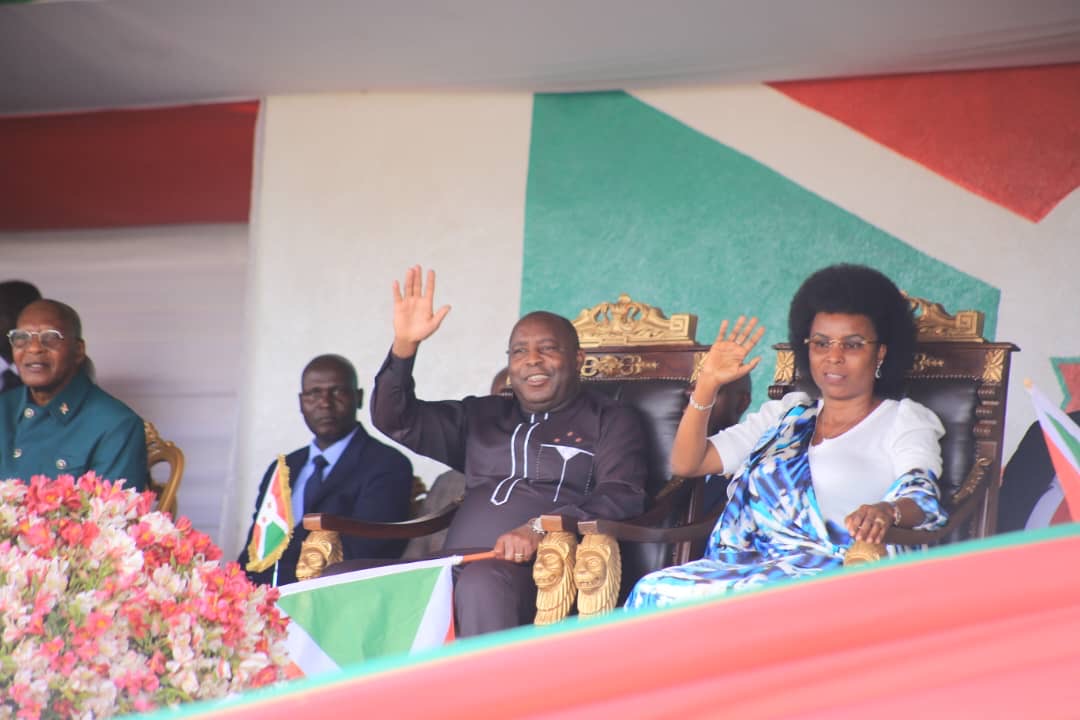
Muyinga, June 19, 2026 – Presented as a major gathering of faith and gratitude to God, the presidential prayer organized in Muyinga, in the Buhumuza province of northeastern Burundi, is at the heart of a heated controversy. Citizens, civil servants, business owners, and even members of the CNDD-FDD, the ruling party, are denouncing imposed contributions, pressure to participate, and a mobilization they consider a form of collective coercion. In the context of a persistent economic crisis, the event is generating frustration, anger, and incomprehension in several regions of the country.
Since the announcement of the presidential prayer, a vast mobilization campaign has reportedly been conducted across districts, public services, schools, health facilities, and various community organizations. According to several sources contacted by SOS Médias Burundi, the instructions were primarily conveyed verbally through local administrative and political authorities.
According to the information gathered, rural households were asked to contribute 2,000 Burundian francs each. Teachers and other basic civil servants were reportedly asked to contribute 5,000 Burundian francs per person. School principals, administrative officials, and some public service managers contributed between 10,000 and 20,000 Burundian francs.
Merchants, business operators, and some holders of ministerial decrees were reportedly asked to contribute between 50,000 and 100,000 Burundian francs, or even more depending on their financial means. Several public institutions, including hospitals and schools, also reportedly participated in the collections.
A burden in the context of an economic crisis
These contributions come at a time when many Burundians are facing a continued deterioration in their living conditions. The rising cost of living, recurring shortages of fuel and basic necessities, and declining purchasing power are weighing heavily on households.
“Many families can no longer make ends meet. When they are asked to contribute to this kind of activity, it becomes an additional burden that is difficult to bear,” testifies a resident of the eastern part of the country.
According to several sources, the discontent is not limited to ordinary citizens. Members of the CNDD-FDD, the ruling party, have also reportedly expressed their frustration with the amounts demanded and the expenses related to traveling to Muyinga.
“Even among the Bagumyabanga, the name given to CNDD-FDD activists, some believe that the requested contributions exceed what people can currently afford,” states a local source.
The participation that was hardly avoidable
Beyond financial contributions, several social groups were reportedly heavily mobilized to participate in the ceremonies. Teachers, civil servants, business owners, administrative officials, graduating students, job seekers, and members of local associations were among those called upon to join the delegations sent to Muyinga.
In Muyinga, a teacher interviewed there described implicit but real pressure.
“We weren’t given any written orders, but everyone knew they had to be there. Many preferred to avoid any trouble with their superiors,” he explained.
In Cankuzo, a district employee claims to have participated against his will.
“We were asked to contribute and to organize ourselves for the trip. Those who hesitated were regularly reminded of the rules,” he stated.
In Gisuru, a business owner described a climate of coercion.
“When you’re asked to give, you give.” “Refusing can have consequences for your business,” he argues.
In Butaganzwa, a job seeker claims to have been subjected to collective pressure.
“Even within families and local groups, those who refused to participate were singled out,” he recounts.
The cloths of unity
According to several participants, cloths provided by the Presidency of the Republic were distributed to those present to serve as an official uniform during the ceremonies.
At the event, these cloths were visible in large numbers and contributed to the image of unity projected by the organizers. But behind this demonstration of cohesion, several participants spoke of a deep unease.
“Many came more out of obligation than conviction,” said a participant who requested anonymity.
Silence and fear of testifying
Several sources also report that warnings were issued to those involved in fundraising to prevent the dissemination of documents that could serve as evidence of the requested contributions.
According to these accounts, contribution lists, collection records, and other internal documents were kept with extreme discretion.
These claims could not, however, be independently verified.
“People talk about it amongst themselves, but few are willing to speak publicly. Fear remains,” confides an administrative source.
For several observers, this situation contributes to a climate of mistrust within government agencies and local communities.
A prayer in a tense political and economic context
This prayer crusade organized in Muyinga coincides with the sixth anniversary of President Évariste Ndayishimiye’s term. During this period, the country has been marked by several economic challenges, including recurring shortages of fuel, foreign currency, and basic necessities.
Several local and international observers believe that Burundi is going through a particularly difficult economic phase, despite regular announcements of recovery and reform. Furthermore, several human rights organizations believe that the overall situation in the country continues to deteriorate. They cite, in particular, cases of targeted assassinations, kidnappings, acts of torture, and the recurring discovery of bodies in various regions of the country, as well as cases of property theft, among other alleged human rights violations.
Closing ceremonies and persistent criticism
The ceremonies concluded on Friday in an atmosphere of religious fervor. However, criticism continues to mount in several regions of the country. This episode highlights the persistent tensions between rhetoric of the national unity and the realities experienced on the ground, in a context marked by significant economic and social constraints.
You might also like

Bubanza : kiongozi wa gereza kukamatwa na kupelekwa jela baada ya mfungwa kutoroka
Kiongozi wa gereza la Bubanza (magharibi mwa Burundi) Émile Nduwayo alisimamishwa jumatatu baada ya kuripoti mbele ya korti ya rufaa ya Bujumbura ( jiji la kibiashara). Faili hiyo ni baada
Cibitoke: Two former MSD activists without news after being kidnapped by the Intelligence Service
Two former members of the MSD party (opposition) who had converted to CNDD-FDD party members were kidnapped last September and November. According to residents of the commune of Mabayi in

DRC (North Kivu): the M23 returns to old positions
The March 23 Movement (M23) has recaptured localities that it had ceded as part of the ceasefire demanded by the Heads of State of the East African Community since December