
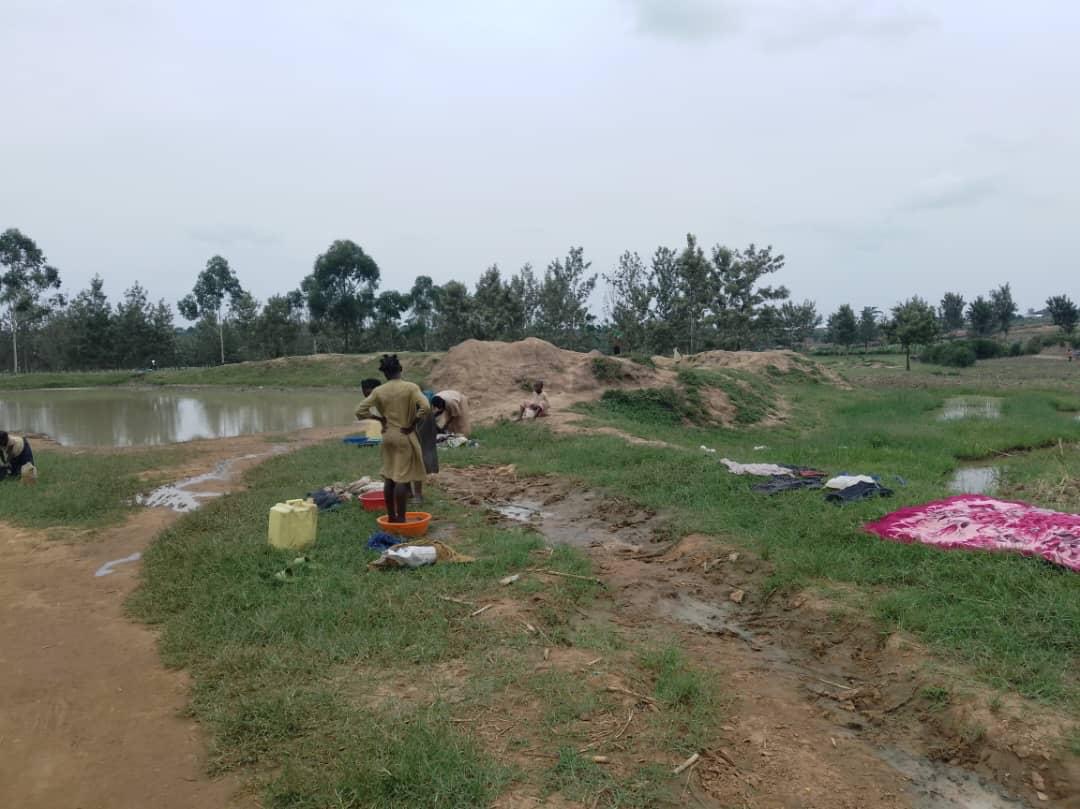
Photo of the week-Nakivale : the thirst grips the camp, refugees travel miles in search of water
In the Nakivale refugee camp, located in southwestern Uganda, access to drinking water has become a critical challenge. For more than three months, the public taps, springs, and fountains installed in and around the camp have run dry, plunging thousands of refugees into an increasingly dire situation.
As the sun beats down on the Isingiro region, home to the Nakivale camp, residents are forced to travel long distances in search of this essential resource. Some refugees even go as far as Lake Nakivale, located about eight kilometers from the camp, to try to obtain water.
To try and address this shortage, the Nsamizi public agency, responsible for implementing water, sanitation, and hygiene (WASH) programs in the camp, had constructed public wells.
The water from these wells was primarily used for cooking and other domestic purposes. It was not intended for drinking. However, faced with the lack of other options, several refugees say they were forced to drink it.
Today, even these wells are dry, further exacerbating the situation. Some refugees are forced to travel several kilometers, including to Lake Nakivale, to find water.
Others have turned this shortage into a business. People with bicycles transport water and sell a 20-liter jerrycan for up to 10,000 Ugandan shillings, a price considered unaffordable for many refugees already living in precarious conditions.
“The small amount of water we get under these conditions cannot be wasted. That’s why we have to choose between doing laundry, maintaining our personal hygiene, or preparing meals,” says a Burundian refugee living in the camp.
Diseases linked to lack of water
In the health facilities of Nakivale, the consequences of this crisis are beginning to be felt. Medical sources indicate an increase in cases of diseases linked to the lack of clean water and hygiene.
“The patients we receive mainly present with signs of cholera and typhoid. They are primarily children, as well as pregnant and breastfeeding women,” explains a medical source.
The same source states that the shortage is also affecting healthcare facilities.
“Imagine, even here at the hospital, we don’t have drinking water,” she laments.
Livestock also affected
The crisis isn’t just affecting refugees. Livestock is also suffering from the lack of water and pasture.
“Several cows are dying every day,” say refugee herders, who are asking the United Nations High Commissioner for Refugees (UNHCR) to consider access to drinking water as a priority as food assistance.
The UNHCR acknowledges the difficulties but says it lacks sufficient financial resources to meet all the needs.
“We don’t even have a budget for flour and medicine. How can we possibly have one for water? We are simply pleading with the host government for help,” UNHCR staff respond.
This situation comes as the UN agency has recently made several cuts to food aid for refugees.
Located in the Isingiro district of southwestern Uganda, the Nakivale camp hosts more than 150,000 refugees, including over 33,000 Burundians. The prolonged shortage of drinking water is raising fears of a worsening health crisis in one of Africa’s oldest refugee camps.
Our photo : women and children around a stream near the Nakivale camp in Uganda, searching for water amid the camp’s shortage
You might also like

Photo of the week: a Burundian journalist arrested in Mulongwe, suspected of links with the Red-Tabara group
SOS Médias Burundi Burundian journalist Gérardine Ingabire, a refugee in the Democratic Republic of Congo and an employee of the community radio station Amani FM in Malindi, was arrested on
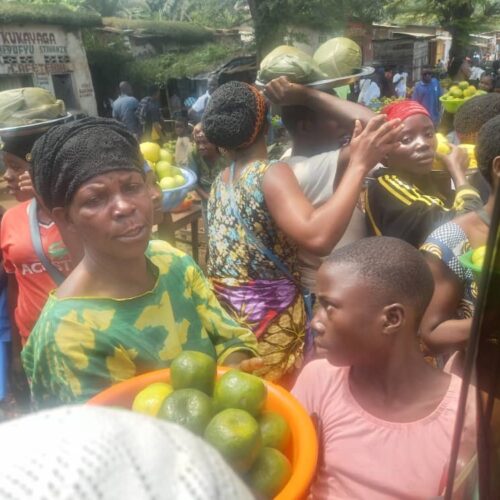
Photo of the week : between closed borders and unsold tangerines, women of Rumonge are innovating
While fruit growers in the district of Rumonge (southwestern Burundi) are struggling to sell their tangerines due to the border closure with neighboring Rwanda, some women are seizing the opportunity
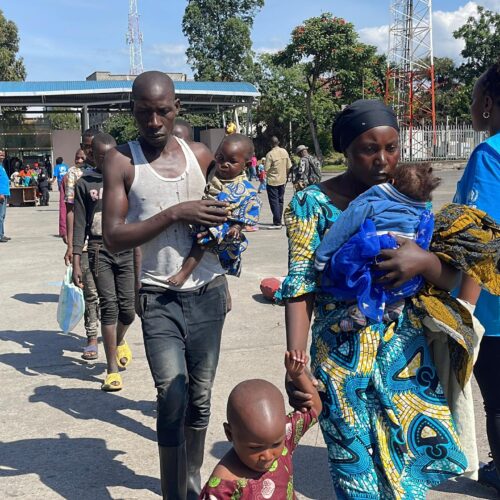

Photo of the week : 1,150 Rwandan refugees repatriated in 48 hours
In the space of 48 hours, exactly 1,150 Rwandan refugees were repatriated from the eastern Democratic Republic of Congo to Rwanda. This large-scale operation was coordinated by the United Nations