
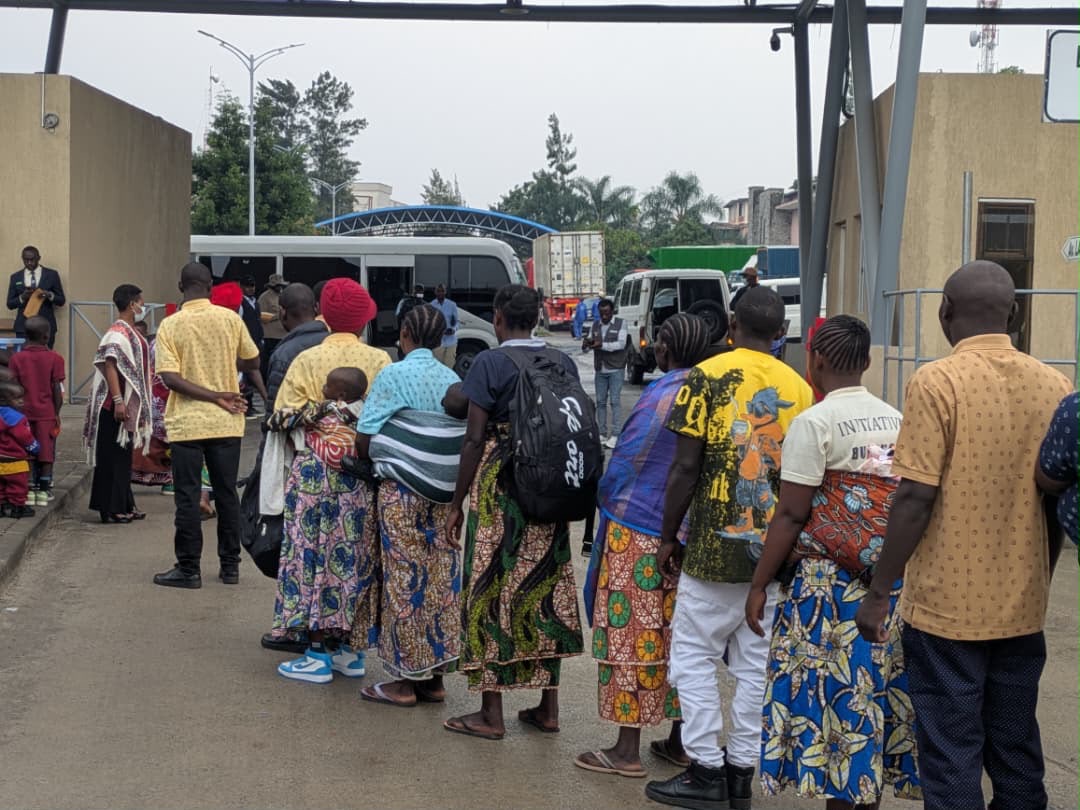
Congolese refugees in Burundi : Canada opens a door, the United States leaves families in waiting
SOS Médias Burundi
Muyinga, August 10, 2026 — After more than a year of uncertainty marked by the freezing of numerous resettlement applications to the United States, some Congolese refugee families living in Burundi are finally regaining hope. Canada is gradually continuing its resettlement program, and the first beneficiaries who have completed all the administrative procedures are beginning to leave Burundi for a new life. For those whose applications were destined for the United States, however, the wait continues.
Canada gives hope to some families
After more than a year of uncertainty, some Congolese refugee families living in camps in Burundi are finally seeing their resettlement plans come to fruition.
Canada is gradually continuing its resettlement program. The first beneficiaries who have completed all the administrative procedures are beginning to leave Burundi to settle in Canada.
In recent years, Canada was among the leading resettlement countries for Congolese refugees living in Burundi, second only to the United States.
For several years, the United States welcomed the vast majority of refugees resettled from Burundi to third countries, while the remaining beneficiaries were primarily directed to Canada and Australia.
This dynamic, however, was profoundly disrupted after Donald Trump’s return to the presidency of the United States.
The US freeze plunges families into uncertainty
The American administration adopted new immigration restrictions and suspended the refugee admissions program, leaving many families whose cases were already underway in a state of deep uncertainty.
In the refugee camps in Burundi, the departure of the first families for Canada is now stirring strong emotions.
Speaking on condition of anonymity, a Congolese family recently informed of their impending departure recounts the seventeen years they spent in a refugee camp.
“We spent seventeen years in the camp. Throughout these years, we have experienced food insecurity, difficulties sending our children to school, and extreme poverty. We have endured many hardships, but today we hold onto the hope that a new life awaits us in Canada. Our children will finally have the opportunity to grow up in better conditions.
For this family, leaving represents the culmination of a long wait marked by hardship and uncertainty.
Families destined for the United States still waiting
The situation is, however, very different for refugees whose cases were destined for the United States.
For over a year, several families have been living in an endless wait. Some had already completed the main stages of the process: medical examinations, documents validated, plane tickets issued, and suitcases packed for departure.
Agnès, a Congolese refugee whose case was destined for the United States, still remembers the day she thought she would finally leave the camp.
“I had been notified of my departure for the United States. Three days later, the authorities announced new restrictions regarding refugee resettlement. Everything stopped.”
To prepare for her trip, she had taken on debt.
“I had incurred debts of about $2,000 USD, thinking I could pay them back once I was settled in the United States. Today, I find myself in an even more difficult situation. All the expenses incurred to prepare for my departure have brought me back to the precarious conditions I experienced during my first year in the camp.”
Her story illustrates the situation of many families who had begun rebuilding their lives around the prospect of resettlement before seeing their plans suspended.
Only 20 families benefit from the Canadian program
Despite the gradual resumption of departures to Canada, the number of beneficiaries remains very limited.
For the current year, the quota allocated to Burundi under the Canadian resettlement program is set at only 20 families.
These families were selected according to the criteria established for the Canadian program and distributed among various offices of the United Nations High Commissioner for Refugees (UNHCR) in Burundi.
These include the UNHCR office in Bujumbura, the country’s commercial capital and largest city, which serves urban refugees; the Ruyigi office, responsible for refugees living in camps in the east of the country; and the Muyinga office, which serves refugees in camps located in the north.
Between hope and endless waiting
For the families selected by Canada, the departure marks a new chapter after years spent in the camps.
For those still hoping to reach the United States, the future remains far more uncertain.
Some had already undergone medical examinations, obtained the necessary documents, and prepared for their departure. But the suspension of the American program has interrupted their journey without them knowing precisely when it will resume.
In the Burundian camps, two realities now coexist : that of a few families who are finally seeing their resettlement dream become a reality, and that of many others who continue to wait for a decision that could change their future.
For these refugees, resettlement is not just a journey to another country. After years of exile, it often represents the hope of regaining stability, educating their children in better conditions, and rebuilding a life far from the precariousness of the camps.
You might also like
Mozambique : eight Burundians threatened with being sent to prison
Eight Burundian nationals have been detained in a Mozambican police cell in the province of Nampula, located northeast of the capital Maputo, for more than 5 months. They were arrested

Mahama (Rwanda) : the camp is equipped with a computer and multi-service center
It is Save the Children, an NGO partner of the UNHCR that financed the project run by two refugees, a young Burundian and a Congolese woman. It is a computer


DRC : Joseph Kabila sentenced to death by a military court
SOS Médias Burundi Goma, October 1, 2025 – Former President of the Democratic Republic of Congo, Joseph Kabila, was sentenced to death on Tuesday, September 30, by the Kinshasa High