
Burundi : miserable wages, shortages, and exodus… is the government letting the civil service die?
SOS Médias Burundi
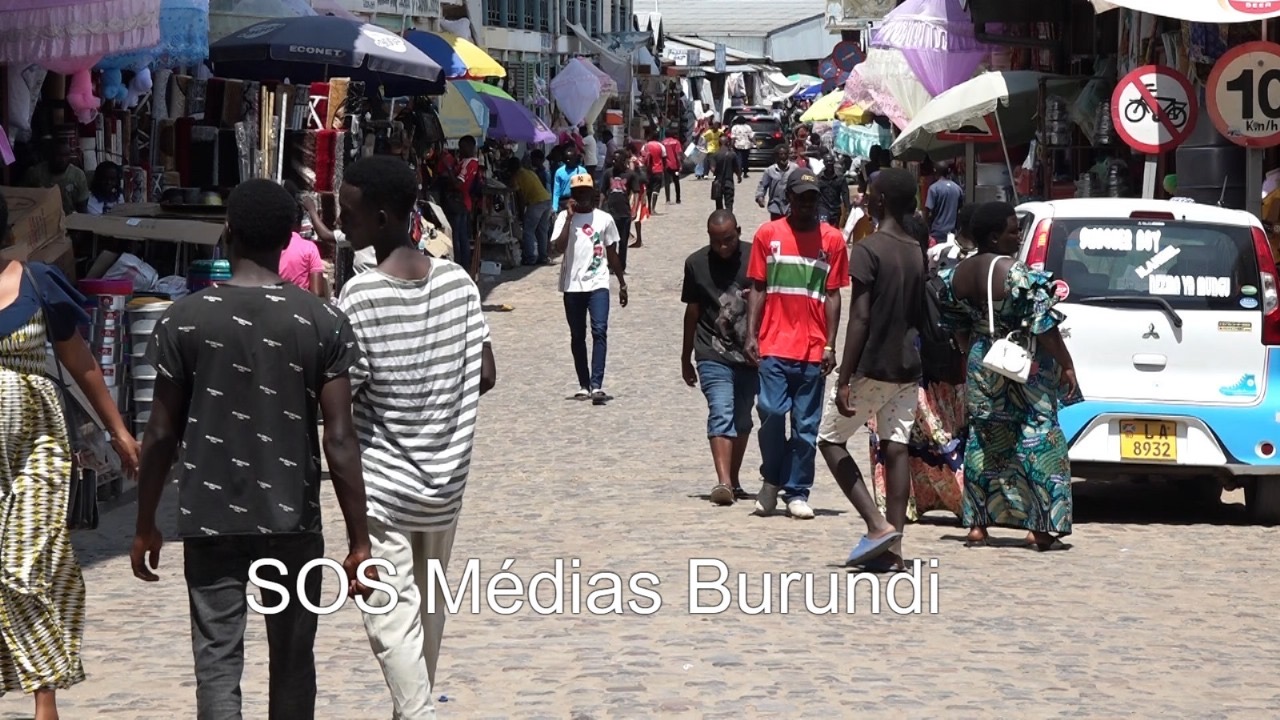
Bujumbura, August 11, 2026—Every week, the job postings broadcast by Burundi’s National Radio and Television (RTNB) reflect a growing concern : civil servants are leaving their posts and going abroad, while others are turning to the informal sector to try to survive.
Behind the unemployment and underemployment figures lies another reality : that of the working poor. In Burundi, having a degree and a stable job in the civil service no longer guarantees a decent life.
Salaries that are no longer enough
Thierry N., recruited last year by a major institution after obtaining a bachelor’s degree, says he quickly became disillusioned.
His salary wouldn’t even cover his rent and basic expenses.
“Sometimes I go a whole day without eating because I can’t afford it,” he confides bitterly. For him, the most discouraging thing is the lack of concrete measures to improve workers’ living conditions.
“Yet I work. The most discouraging thing is seeing that the authorities don’t care, that there’s no real effort to get us out of this situation,” he laments.
Faced with this situation, the authorities regularly encourage civil servants to develop income-generating activities outside of their working hours.
A solution that leaves Yvette N. perplexed.
“What do we need to start this business? And above all, when? We already spend hours waiting for a bus just to get home!” she exclaims.
Getting to work is already becoming a luxury.
In Bujumbura, Burundi’s commercial capital and main administrative center, home to UN agencies, state institutions, and much of the country’s economic activity, the soaring cost of transportation and basic necessities is hitting workers particularly hard.
The “One One” shared taxis, which emerged and became especially popular in the context of fuel shortages, transport several passengers on the same route. Each passenger pays according to the distance traveled. This system has become an essential part of urban transportation in Bujumbura.
But with the general rise in costs and difficulties in obtaining fuel, travel expenses are a heavy burden on workers’ incomes.
Dynamique, another worker interviewed, believes that simply getting around the capital has become a real challenge.
“Today, leaving home costs at least 10,000 Burundian francs just to pay for the ‘One One’ taxis.” Add to that the skyrocketing price of food… We’re living like orphans. If nothing changes, the exodus will accelerate,” he says.
For some workers, daily transportation costs absorb a considerable portion of their salary. The monthly budget allocated to travel can even exceed the base salary of some employees.
When the informal sector becomes more profitable than the state
Faced with this situation, the informal sector appears increasingly attractive.
Samuel H. recounts that he witnesses daily the difficulties faced by his father, a civil servant in Bujumbura, whose salary disappears just days after being paid.
Conversely, some family members have found a more significant source of income in informal activities.
“My cousin transports water in neighborhoods where there are often shortages and earns a better living than my father. My father himself acknowledges this,” he says.
In Gihanga, a livestock-raising area located about 25 kilometers northwest of the economic capital, the informal sector also appears to offer higher incomes than some public sector jobs.
According to residents, fodder vendors can sell around thirty bales a day for about 10,000 Burundian francs each. When these earnings are actually realized, they can represent several times the monthly salary of some government employees in a single day.
A degree no longer guarantees the future
For many young people, this situation breeds profound disillusionment.
After years spent in university, some discover that a degree guarantees neither a sufficient income nor a stable life.
A question then arises for some of these young people : what is the point of studying for years if the degree ultimately leads to precariousness, unemployment, or migration?
This disillusionment fuels the desire to go abroad, particularly among young graduates and some civil servants who feel they can no longer live decently from their profession.
You might also like

Ecocash- Affairs: the situation going from bad to worse
Since the disruption of money transfer operations via the Ecocash service, the population is grumbling. Agents and super agents are in an untenable situation and ask the central bank to
Makamba: waziri mkuu atishia kuwafuta kazi au kuwatoa cheo majaji “wanaokula rushwa”
Ijumaa iliyopita, waziri mkuu wa Burundi alikuwa ziarani mkoani Makamba (kusini mwa Burundi). Katika mkutano na wananchi, iliripotiwa kuwa vyombo vya sheria mkoani Makamba unasimama vibaya, watu masikini hawawezi kushinda

Burundi : Brarudi increases prices of its unobtainable products
The prices of drinks from the Burundi Brewery Company (Brarudi) have increased in a proportion of 100 to 500 Burundi francs since June 1, 2024. The increase in the prices