Fizi : targeted M23 strike in Mwalu, soldiers under intelligence surveillance
SOS Médias Burundi
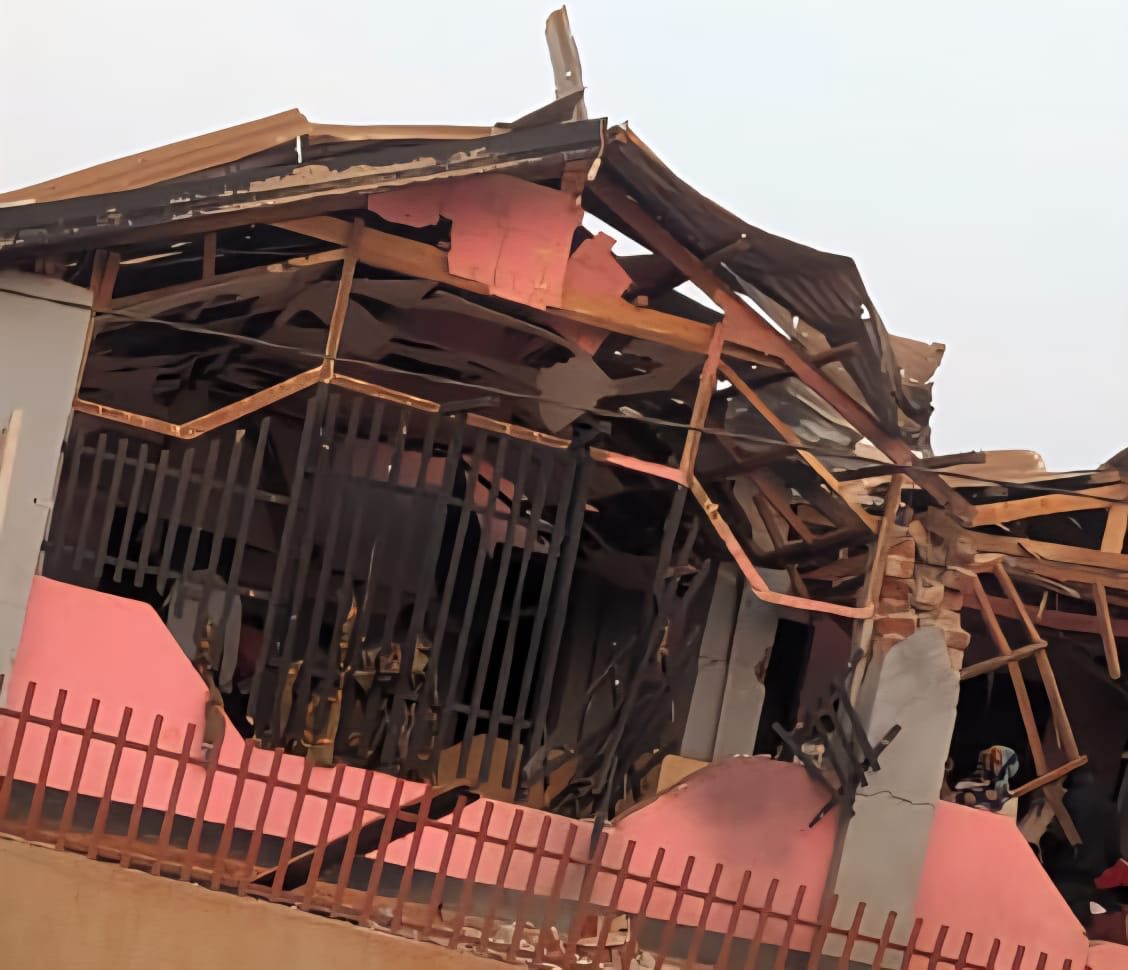
Fizi, August 23, 2026 — A drone strike attributed to the M23 targeted the Mwalu Hotel in the Fizi territory of South Kivu, in eastern Democratic Republic of Congo, on Wednesday, August 19, 2026. The hotel reportedly hosted several Congolese and Burundian military officials, as well as fighters engaged alongside government forces, prior to the attack. Suspicions of an intelligence leak now surround this strike.
According to locally gathered security information, a meeting to prepare for a new military operation toward Minembwe, in the Fizi highlands, a strategic area of South Kivu, was being held at the hotel before the attack. Several soldiers from the Armed Forces of the Democratic Republic of Congo (FARDC), the Burundi National Defense Force (FDNB), and foreign fighters were reportedly present.
Among the high-ranking officials named are Major General Elie Ndizigiye, better known by his alias Muzinga, deputy commander of the Burundian National Defense Forces (FDNB) land forces, responsible for coordinating Burundian military operations, and Brigadier General Télesphore Barandereka, head of the training and instruction service at the FDNB General Staff, commonly referred to as G3 in military jargon.
Congolese General Dunia Kashindi Fabien, described as an official within the 33rd Military Region, was also among those named. According to information gathered by SOS Médias Burundi, these officers reportedly left the area before the strike.
Arrests after the strike
Sources close to the case confirmed to SOS Médias Burundi the arrest, following the attack, of Burundian and Congolese officers as part of the investigation into a possible intelligence leak.
Congolese and Burundian intelligence services are reportedly trying to determine how information about the presence of military officials and the meeting could have reached the M23.
Members of the FARDC (Armed Forces of the Democratic Republic of Congo) and the FDNB (Burundi National Defense Force) are suspected of having transmitted information that could have led to the location of the facility.
At this stage, however, no public evidence establishes that a specific soldier actually transmitted this information to the M23. Arrests and suspicions must therefore be distinguished from any potential guilt, which will have to be established through investigations and, if necessary, by the courts.
Satellite communications
The issue of the leak is more sensitive given that mobile phone networks have been cut off in the Fizi territory since June 19, according to locally gathered information.
This measure is reportedly intended to limit the flow of intelligence that could be exploited by opposing forces.
In this context, some Congolese and Burundian military officials, as well as Wazalendo fighters, are reportedly using alternative means of communication, including Starlink satellite connections.
These devices allow for continued communication in areas without telephone network coverage, but also raise questions about the security of communications concerning troop movements and operational preparations.
More than 29,000 Burundian soldiers deployed
The presence of Burundian soldiers in eastern DRC reflects their increasingly significant involvement in the conflict.
Between August 2022 and December 2025, the Burundi National Defense Force (FDNB) deployed more than 29,000 soldiers in eastern Congo to fight alongside the Armed Forces of the Democratic Republic of Congo (FARDC) and the Wazalendo armed groups supported by Kinshasa, according to an internal report from the Congolese Ministry of the Interior and Security consulted by SOS Médias Burundi in December 2025.
In some operations, this coalition also benefited from the presence of elements of the Democratic Forces for the Liberation of Rwanda (FDLR), an armed group primarily composed of Rwandan Hutus, some of whose members are accused of participating in the 1994 genocide against the Tutsis in Rwanda.
The M23 and Twirwaneho in South Kivu
In South Kivu, the M23 has a significant ally : Twirwaneho, an armed group composed mainly of members of the Banyamulenge community.
Lately, the M23 and its allies have recovered or consolidated several important positions in the highlands of South Kivu, particularly in the areas near Fizi, Mwenga and Minembwe.
The Minembwe area is thus a major military objective for the various forces involved in the conflict.
The M23 also controls vast portions of North and South Kivu, where it has established parallel administrative structures. The capture of Goma and Bukavu, the capitals of North and South Kivu respectively, by the M23 in January and February 2015 profoundly altered the balance of power in eastern Congo.
This development also changed communication routes and access to areas still controlled by government forces.
A war that has become regional
The conflict now pits several Congolese and regional actors against each other.
Kinshasa accuses Kigali of supporting the M23, while Rwanda accuses Burundi and the DRC of supporting the Democratic Forces for the Liberation of Rwanda (FDLR). The three countries in the Great Lakes region mutually deny these accusations.
Despite repeated denials from Rwanda, United Nations experts have documented Kigali’s support for the M23. UN reports have notably indicated the presence of Rwandan forces alongside the movement.
Burundi, for its part, provides military support to the FARDC (Armed Forces of the Democratic Republic of Congo) against the M23 and its allies. This involvement makes South Kivu an area where the security interests of several countries in the region directly intersect.
Kinshasa denies any collaboration with the FDLR (Democratic Forces for the Liberation of Rwanda). However, several United Nations reports have documented, at various times, forms of cooperation between elements of the FARDC, Wazalendo groups, and FDLR fighters in operations against the M23.
SOS Médias Burundi has also documented the presence of some FDLR leaders in Burundi, particularly in Bujumbura, the country’s commercial capital.
Burundi regularly rejects accusations of supporting the FDLR. Kigali, for its part, accuses Kinshasa and its allies of maintaining this threat near its border, making the presence of the FDLR one of the main arguments put forward by Rwanda to justify its security involvement in eastern DRC.
This confrontation of accusations and military alliances has gradually transformed the Congolese conflict into a regional crisis, in which the M23, the FARDC, the Wazalendo, the FDLR, the FDNB, and Rwandan forces are linked, directly or indirectly, to the balance of power around North Kivu and South Kivu.
The M23 integrated into the AFC
The M23, a former Tutsi-dominated rebellion that took up arms again at the end of 2021, claims to have resumed fighting in particular to denounce Kinshasa’s failure to respect its commitments regarding the reintegration of its fighters.
The movement is now integrated into the Congo River Alliance (AFC), a political-military coalition led by Corneille Nangaa, former president of the DRC’s Independent National Electoral Commission (CENI).
The AFC/M23 advocates, in particular, for the DRC’s institutional transformation towards a federal system.
Hostilities continue despite diplomatic efforts
On the ground, hostilities continue despite various diplomatic initiatives aimed at ending the conflict.
Kinshasa and the AFC/M23 are engaged in discussions mediated by Qatar in Doha, the Qatari capital, to reach a political settlement to the conflict.
Meanwhile, the DRC and Rwanda signed a peace agreement in Washington under the auspices of the United States, intended in particular to reduce tensions between the two countries and promote an end to hostilities in eastern Congo.
These two approaches are, however, evolving on distinct fronts : the Doha process directly concerns discussions between Kinshasa and the AFC/M23, while the Washington agreement focuses primarily on relations between the DRC and Rwanda.
But diplomatic progress remains fragile as fighting continues in several areas of North and South Kivu.
The increasing use of drones adds a new dimension to the conflict. Strikes now allow for the remote targeting of positions, infrastructure, or locations suspected of harboring military officials.
An investigation that could reveal a major flaw
The Mwalu strike raises a central question : how did the M23 obtain sufficiently precise information about the presence of military officials and the holding of a meeting at this hotel?
The reported arrests of Burundian and Congolese officers could allow intelligence services to determine whether an internal leak did indeed precede the attack.
But until the investigations establish the facts, those arrested remain presumed innocent.
If a military intelligence leak were ultimately confirmed, it would reveal a major flaw in the security of communications and operations of the FARDC-FDNB-Wazalendo coalition.
A former colonel in the Burundian army, speaking to SOS Médias Burundi on Sunday, now speaks of a “crisis of confidence” within the forces deployed in eastern Congo, as suspicions of intelligence leaks and the arrests of officers risk exacerbating tensions between various contingents engaged on the front.
You might also like
Giharo: arrest of several Congolese refugees including minors
At least 18 Congolese refugees are detained by the Rutana police in southeastern Burundi. According to administrative and police sources, these Congolese were arrested in the Musenyi refugee site in
Lusenda : the UNHCR repatriates 171 Burundian refugees to their country of origin
SOS Médias Burundi Fizi, July 23, 2026 – A total of 171 Burundian refugees living in the Lusenda camp, located in the Fizi territory of South Kivu, in eastern Democratic

Gitega : a 14-year-old found dead in bush in Kanyonga, an investigation launched
SOS Médias Burundi Gitega, March 15, 2026 — The lifeless body of a 14-year-old teenager was discovered Saturday morning in Kanyonga village in Gitega district and province, in the heart