
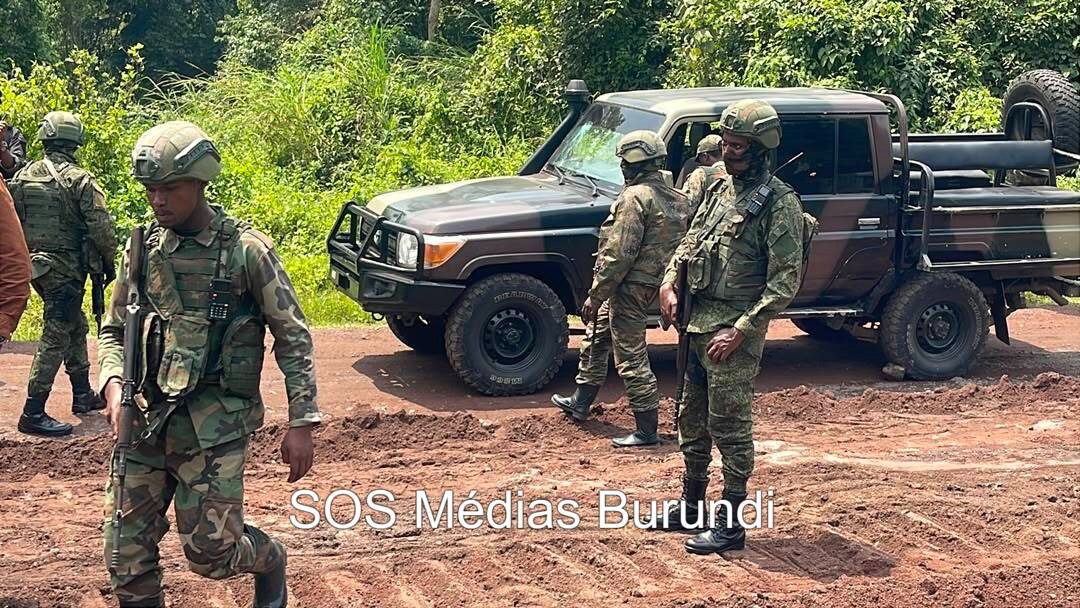
South Kivu : M23 and Twirwaneho offensive, several FARDC-Wazalendo positions fall in Bijombo
SOS Médias Burundi
Uvira, South Kivu, August 24, 2020—Clashes were reported Sunday in the Bijombo area of Uvira territory, South Kivu, between fighters described by local sources as affiliated with Twirwaneho and the M23, and elements of the Armed Forces of the Democratic Republic of Congo (FARDC) as well as Wazalendo militiamen.
According to information gathered from local sources, the fighting resulted in the capture of several positions previously held by the FARDC and Wazalendo militiamen in the areas of Rubarati, Ruhuha, and Malimba. This information, which could not be independently verified, indicates that fighters from the different sides have been displaced following the clashes.
Sources from the Masango area claim that some of the fighters involved in the offensive came from Muramvya, Kashongo, Kageregere, and Mukumba.
Weapons were reportedly abandoned.
According to these same sources, some FARDC elements retreated towards the Munanira mountains, while Wazalendo militiamen headed towards Masango.
Local sources also mention the abandonment of several weapons during the retreat.
The presence of Red Tabara is being discussed.
Representatives of the civil society in the Uvira territory also claim that Burundian fighters from the Red Tabara group participated in the fighting alongside elements identified as Twirwaneho/M23.
This alleged involvement has not yet been independently verified.
A strategic stake for the highlands
The potential capture of Malimba, Ruhuha, and Rubarati could have major strategic importance for controlling the Uvira highlands and the routes connecting several localities in South Kivu.
Local analysts believe that controlling these positions could facilitate movements toward Bukavu, Kaziba, Rurambo, and Minembwe, while also providing access to the Rusizi plain and certain highlands overlooking the city of Uvira.
These assessments, however, remain purely analytical and do not constitute confirmation of a military advance toward these areas.
A series of retreats since June
The events of this Sunday are part of a series of military movements reported in recent months in the Uvira and Fizi highlands.
According to local reports, several positions previously held by the FARDC and the Wazalendo militia, notably in Point Zéro, Kakenge, Kalongi, and Kalingi, have seen retreats since June 19, 2026, with some fighters heading towards the Fizi territory.
A conflict with regional repercussions
These new clashes are occurring against a backdrop of rapidly deteriorating security in eastern DRC. For several months, the AFC/M23 has seized control of several major cities and vast territories in North and South Kivu, while the FARDC is relying in particular on the Wazalendo militia to try to contain its advance.
The M23, a former Tutsi-dominated rebellion that resumed hostilities in late 2021, accusing Congolese authorities of failing to uphold their commitments regarding reintegration, is now affiliated with the Congo River Alliance (AFC), led by Corneille Nangaa, former president of the DRC’s Independent National Electoral Commission (CENI).
The AFC/M23 has a significant ally in South Kivu : the armed group Twirwaneho, composed mainly of young men from the Banyamulenge community.
Kinshasa accuses Kigali of supporting the M23, which Rwanda denies, despite international accusations and reports alleging Rwandan support for the movement.
For its part, Rwanda denounces the alleged support of Gitega and Kinshasa for the Democratic Forces for the Liberation of Rwanda (FDLR), a Rwandan Hutu armed group, some of whose members are accused of participating in the 1994 genocide against Tutsis in Rwanda.
These cross-accusations are fueling tensions between the DRC, Rwanda, and Burundi and contributing to making the conflict in eastern DRC a regional crisis.
Burundi has notably deployed troops in eastern DRC alongside Congolese forces and allied armed groups, making the situation in the Uvira and Fizi highlands also a significant issue for Burundian security.
The conflict has also caused population displacements and increased risks for civilians living in the highlands and around the Rusizi Plain.
The situation remains volatile in the South Kivu highlands. Reports of new positions taken, troop movements, and equipment losses still require independent verification, pending with military authorities, humanitarian actors and sources on the ground.
You might also like
Stolen assets : the CVR announces sanctions against false testimony
SOS Médias Burundi Bujumbura, April 15, 2026 – The Truth and Reconciliation Commission (CVR) is warning against any obstruction of its investigations into stolen assets. At a press conference held

Photo of the week : massive influx of Congolese refugees, more than 47,000 people received urgently
In less than two weeks, the province of Cibitoke has seen an influx of nearly 50,000 Congolese refugees fleeing violence in their country. This massive displacement, composed mainly of women

Burundi: two bodies found in Gitega, a murder disguised as suicide suspected
SOS Médias Burundi Gitega, July 27, 2026—Two lifeless bodies were discovered over the weekend in the district and province of Gitega, in central Burundi. While the circumstances surrounding the death