
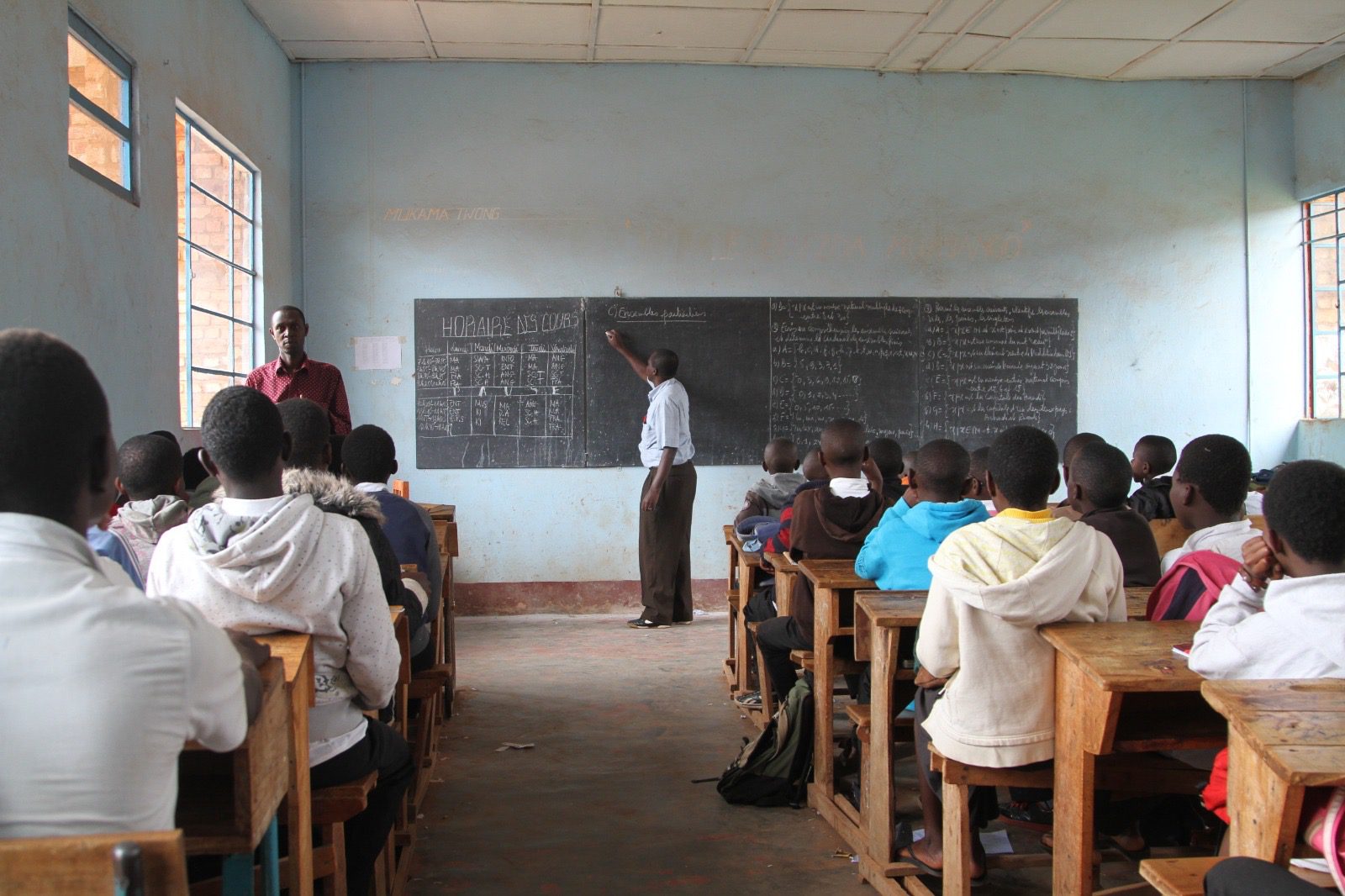
In Burundi, unions accuse the government of sacrificing schools and abandoning its teachers
SOS Médias Burundi
Bujumbura, October 7, 2026 — On the occasion of the World Teachers’ Day, celebrated every October 5, education unions in Burundi painted a bleak picture of the profession. Teachers leaving for other countries, retirements, low salaries, and staff shortages : they accused the authorities of not having sufficiently addressed the difficulties that are weakening the profession and, according to them, threatening the quality of education.
Experienced teachers have left the country
Among the main concerns raised by the unions, the departure of teachers to other countries was a major issue. Several teachers, particularly some of the most experienced, have left the country in search of better living conditions.
“When an experienced teacher leaves their school, it’s not just a position that becomes vacant, but also professional experience, teaching skills, and a part of the school’s collective memory that disappears,” emphasized Emmanuel Mashandari, Vice-President of the Special Coalition of Teachers’ Unions for National Solidarity in Burundi (COSSESSONA), in a statement released on this day.
According to him, these departures have deprived schools of a significant portion of their experience and teaching expertise.
In addition to these departures, a significant number of teachers have retired. COSSESSONA believes that the change in the retirement age has also contributed to exacerbating the difficulties related to staff renewal.
For the unions, the combination of departures abroad and retirements has thus intensified the shortage of experienced teachers in schools.
More than 1,800 teachers have reportedly left their posts
The president of the Burundi Teachers’ Union (STEB), Rémy Nsengiyumva, also reported a worrying situation.
He stated that more than 1,800 teachers have left their posts since the last school year, mainly due to difficult living conditions.
This figure, put forward by the union and not presented as official data, illustrates, according to STEB, the difficulties encountered in attracting and, above all, retaining teaching staff.
The union called for discussions between the authorities and workers’ representatives, particularly regarding salary and working conditions.
Low incomes denounced
The unions also highlighted the economic difficulties faced by teachers.
According to Emmanuel Mashandari, some teachers’ incomes no longer allow them to adequately meet their families’ basic needs. This economic pressure can also, according to him, affect their working conditions and their ability to fully dedicate themselves to their mission.
For COSSESSONA, these difficulties are not limited to the situation of teachers. According to the organization, they also have repercussions on learning and, more broadly, on the quality of education.
Unions are demanding a salary review.
Remuneration was thus one of the main demands made on the World Teachers’ Day.
Antoine Manuma, legal representative of the National Federation of Teachers’ Unions of Burundi (FENASEB), stated that current salaries no longer adequately reflect the socio-economic realities of the country.
Rémy Nsengiyumva, for his part, recommended opening a dialogue with a view to revising the salary scale.
For the unions, improving salaries is directly linked to Burundi’s ability to retain its teachers and preserve the experience accumulated in schools.
FENASEB denounces the lack of attention given to the day
FENASEB also denounced the lack of attention given to World Teachers’ Day.
In a statement released on October 5, 2026, Antoine Manuma asserted that this day should not be reduced to a mere formality. He specifically noted that it was not celebrated in Burundi in 2025.
For the federation, this day provided an opportunity to recognize the contribution of teachers to the country’s development and to initiate a dialogue on the challenges facing the sector.
FENASEB also highlighted the existence of a union framework encompassing some fifteen unions and two federations. It further emphasized the importance of respecting union freedoms, particularly the right to strike, which is enshrined in the Burundian Constitution.
5,000 recruitments announced to counter greater needs
Faced with a staff shortage, the government announced the recruitment of 5,000 teachers for the 2026-2027 school year.
However, this recruitment remains insufficient to meet the identified needs in the sector. According to data released by the authorities, 14,330 teachers are needed for this school year, compared to the planned 5,000 recruitments.
The shortfall thus amounts to 9,330 teachers to cover the identified needs for 2026-2027.
For the unions, however, recruitment is only part of the solution. Without improved salaries and working conditions, new recruitment will not be enough to retain teachers in the education system in the long term.
The shortage remains a challenge by 2030
Four years before the 2030 deadline, the issue of staffing levels remains a major challenge for the Burundian education system.
Education sector planning documents anticipate continued recruitment and training of teachers to improve access to quality education. The shortage of 9,330 teachers identified for 2026-2027 gives an indication of the scale of the short-term needs, but no single official Burundian figure allows for a precise determination of the total number of additional teachers needed by 2030.
For the unions, achieving the quality objectives set for the education system will therefore require not only recruiting more teachers, but also retaining those already in service, particularly the most experienced ones.
A shortage affecting the whole world
The teacher shortage crisis, however, extends far beyond Burundi’s borders. In new data published on October 5, 2026, to mark the World Teachers’ Day, the UNESCO estimated that the world will need 50 million additional teachers by 2030 to guarantee universal access to preschool, primary, and secondary education.
According to the organization, the world currently has approximately 107 million teachers. The additional needs therefore represent roughly one teacher to be recruited for every two teachers currently in service. Some 58% of the teachers needed by 2030 will have to replace those leaving the profession.
The shortage is explained in particular by departures from the profession, difficulties in attracting new candidates, working conditions, remuneration, and the lack of recognition of the profession. Education systems also face challenges in training and retaining qualified teachers.
Sub-Saharan Africa is among the most affected regions. Previous UNESCO projections already estimated that 15 million additional teachers would be needed in this region by 2030 to achieve the goals of universal education.
The global teacher shortage is also impacting current teachers. The UNESCO emphasizes that it leads to an increased workload, undermines their well-being, and can compromise the quality of education. Globally, the primary school teacher turnover rate rose from 4.62% in 2015 to 9.06% in 2022, nearly doubling in seven years.
On this World Teachers’ Day, Burundian trade unions called on the authorities to engage in dialogue on salaries, living and working conditions, immigration, pensions, the staff shortage, and union freedoms.
In Burundi, as in many other countries, the issue is therefore no longer limited to the recruitment of new teachers. It also concerns the capacity of education systems to attract, train, and, above all, retain enough qualified teachers to meet the growing needs of pupils.
You might also like
Kurudia-Shule hatarini katika shule za bweni za Cibitoke: Wanafunzi wanakabiliwa na njaa na magonjwa
SOS Médias Burundi Cibitoke, Septemba 14, 2025 – Katika mkesha wa kuanza kwa mwaka wa shule, wasiwasi umeenea katika shule kadhaa za bweni katika eneo la Cibitoke mkoani Bujumbura, magharibi
Karusi : where are the 6,700 missing pupils?
SOS Médias Burundi Karusi, July 11, 2025 – Mass school dropouts, poverty, illegal migration… The former province of Karusi, now part of Gitega province (central Burundi), is facing an unprecedented

Kinyinya : rising sexual violence threatens girls’ education
SOS Médias Burundi Kinyinya, April 27, 2025 – The district of Kinyinya, in Ruyigi province (eastern Burundi), is facing an alarming upsurge in sexual violence targeting underage girls. Since mid-March,