
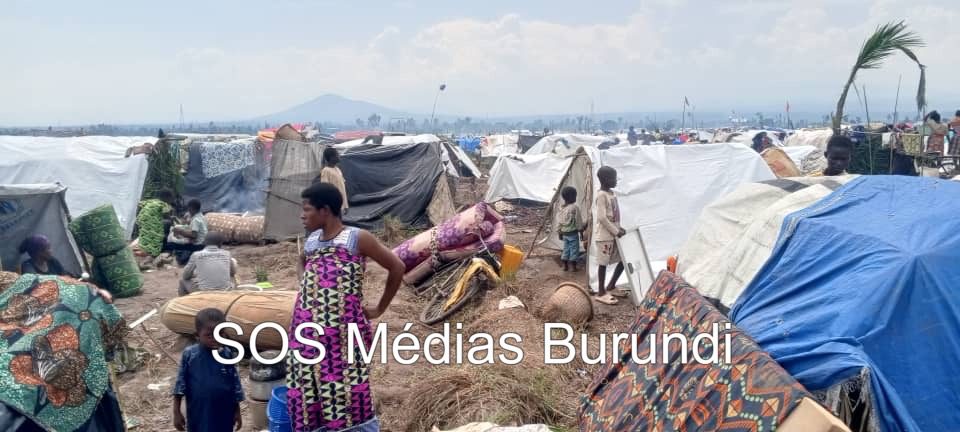
Burundi : ONPRA forces refugees to return to camps, their survival sacrificed in the name of security
SOS Médias Burundi
Musenyi, October 20, 2026 — Richard Uwimana, coordinator of the National Office for the Protection of Refugees and Stateless Persons (ONPRA), is continuing his tour of Burundi’s camps with a demand that is sparking anger and concern : all refugees living outside the camps must return to their original settlement locations. Presented by the authorities as a security measure, this decision risks depriving many families of their main sources of income, at a time when humanitarian aid has significantly decreased and food rations are no longer sufficient to meet their basic needs.
On Friday, October 16, at the Musenyi site, located in the district of Musongati, in Burunga province, southeastern Burundi, Richard Uwimana reiterated this directive to refugees. The government intends to strengthen the oversight and control of the refugee population in the context of war and persistent instability in the Great Lakes region.
This tour comes a few days after the public presentation, by the spokesperson for the Ministry of Security, of 13 people, the majority of whom are Banyamulenge refugees, accused of spying for Rwanda and armed groups operating in eastern Democratic Republic of Congo (DRC).
The suspects were presented in handcuffs to journalists at the headquarters of the National Intelligence Service (SNR) in Bujumbura, the commercial capital. The ministry spokesperson, Pierre Nkurikiye, had notably called on Burundians to monitor the Banyamulenge and to stop renting houses to them.
Read also :
Relatives of those presented rejected the accusations, which they consider unjust. According to them, the refugees in question fled fighting in the Minembwe Highlands of South Kivu to protect their lives and those of their families. This public presentation has reignited fears of stigmatization within the Banyamulenge community, some of whose members now fear being collectively associated with a security threat.
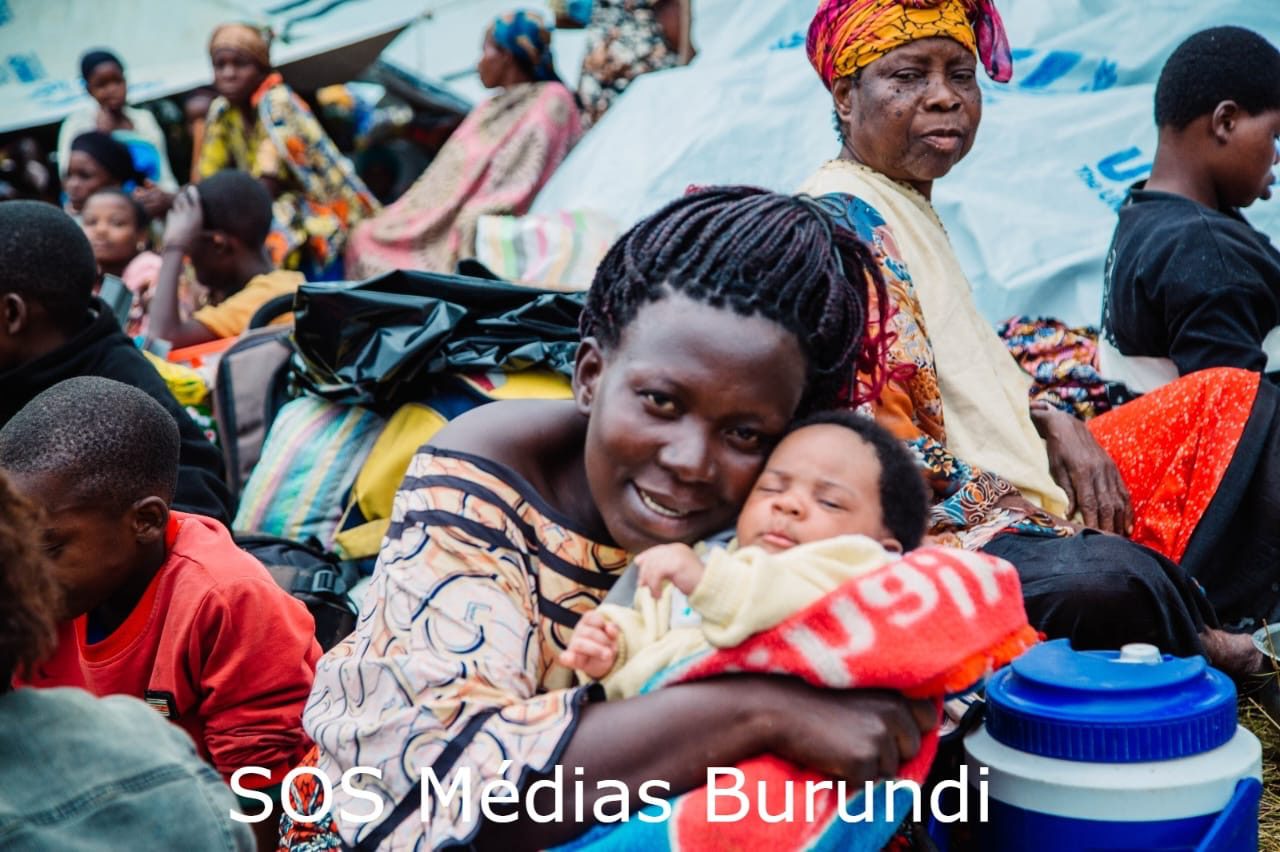
A Congolese refugee holds her baby in a transit center in western Burundi, not far from the border with the Democratic Republic of the Congo (DRC) (SOS Médias Burundi)
Families deprived of their livelihoods
At various sites visited, the call for immediate return has been met with resistance from refugees who depend on economic activities outside the camps to feed their families.
The reduction in humanitarian aid has worsened living conditions in the settlement sites. Many families consider food rations insufficient. To supplement this assistance, some refugees travel to Bujumbura to engage in small-scale trading, day labor, or other income-generating activities.
A refugee from the Musenyi site, who sells clothes in Bujumbura, laments a measure that threatens to deprive him of his main source of income. Contacted by SOS Médias Burundi on condition of anonymity, he explains that his business allows him to feed his relatives back in the camp and pay for their medical care.
“My business in Bujumbura isn’t a luxury; it’s what helps my family back in the camp. I wonder how I’ll survive once I return to the camp. There’s no work there, no customers,” he says.
He also denounces a contradiction between the calls for empowerment issued by the United Nations High Commissioner for Refugees (UNHCR) and the National Office for the Protection of Refugees and Stateless Persons (ONPRA), and a measure that risks depriving refugees of the means to become self-reliant.
“Aid has decreased. How are we going to live in the camp where the purchasing power is low? If everyone returns to the camp, we will all become dependent on aid that is almost nonexistent,” he says worryingly.
Security cited against the backdrop of regional conflict
The refugee disputes the security justification put forward by the authorities. According to him, those suspected of illegal activities should be held individually accountable for their actions, without the entire refugee population being penalized.
“A refugee who sells clothes, who tries to feed his family, is not a threat.” “Those apprehended as troublemakers should be punished according to the law, and the others should be left free. We cannot punish 160,000 people because of a few suspicions,” he asserts.
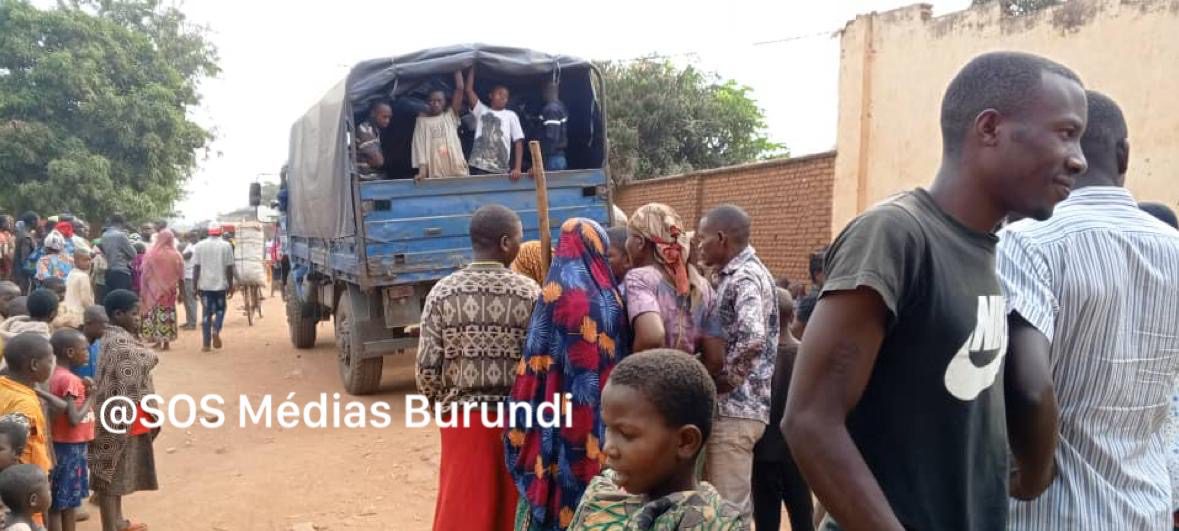
A truck belonging to the Burundi National Police (PNB) transports Congolese refugees—who were arrested in a neighborhood in the border region of Cibitoke, in the northwest of the country—to force them back to a refugee site. Burundian authorities cite security requirements, while the measure has raised concerns regarding the livelihoods of the affected families (SOS Médias Burundi)
Concerns are heightened by the arrests targeting Congolese refugees, particularly Banyamulenge, in recent weeks. In addition to the 13 people recently presented to the press, other refugees have been arrested in the past two weeks in neighborhoods in northern and southern Bujumbura. Some relatives describe these arrests as kidnappings and say they lack information about the fate of those involved.
These operations are taking place against a backdrop of tensions linked to the conflict in eastern DRC.
The Armed Forces of the DRC (FARDC), supported by the Wazalendo militias and Burundian soldiers from the Burundi National Defense Force (FDNB), are fighting rebels from the Front for the Refoundation of the Nation (FRN), which succeeded the AFC/M23.
Led by former Congolese president Joseph Kabila, the FRN is accused of receiving support from Rwanda, which Kigali denies. In South Kivu, the movement notably receives support from Twirwaneho, an armed group composed mainly of fighters from the Congolese Tutsi minority, the Banyamulenge.
Against this backdrop, Burundian authorities suspect some Banyamulenge refugees of collaborating with rebels or spying on behalf of Rwanda. These accusations against specific individuals fuel fears of generalized suspicion toward an entire community—many of whose members fled violence in the eastern Democratic Republic of Congo (DRC).
Last September, a group of refugees—predominantly Banyamulenge—who were in Gitega, Burundi’s political capital, were sent back to their original camps.
Burundi currently hosts more than 160,000 refugees, over 95% of whom are Congolese, according to figures provided in this context.
In recent months, several thousand Congolese refugees—most of whom were living at the Busuma site in the Ruyigi district (Buhumuza province, eastern Burundi)—have chosen to return to regions in South Kivu that remain plagued by armed conflict, driven by the deterioration of their living conditions.
This measure, ostensibly taken for security reasons, risks exacerbating the precarious situation of thousands of refugees—already made vulnerable by a decline in humanitarian aid—by further undermining their self-reliance and their prospects for living a dignified life.
Women and children in the Busuma refugee camp in eastern Burundi, where difficult living conditions are driving thousands of Congolese refugees to consider returning to regions in South Kivu that remain plagued by armed conflict (SOS Médias Burundi)
You might also like
Masisi : more than 200 dead in landslide at artisanal mine in Rubaya
Goma, January 31, 2026 – A tragedy has struck the artisanal mining site of Rubaya, in the Masisi territory of eastern Democratic Republic of Congo. More than 200 miners lost

Bujumbura rocked by explosions in Musaga : projectiles hit homes, the population on alert
SOS Médias Burundi Bujumbura, March 31, 2026 — Explosions were heard Tuesday evening in southern Bujumbura, mainly in the Musaga zone, causing many families to flee and panic in several


Cibitoke : three bodies found on the banks of the Rusizi River
SOS Médias Burundi Cibitoke, January 27, 2026 – The lifeless bodies of a man, a woman, and a child were discovered Tuesday morning on the banks of the Rusizi River,