Nyarugusu : Burundian refugees denounce their exclusion from humanitarian aid
SOS Médias Burundi
Nyarugusu, October 31, 2026 — Burundian refugees living in the Nyarugusu camp, in northwestern Tanzania, are denouncing the exclusion of their youth from the distribution of school supplies and hygiene products organized by the United Nations Children’s Fund (UNICEF). According to them, this assistance is provided to young Congolese, even though both communities attend the same classrooms and live in similar conditions. They decry this disparity in treatment and are calling on the United Nations High Commissioner for Refugees (UNHCR) to intervene to ensure fair access to humanitarian aid.
A distribution deemed unfair
Burundian refugees state that their youth do not receive the same assistance as their Congolese peers, particularly regarding school supplies. They argue that basic needs should not be assessed based on nationality, especially when pupils share the same desks and follow the same curriculum.
“When there is a lack of school supplies, it’s a problem for everyone! Imagine giving notebooks to two Congolese children while leaving out a Burundian child, even though they sit at the same desk. This is an injustice committed by United Nations agencies,” laments a Burundian refugee.
The affected families are requesting that the needs of Burundian pupils be taken into account during distributions and that selection criteria be applied equitably.
Less than 10,000 Burundian refugees remain
This situation comes as the camps hosting Burundian refugees in Tanzania were dismantled over the course of 2026. Thousands of people were forced to return to Burundi, while others sought refuge in neighboring countries, including Kenya, Uganda, Rwanda, and Zambia.
Less than 10,000 Burundian refugees are believed to remain in Nyarugusu, down from more than 50,000 at the beginning of the year. Some have stayed due to concerns regarding their safety or health.
The Burundian families still present are living in tents in a section of the camp primarily inhabited by Congolese refugees—an area that, according to reports, hosts more than 60,000 Congolese people.
For the Burundians, this shared living arrangement should, in theory, ensure that their needs are taken into account—especially since their children attend the same schools as those from the Congolese community.
The UNICEF points to a prior needs assessment
According to accounts from the refugees, UNICEF officials state that the needs assessment was conducted before the Burundian families were settled in this part of the camp. Consequently, the beneficiaries were identified based on previously established data.
The families dispute this justification, arguing that the lists should have been updated following their arrival.
“They should have waited or updated the data instead of being so discriminatory. They are acting just like the Tanzanians, who are constantly hounding us,” says another Burundian refugee. Those concerned believe that the failure to update data risks leaving out vulnerable individuals who are in need of school supplies and hygiene products.
The UNHCR called upon to intervene
Faced with this situation, Burundian refugees are calling on the United Nations High Commissioner for Refugees (UNHCR) to intervene with the relevant agencies. They want the needs of all communities present in the camp to be assessed regularly and for assistance to be provided based on the actual needs of the beneficiaries.
They fear that a lack of aid will further penalize families already made vulnerable by displacement and the uncertainty surrounding their future.
In their view, the fact that pupils share the same classrooms should be sufficient justification for a fair consideration of educational needs, regardless of the pupils’ origins.
SOS Médias Burundi has been unable to independently verify the criteria applied to this distribution, nor has it been able to obtain an official response from the UNICEF or the UNHCR regarding the allegations made by the Burundian refugees.
…..
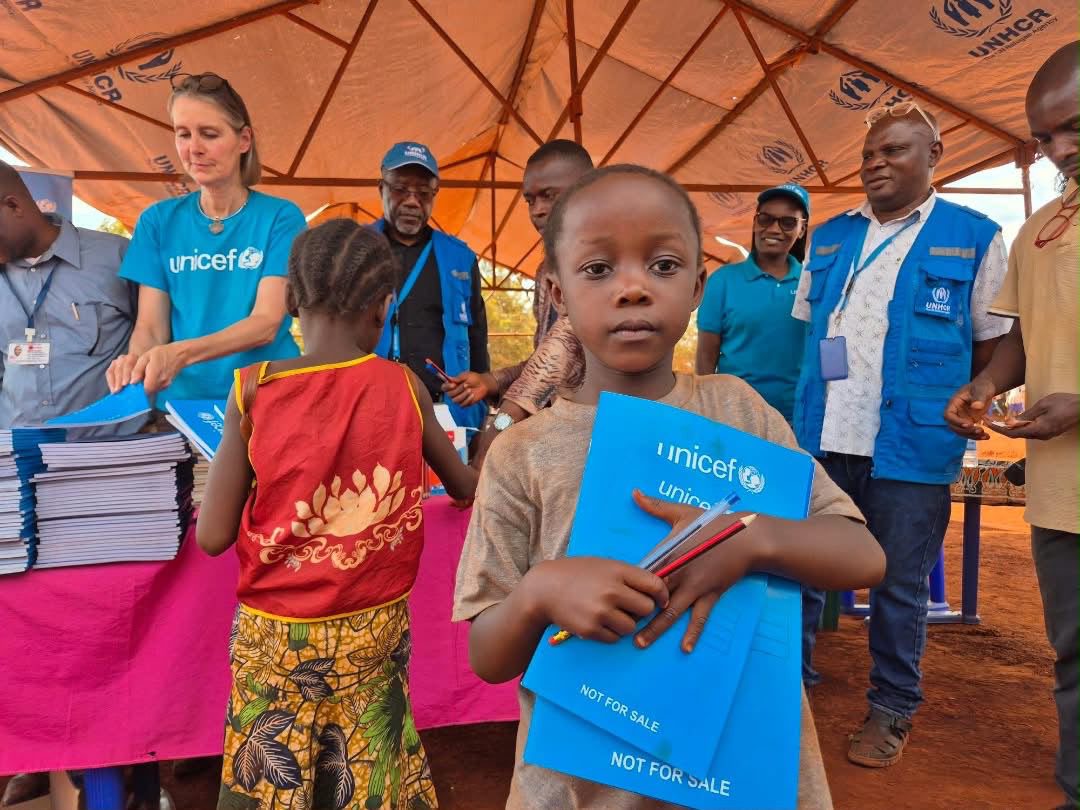
A child from a Congolese refugee family poses with the kit they received during a distribution of school supplies and hygiene products at the Nyarugusu camp in northwestern Tanzania. Burundian refugees living in the same camp have denounced the exclusion of their own children from this assistance (DR/SOS Médias Burundi)
You might also like

Nduta (Tanzania): at least five children tested positive for HIV/AIDS, a first since 2015
At least five under-two-year old children have tested positive for HIV/AIDS in the Tanzania’s Nduta refugee camp. Refugees are so worried and say they fear that the number of children

Malawi : refugees swept away by Cyclone Freddy
Cyclone “Freddy”, with its exceptional longevity, killed more than 400 people in southern Africa, the vast majority of them in Malawi. The toll continues to rise, according to the country’s

Tanzania: authorities to expel former Burundian refugees who have returned to exile
In total, there are 1,048 Burundians to be affected by the measure. They are former refugees who have returned to exile in the past two years after being repatriated to