Burundi : one in four residents lives in Bujumbura province
SOS Médias Burundi
Bujumbura, November 2, 2026 — Bujumbura Province, located in the west of the country, is home to more than a quarter of Burundi’s population. With 3,353,650 inhabitants, it represents 27.2% of the 12,332,977 people counted across the entire national territory, according to the final results of the 2024 General Census of the Population, Housing, Agriculture, and Livestock.
The province is home to Burundi’s commercial capital, where several United Nations agencies and a large part of the central administration are concentrated. It far surpasses the country’s four other provinces in terms of population.
The final census results were published following the signing, on October 20, 2026, of a decree by President Évariste Ndayishimiye authorizing the release of the data. The census covers the population, housing, agriculture, livestock, and community aspects.
More women than men
Of the 12,332,977 inhabitants counted, 6,431,779 are women, compared to 5,901,198 men. Women thus represent slightly more than half of the Burundian population.
The census also counted 2,724,595 ordinary households, 85.2% of which are agricultural households, as well as 2,517 collective households.
Ordinary households consist of people living alone or who usually share the same dwelling and organize their daily lives together. Collective households, on the other hand, refer to people living in institutions or other collective housing structures.
The distribution of the population by place of residence confirms Burundi’s largely rural character : 9,251,639 people live in rural areas, compared to 3,081,338 in urban areas. Nearly three out of four Burundians thus live in the countryside.
Bujumbura leads the way
Bujumbura province tops the demographic ranking with 3,353,650 inhabitants, including 1,669,030 men and 1,684,620 women.
The district of Ntahangwa is the most populated in the province, with 927,964 inhabitants. It alone accounts for 27.7% of the provincial population and 7.5% of the national population. At the other end of the spectrum, the district of Rwibaga is the least populated, with 116,758 inhabitants.
Butanyerera province, in the north of the country, ranks second with 2,530,263 inhabitants, representing 20.5% of the national population. The district of Muhanga is the least populated in this province, with 222,815 inhabitants.
In central Burundi, Gitega province, home to the political capital, has 2,278,227 inhabitants, or 18.5% of the national population. The district of Mwaro is the least populated in this province, with 149,192 inhabitants.
Burunga and Buhumuza bring up the rear.
Burunga province, located in the south of the country, has 2,118,561 inhabitants, representing 17.2% of the national population. The district of Bururi is the least populated, with 189,960 inhabitants.
In eastern and northeastern Burundi, the province of Buhumuza has 2,052,276 inhabitants, representing 16.6% of the total population. It is the least populated of the five provinces. The district of Butaganzwa has the smallest population, with 109,813 inhabitants.
Data to prepare for the future
Beyond simply counting the population, the census results are an important tool for development planning and the allocation of public resources. They should enable authorities to better identify the needs of the population and guide investments in sectors such as education, health, agriculture, and infrastructure.
This data should also help Burundi better plan its development and measure progress. In particular, it will be used to monitor the country’s objectives for improving the living conditions of its population, as well as its commitments within the framework of the United Nations and African Union development programs.
The 2024 census thus provides an updated overview of Burundi’s population and its distribution across the five provinces. This data now forms an important basis for guiding public policies and investment choices in the years to come.
……
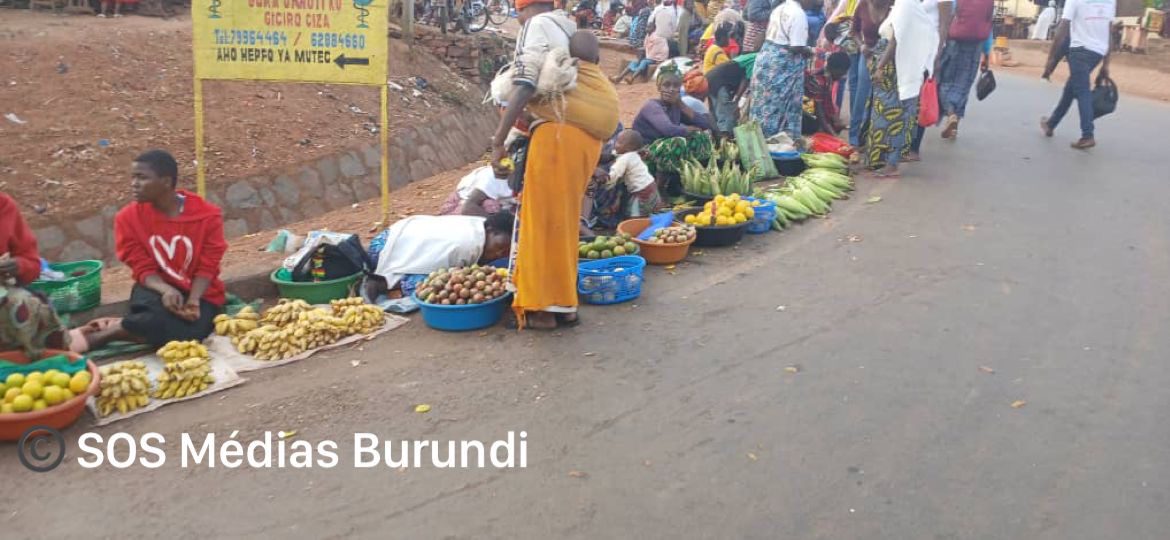
Women sell fruits and vegetables along a main road in Gitega, the political capital of Burundi. The 2024 general census of the population, housing, agriculture, and livestock counted 12,332,788 inhabitants, including 6,431,719 women (52.4%) and 5,901,069 men (47.6%). Women thus represent the majority of Burundi’s population (SOS Médias Burundi)
You might also like

Masisi: the rebellion next to the guarantor of world peace
The M23 rebels who took control of the city of Kithanga in the territory of Masisi, in the province of North Kivu eastern DRC, have installed new positions to secure

Burundi: IDHB notes a precarious lull and a fierce struggle at the top of the regime
The Initiative for Human Rights in Burundi, IDHB, has released its annual report describing a fierce struggle at the top of the Burundian administration which seems to hide a lull

Burundi : over 210 people murdered in less than a year (Iteka League Report)
The Human Rights League Iteka is alarmed by the increasing deterioration of the human rights situation a few months before the legislative elections in Burundi. It fears the worst and