
Burundi : overcrowded prisons, hunger, and lack of care worsen the poverty of inmates
SOS Médias Burundi
Bujumbura, November 4, 2026 — Prison conditions remain alarming in Burundian prisons. In its report covering the period from July to September 2026, the Action of Christians for the Abolition of Torture (ACAT-Burundi) denounces critical prison overcrowding, food shortages, deaths related to health problems, and cases of prolonged detention despite court-ordered release.
According to statistics from the Burundian League for Human Rights, Iteka League, cited in the report, the country’s prisons held 12,521 inmates at the end of September 2026, while their capacity was only 4,294. The occupancy rate thus reached nearly 292%, almost three times the intended capacity.
The situation is particularly worrying in several facilities. Mpimba Central Prison in Bujumbura, Burundi’s commercial capital, held 4,226 inmates in a facility designed for 800. In Muramvya, in the center of the country, 771 inmates were recorded in a facility with a capacity of 100. In Ngozi, in the north, the men’s prison held 1,889 inmates in a facility designed for 400. The prison in Gitega, the political capital, held 1,450 inmates in a facility designed for 400.
In Rumonge, overcrowding is accelerating food shortages.
Murembwe Central Prison, located in the port town of Rumonge, in Burunga province, southwestern Burundi, held 1,489 inmates in September, while its official capacity is 800, according to data from the Iteka League.
ACAT-Burundi emphasizes that this overcrowding significantly accelerates the depletion of food reserves. The report indicates that one ton of beans, based on an official ration of 350 grams per inmate per day, can last approximately eleven days in Bururi prison, but less than two days in Rumonge, due to the high number of inmates.
The report also notes a complete stockout of beans for five days in Rumonge prison in August. This situation compounds the food supply difficulties already reported at this facility. In October, SOS Médias Burundi reported that inmates in Murembwe were deprived of flour and forced to find their own way to supplement their meals.
Read also : [Burundi : Murembwe inmates deprived of flour and forced to buy charcoal at exorbitant prices](https:
).
Food shortages and fifteen deaths in Muramvya
In Bururi, in the south of the country, prisoners went ten consecutive days without beans. In Gitega, the political capital, the shortage lasted two weeks. In Muramvya, in the center of the country, prisoners also experienced a two-week shortage of beans. In Ngozi, in the north, they received them for only seven days during the month of September.
In some facilities, meals have been reduced to flour mixed with water. ACAT-Burundi believes that these food shortages particularly affect sick prisoners and those who do not receive support from their families.
The report also mentions fifteen deaths at Muramvya Central Prison, following an illness whose origin has not been medically confirmed. The observed symptoms, including high fever, diarrhea, and general weakness, led to suspicions of typhoid fever. Three inmates died in August and twelve more in September, according to the organization.
As of September 17, 45 inmates were hospitalized and about 60 others were still in their cells due to illness. ACAT-Burundi believes that overcrowding, food shortages, and a lack of medication have exacerbated the situation.
This alert comes after a previous health crisis at this prison. In early September, SOS Médias Burundi reported the deaths of three inmates and an epidemic affecting several dozen prisoners. The prison administration cited malaria as the cause after intervention by the Ministry of Health.
The ACAT-Burundi report also mentions two deaths linked to difficulties accessing healthcare. At Mpimba Central Prison, Apollinaire Ahishakiye, a diabetic inmate, died on August 8, 2026, after being repeatedly refused transfer to an outside hospital, according to testimonies gathered by the organization’s observers.
In Ngozi, in the north of the country, a prisoner identified only as Bwayeye died on September 25 while being transferred to a hospital. The report indicates that the prison infirmary lacked the essential medications needed to stabilize his condition before his transfer.
The organization also denounces the difficulties in accessing medication in several facilities, which it attributes in particular to irregularities in the allocation of budgets for healthcare.
Inmates kept in prison despite court orders
Beyond the material conditions, ACAT-Burundi notes irregularities in the implementation of court orders. It cites, in particular, individuals who remain in detention despite acquittal or the expiration of their sentences.
In Ngozi, a prisoner identified by the initials MC was reportedly kept in prison after serving his sentence. According to the report, the administration justified this decision with instructions from “higher up.”
In Ruyigi, eastern Burundi, three detainees described as political prisoners, identified by the initials AE and EB and the rank of Second Lieutenant EN, were reportedly still incarcerated despite having already served their sentences.
In Muramvya, two detainees, R.H. and F.N., whose release had already been recommended in the previous report of June 2026, were still in prison during the period under review. The organization also mentions the case of Franck Mananzigamira, who died in August after five years of detention, despite having been acquitted by all judicial bodies.
The report also highlights the burden of pretrial detention. At the end of September, those awaiting trial represented 49.99% of the national prison population, or nearly half of all detainees.
Insufficient releases in the face of new incarcerations
ACAT-Burundi reports that release operations were carried out in some prisons during the quarter. Its teams documented at least 363 releases in Ngozi, Ruyigi, and Muramvya, primarily in September.
In Ngozi, more than 200 inmates who had served at least a quarter of their sentences were released. In Ruyigi, nearly 100 releases were recorded, including those of pretrial detainees released, individuals who had completed their sentences, and inmates suffering from mental health issues. In Muramvya, 63 people prosecuted for minor offenses were released on September 23 as part of an operation to alleviate overcrowding.
However, these measures did not significantly reduce overcrowding. According to figures cited in the report, the prison population increased from 12,216 inmates in June to 12,521 in September 2026.
The organization believes that reducing the prison population requires, in particular, limiting the use of pretrial detention, expediting the processing of legal cases, and ensuring the effective enforcement of release orders.
It also recommends that the authorities guarantee the regular supply of food and medicine to prisons, improve access to water and sanitation facilities, and launch independent investigations into deaths recorded in detention.
The report, published in October 2026, is based on information gathered by ACAT-Burundi observers between July and September in the prisons of Bururi, Gitega, Muramvya, Ngozi, Ruyigi, Rumonge, and Mpimba. The organization specifies that its field data is supplemented by national statistics from the Iteka League and that some information remains approximate due to difficulties in accessing prison facilities.
……
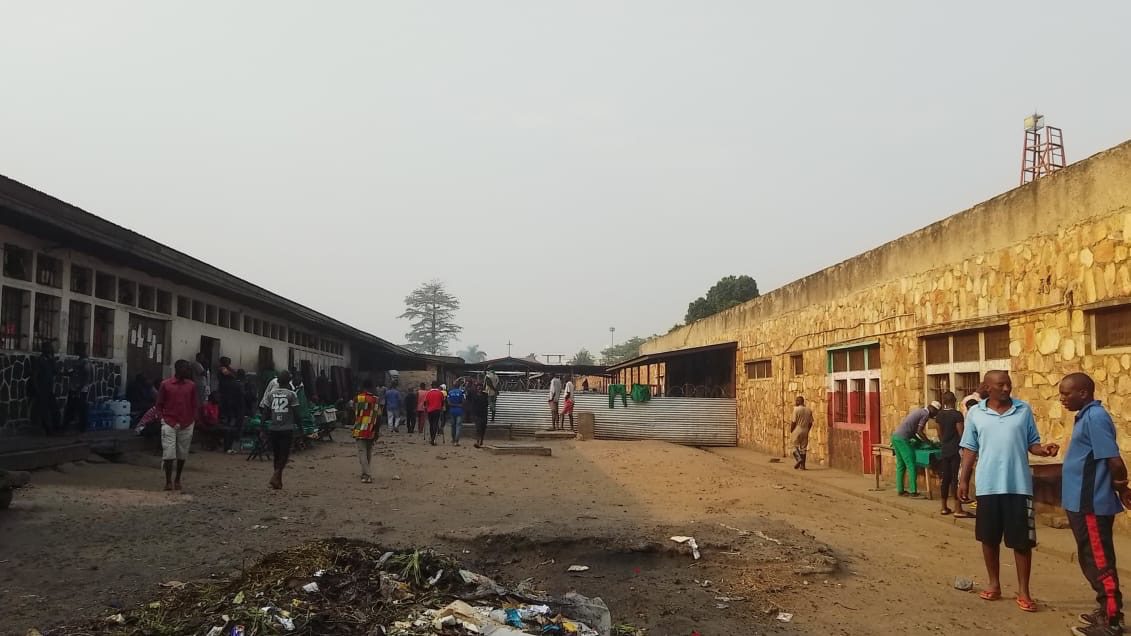
Inmates talk in small groups within the grounds of Bujumbura’s central prison, known as Mpimba. In a report covering the period from July to September 2026, the Burundian organization ACAT-Burundi denounces prison overcrowding, food shortages and lack of care in the country’s prisons (SOS Médias Burundi)
You might also like

Bujumbura: the prosecutor to the Ntahangwa Court of Appeal and his substitute in jail
Merveille de Dieu Cishhayo, Attorney General at the Ntahangwa Court of Appeal in the north of the economic capital Bujumbura and Anastase Habonimana, Deputy General to the same court are

Kaburantwa – DRC : Burundian military convoys en route to South Kivu, amid regional tensions and official silence
SOS Médias Burundi Bujumbura, September 2, 2025 — For three days, heavy Burundian military convoys have been passing through the town of Kaburantwa, in the Cibitoke region of Bujumbura province,


Burundi : the fuel crisis far from being resolved
After more than 18 months of fuel crisis, the Burundian authorities give no hope. They announce measures which don’t last. Activists themselves, propose that a round table on the issue