

Photo of the week : explosion of school dropouts due to hunger
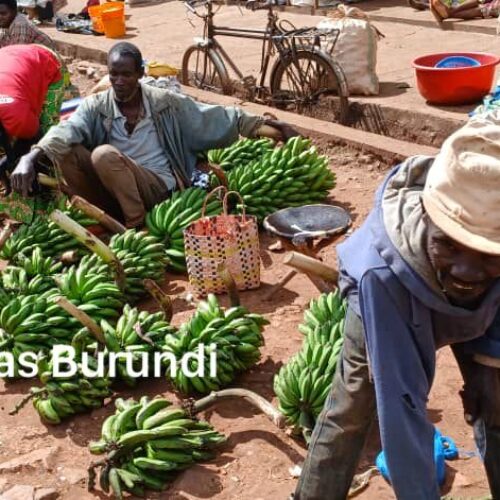
Residents at the village of Buhoro in the district and province of Bubanza (western Burundi) complain about the rise in the price of food products. Going to school on an empty stomach is unbearable for many pupils. They decided to slam the classroom door. A village official reported that they are about twenty to have dropped out of school in his locality alone. Several families say that “we are no longer able to find enough food for our children”. INFO SOS Médias Burundi
With the end of September, prices of food products have increased worryingly in Bubanza as in other provinces of the small East African nation.
Rice, maize, cassava flour, beans etc. increased by 1000 Burundi francs per kilogram, or even more. These are the foods that are found on the plate of Burundians in general.
Commodities whose price has not been increased are generally tubers such as cassava, sweet potato and colocase.
“Families barely eat once a day, at night”, admits a mother.
A taxi-bicycle rider admits he is struggling to feed his family.
“It happens that I earn three thousand Burundi francs a day. While the kg of rice costs the same amount, beans cost 2300 francs per kg, cassava flour costs 1700 and maize flour 2300 francs per kg, a sum that I earn per day, I cannot support my family”, he laments.
Consequences of this scarcity of food products
“I saw children who looked like they were malnourished,” said a mother I met at the Bubanza market.
Consequence: children began to leave the classes. This is the case for some schoolchildren in the Matonge district, north of the town of Bubanza.
According to a hill official, about twenty schoolchildren have dropped out of school.
“It’s because of hunger that children no longer go to school, they don’t eat well,” he says.
Wishes
“The government should let food products from abroad enter Burundi, without paying taxes at the border”, propose traders of essential products met in a market in the capital of this western province of Burundi. .
“In reality, domestic production has not been good and is not enough to feed the ever-growing population. This is compounded by the lack of rain and its late arrival. The government should liberalize food trade and invest in it. sector,” said a farmer.
School canteens supplied by the WFP (World Food Programme) are in some schools in Bubanza. In these establishments, there are no dropouts.
However, residents regret that this UN agency, which distributes food collected inside the country, has therefore contributed to the reduction of dry food (beans, rice).
“This year has been declared an agricultural year by the Head of State. It is rather a year of crisis in the supply of agricultural products to Bubanza, yet a breadbasket of rice, beans, cassava, bananas”, deplores an official.
Speculation on FOMI fertilizers (organo-mineral fertilizers) has caused poor rice production, insufficient irrigation water with failures in the development of the Kajeke dam (Bubanza province).
Several residents who are over fifty years old testified that “it is the first time in the history of Burundi that we have seen prices rise at this rate and face such a high cost of living situation”. Our photo : pupils at a secondary school in the Buhoro locality, November 2022
You might also like

Masisi: the rebellion next to the guarantor of world peace
The M23 rebels who took control of the city of Kithanga in the territory of Masisi, in the province of North Kivu eastern DRC, have installed new positions to secure
Gitega : prices have become unaffordable
Several families in the city of Gitega (political capital) are unable to attend Christmas and New Year markets. All products have experienced an excessive increase in prices, leaving residents unable


Tanzania: UNHCR steps up its campaign for the return of Burundian refugees
The UN High Commissioner for Refugees Filippo Grandi was visiting Tanzania this week. He strongly argued for the “voluntary” repatriation of Burundian refugees in Tanzania. Those concerned fear drastic measures