
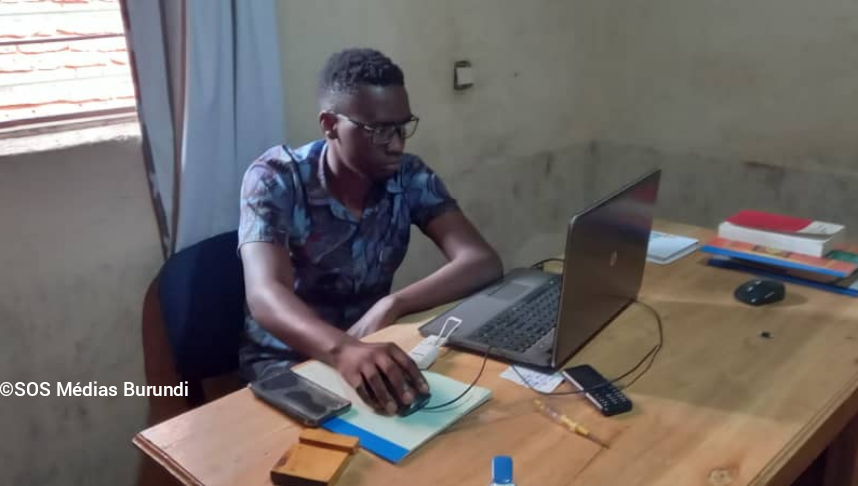
Gitega: a young man succeeds to manufacture light bulbs and solar panels
Landry Nikiza is a laureate of a Polytechnic University of Burundi. He concentrates his efforts in producing light bulbs and solar panels in Gitega city (political capital). However, this young entrepreneur says he lacks resources that he normally has to order from China. INFO SOS Médias Burundi
His factory is located in Magarama in the town of Gitega.
“I initiated this project to manufacture solar bulbs and panels in 2021. Based on the skills I have acquired, I reduce the power consumption of bulbs from 220 volts to 12 volts”, explains Nikiza, young laureate of the Polytechnic University of Gitega.
His project was carried out with the financial support of the Youth Economic Empowerment Program (PAEJ).
In addition to light bulbs, the young man manages to manufacture solar panels.
“We have consistent markets in different provinces. This requires a large production that we had to hire dozens of young people in our factory dubbed Nikiza Bio Energy”, he says.
However, he claims to have difficulty in “easily accessing raw materials”.
“We are forced to get supplies from China”, he says.
You might also like

Burundi: Prime Minister suspends fishermen associations’ fundraising
More than 40 million Burundian francs unduly collected by the Burundi Fishermen’s Federation will be paid into the public treasury. A decision taken by the Prime Minister Gervais Ndirakobuca, after
Non-compliant metal construction materials worry regulators
SOS Médias Burundi Bujumbura, March 26, 2026 — Metal construction materials imported into Burundi and used on numerous building sites are reportedly far from meeting the quality and durability standards

Mahama (Rwanda): exponential rise in food prices
In less than five months, almost all food products have doubled or even tripled in price. Refugees point out that the cash distributions they receive may not even be enough