
Burundi: HRW demands the release of Floriane Irangabiye
Human Rights Watch believes that the conviction of the Burundian journalist breaches the right to freedom of expression. It says that authorities should release Floriane Irangabiye and end what they describe as a politicized trials. Clémentine de Montjoye, researcher in the Africa division of Human Rights Watch explains that the conviction and sentence imposed on Floriane Irangabiye in Burundi is motivated by a vague crime and likely to be used arbitrarily to prosecute people expressing critical opinions, in violation of freedom of expression. INFO SOS Médias Burundi
Burundian journalist Floriane Irangabiye’s sentence violates her rights to freedom of expression and to a fair trial, Human Rights Watch said Thursday.
Froriane was sentenced for “undermining the integrity of the national territory” on January 2, 2023 by the High Court of Mukaza. She has to serve 10 years in prison and was fined to pay one million Burundian francs (480 USD).
Floriane Irangabiye’s lawyers appealed on January 23.
According to the court’s verdict, her conviction follows a program broadcast on Radio Igicaniro in which she participated in August 2022, alongside a human rights defender and a journalist in exile, who both criticized Burundi’s human rights record.
“The conviction of Floriane Irangabiye highlights the manipulation of the judicial system by the Burundian authorities to silence critical voices,” said Clémentine de Montjoye, researcher in the Africa division of Human Rights Watch. “If the Burundian authorities are sincere about their desire to introduce reforms, they should end their vendetta against those they perceive to be opponents of the government, including the dozens of journalists and human rights defenders who fled after the country’s political crisis in 2015.”
During Floriane Irangabiye’s trial on December 16, the prosecution based its charges on her work as a columnist and host on Radio Igicaniro, an online media outlet that broadcasts critical content and debates on Burundian politics and culture.
According to the verdict after Floriane Irangabiye’s trial, the prosecution relied on her regular trips between Rwanda, where she was based, and Burundi, and accused her of criticizing the Burundian government and to encourage young people to overthrow the government, in particular because of her participation in meetings with young Burundians in exile in Rwanda.
The prosecution also cited photos in which she appears with Rwandan President Paul Kagame and former Burundian President Pierre Buyoya (who died of Covid-19 in Paris in December 2020), who was found guilty in absentia of the assassination in 1993 of his successor, Melchior Ndadaye, and sentenced to life imprisonment a month before he died.
The court’s verdict and long prison sentence appear to be motivated by the work of Floriane Irangabiye, who as a journalist interviews government critics on a radio show. The court rejected arguments based on the right to freedom of expression guaranteed by the Constitution of Burundi.
Floriane Irangabiye was taken into custody on August 30, 2022, after being intercepted by National Intelligence Service agents on her way to a relative’s funeral in Matana, southern Burundi, according to a member of the family.
You might also like
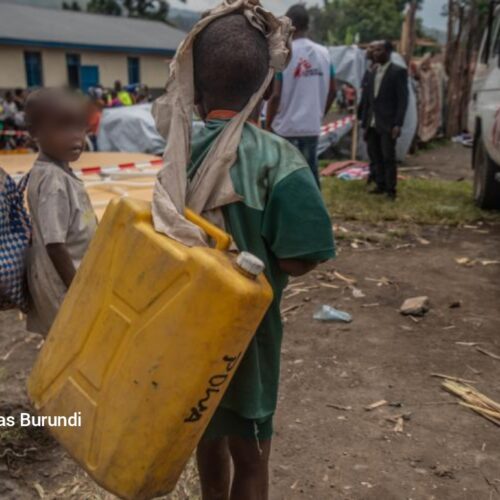
North Kivu : MSF warns of a humanitarian crisis in the eastern part of the DRC following insecurity
A humanitarian disaster is underway in the province of North Kivu in eastern DRC, Médecins Sans Frontières (MSF) has warned. This international medical organization calls on the international community and
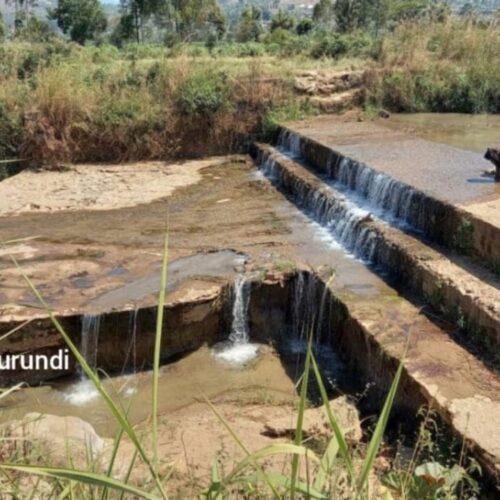
Persistent tensions on the border : the Malagarazi River is sweeping away the Burundian land, the Rutana court reacts firmly
SOS Médias Burundi Rutana, October 13, 2025 — As the Malagarazi River changes its course and sweeps away Burundian land to the benefit of Tanzania, border tensions are intensifying. The
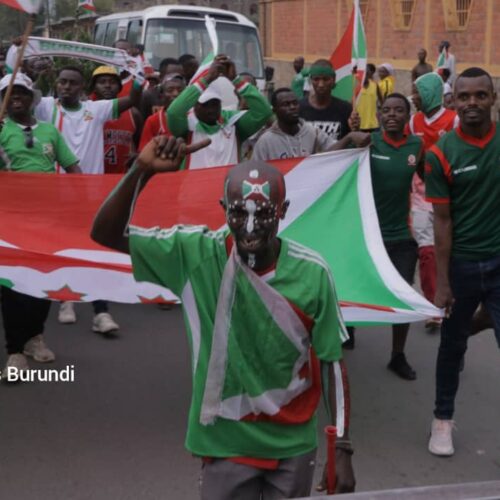

Burundi-Cameroon : no need to sing victory before the war
Burundi will not participate in AFCON 2024. It was eliminated even if the Intamba fans sang victory before the game. The Indomitable Lions were not defeated by the Intamba. INFO