Burundi: on the road to the abolition of ethnic quotas in institutions?
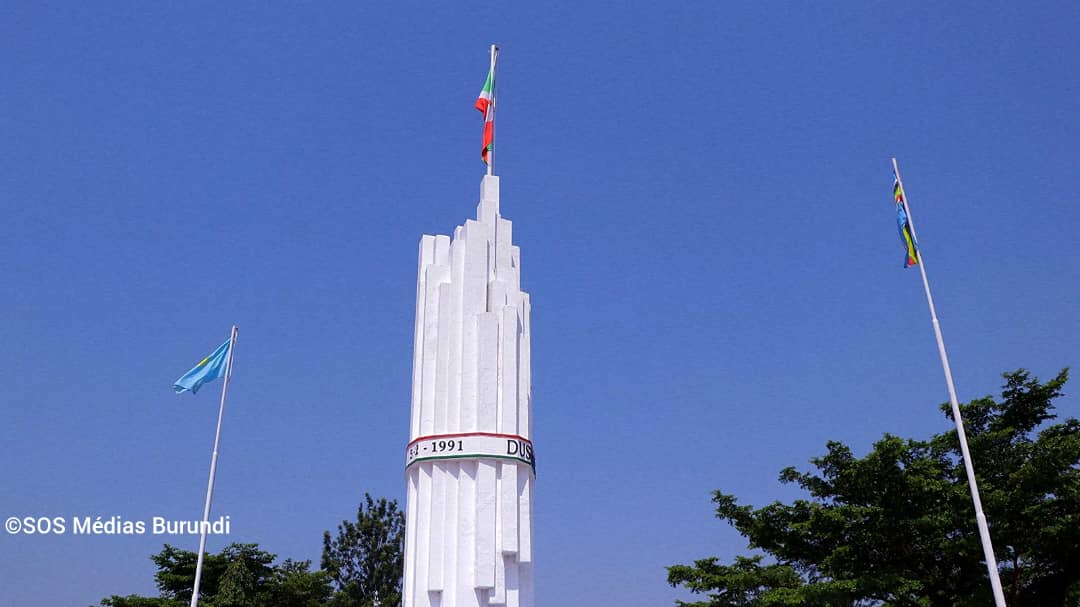
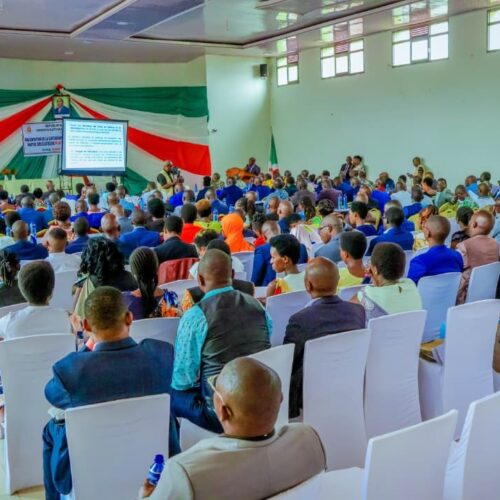
Burundi celebrated the 32nd anniversary of the national unity charter on Monday. In Bujumbura, the economic capital, ceremonies were presided over by the speaker of the senate Emmanuel Sinzohagera who said the upper house of parliament will analyze whether the application of the ethnic quotas is still necessary. INFO SOS Médias Burundi
Two years before end of the senate term, the body plans to see if it could amend the article of the Constitution about ethnic quotas.
According to Mr. Sinzohagera, “it is high time that people be appointed, entrusted with functions thanks to their skills and not their ethnicity”.
The speaker of the Burundian senate describes ethnic considerations as “poison” that “we have swallowed and which will be difficult to vomit”.
“It turns out that it is time to change this article of the constitution, the representatives of the people will make it known to the population and to the President of the Republic”, he declared.
Secretly, the engine is running
According to Emmanuel Sinzohagera, the process has already started.
“One day, I spoke with administrators appointed on the basis of their ethnicity: to a Tutsi, I told him to speak to me in the Tutsi language and the same for a Hutu. They do not have a different language, they are all Burundians “, defended this politician and senior official of the United Methodist Church.
An event that loses more and more meaning
Most of the participants were children from the surrounding localities of Vugizo hill, in the urban commune of Mukaza, where the National Unity monument is located.
There were a lot of empty places, unlike previous years when we could see students from certain secondary schools coming in big buses.
National Unity Day has been celebrated since 1991. It was initiated by former President Pierre Buyoya (who died of Covid-19 in December 2020 in Paris) after the killings of 1988 in the municipalities of Ntega and Marangara ( provinces of Kirundo and Ngozi, northern Burundi) which, according to the UN, left more than thirty thousand dead.
Ethnic quotas in institutions were set by the Arusha Agreement of August 2000 which also ended a decade of civil war and imposed ethnic quotas by sharing power between the different social strata of the country , an agreement that also allowed former Hutu rebels to join the army, then dominated by the Tutsi minority.
You might also like
Masisi: resurgence of hostilities between the FARDC and the M23
Fighting between the FARDC (DRC army) and M23 rebels is going on in several parts of Masisi. After taking several localities of Matanda and Kamuronza groupment in Masisi region, the
Burundi : Burundians are ungrateful (President Ndayishimiye)
Burundian President Évariste Ndayishimiye said Wednesday that Burundians are ungrateful, refusing to take responsibility for the fuel shortage which he describes as “a common challenge.” In a message to the

2027 presidential election : CENI maps Gitega and prepares the electoral ground
SOS Médias Burundi Gitega, August 20, 2026 — The Independent National Electoral Commission (CENI) presented the electoral map of Gitega province, in central Burundi, home to the country’s political capital,