
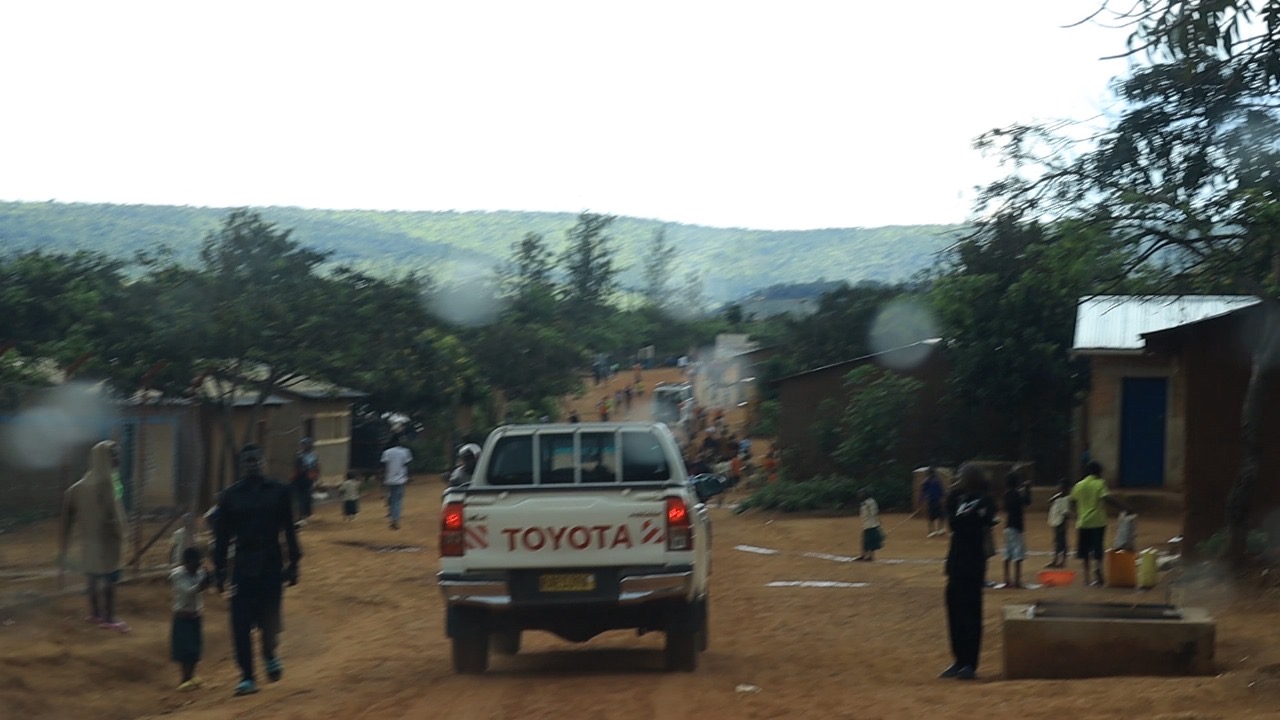
Mahama (Rwanda) : a WFP data update raises concerns
SOS Médias Burundi
Mahama, October 13, 2025 — The World Food Program (WFP) has launched an exercise to update the data of its beneficiaries in the Mahama refugee camp in eastern Rwanda. Officially, this is a simple census to harmonize the figures. But among the refugees, mistrust is growing : many fear a further reduction in food assistance.
The operation concerns refugees in the first and second social categories, who receive 5,600 and 2,800 Rwanda francs per person per month, respectively. In addition, they also receive fuel gas for cooking. But according to the WFP, a significant gap exists between the number of cash recipients and the number of households actually receiving gas.
“Are there refugees who receive the money without being present in the camp? Or others who prefer cash and do without gas?” asks a census supervisor.
The exercise, which targets only chiefs of households—holders of bank cards used for withdrawals from Equity Bank mobile ATMs—should shed more light on the situation, according to WFP officials.
Cards left behind by refugees who have left
According to an internal source in the camp contacted by SOS Médias Burundi, the problem stems from the undeclared mobility of many refugees.
“Many have returned illegally to their country of origin or gone to look for work elsewhere, but have left their cards with relatives or neighbors,” she explains.
Some Congolese have reportedly entrusted their cards to other families who have remained in the camp. Others, notably Burundians, are said to have left for Kigali, Uganda, Kenya, Zambia, or even Dubai, leaving their aid cards with third parties.
Still others leave them with shopkeepers or creditors before going to work in the surrounding area.
“These people no longer come to collect gas, hence the discrepancy in WFP statistics,” our source continues.
Feared consequences
The WFP believes the operation will correct inconsistencies and reduce spending, in a context of declining donor contributions.
“The goal is not to punish, but to make aid more consistent with reality,” confides a WFP official.
“There will undoubtedly be adjustments, but they will be corrected if necessary.”
The refugees, for their part, fear the worst.
“If the chief of the household is no longer here and the card is blocked, how will the other members survive?” worries a Burundian mother.
Many are calling on the UNHCR and WFP to conduct a general census to officially replace absent chiefs of households, rather than blocking their assistance.
A camp under pressure
According to several local sources, the registration update campaign is taking place over ten days and has already caused an unusual influx of refugees returning temporarily to register.
“The camp is full right now; everyone wants to avoid being removed from the registry,” says a refugee.
Camp residents are also urging the WFP to increase its monthly assistance, which they consider insufficient in the face of rising prices.
Mahama camp, the largest in Rwanda, currently shelters more than 76,000 refugees, including more than 40,000 Burundians, according to UNHCR figures.
You might also like
Musenyi : chronically ill people forced to survive in overcrowded sheds
SOS Médias Burundi Musenyi, April 28, 2026 — At the Congolese refugee site in Musenyi, Musongati district, Burunga province, in the south of the small East African nation, living conditions
Uvira : due to lack of schools for their children, some Burundian asylum seekers opt for repatriation
Burundians living in the transit camps of Kamvimvira and Sange in the province of South Kivu in the east of the Democratic Republic of Congo are asking the UNHCR to

 : a WFP data update raises concerns)
Kakuma, Kenya : a Burundian refugee missing
SOS Médias Burundi Kakuma, March 27, 2026 — The family of Fabien Ndayegamiye is issuing a desperate plea : this Burundian refugee, originally from Makamba in Burunga province, southern Burundi,