
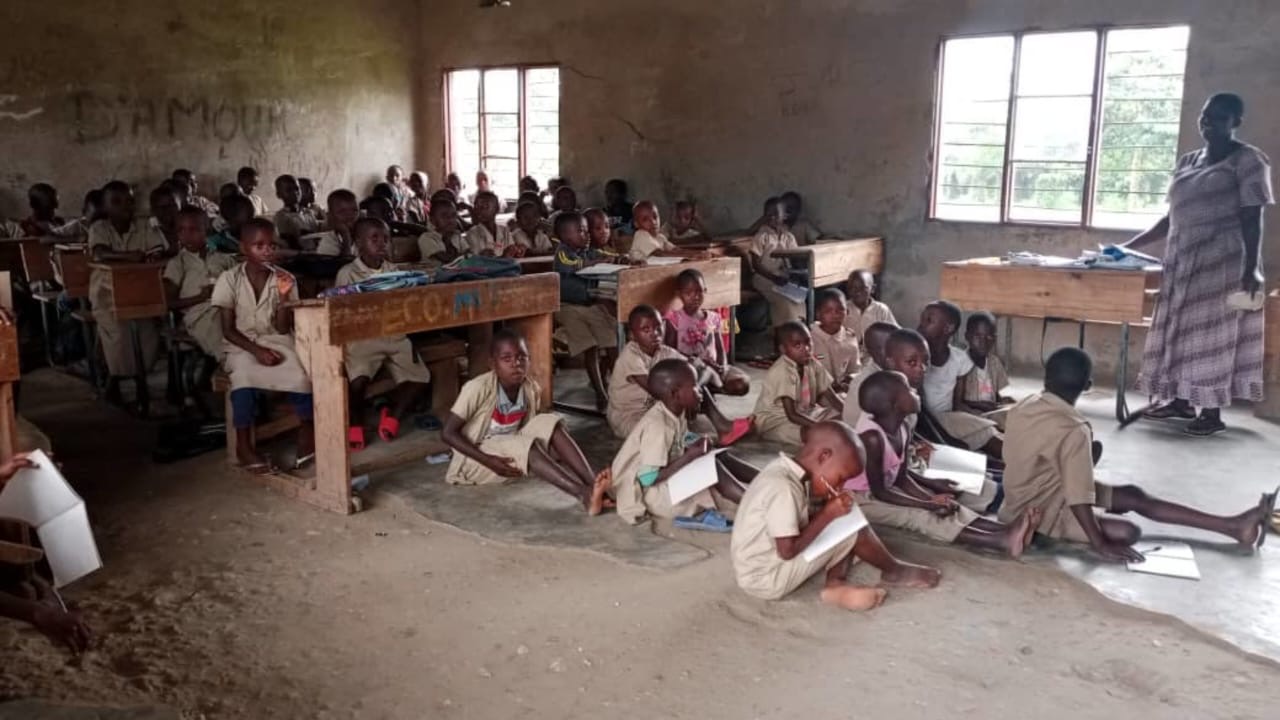
Burundi : STEB calls for recognition of teachers’ occupational illnesses
SOS Médias Burundi
Bujumbura, October 27, 2025 – On the occasion of the International Day for Disaster Risk Reduction, STEB highlighted the vulnerability of teachers to illnesses related to their working conditions.
The President of the Burundi Education Workers’ Union (STEB), Rémy Nsengiyumva, took advantage of the celebration of this day, Friday, October 24, 2025, to raise awareness of the consequences of occupational illnesses that threaten Burundian teachers.
In a statement released on this occasion, Mr. Nsengiyumva reiterated that teachers should, in principle, perform their duties in good working—and therefore living—conditions. However, he laments, many work in environments marked by multiple nuisances : excessive cold or heat, fatigue, noise, and other interference.
According to him, these conditions favor the development of so-called occupational diseases, which are still poorly recognized in Burundi. He regrets the absence of a national occupational health and safety policy, as well as an updated list of occupational diseases. The only existing one, he emphasizes, dates back to the colonial era, in 1965.
The STEB president also points out that since 2010, many workers, particularly teachers, have been redeployed across the country. Many have been forced to leave their families and found themselves isolated in remote locations. This situation, he explains, leads to social isolation, overwork, increased fatigue, and the payment of double rent—all factors that, according to him, contribute to the development of occupational diseases that are sometimes incurable or even fatal.
Faced with this reality, the STEB president advocates for an urgent update of the legal framework to guarantee the health and safety of workers. He emphasizes that “times, the climate, and working conditions have changed considerably” and that it is necessary to adapt the legislation to these new realities.
Finally, Mr. Nsengiyumva points out that the Burundian Labor Code, like International Labor Convention No. 155, enshrines the right to safety and health of workers in their workplaces.
Adopted on June 22, 1981, by the International Labor Organization (ILO), this convention establishes standards for the safety and health of workers. It aims to prevent accidents and occupational diseases by defining the fundamental principles of national policies, the responsibilities of employers, workers, and public authorities, as well as inspection and penalty mechanisms.
For now, the authorities of the Ministry of Labor have not yet responded to STEB’s appeal, but several teachers hope that their situation will finally be taken into account in public occupational health policies.
You might also like

Cibitoke : a sixty-year-old brutally killed in Mabayi
A tragedy occurred during the night of January 24-25 in the district of Mabayi, located in the province of Cibitoke, in northwest Burundi. Berchmans Sinzobakwira, aged 64 and father of
Bubanza : three inmates escape from prison before being recaptured during the night
SOS Médias Burundi Bubanza, May 11, 2025 – A nighttime escape briefly disrupted security around the Bubanza central prison (western Burundi). Three men charged with robbery attempted to escape during

Ituri : 25 civilians killed in ADF attack in Irumu
SOS Médias Burundi Irumu, January 26, 2026 – Militiamen from the Allied Democratic Forces (ADF) again attacked the village of Apakolu, in the Walese Vonkutu chiefdom of Irumu territory in