
Buhumuza : cholera outbreak, refugee buses at the heart of concerns
SOS Médias Burundi
Ruyigi, December 28, 2025 – Residents of the districts of Butaganzwa and Ruyigi, in Buhumuza province in eastern Burundi, are expressing serious concern about the risk of a cholera outbreak, following reports of cases in the Busuma refugee camp. They are pointing to inadequate health measures, particularly in the transportation used to move refugees.
Fear of cholera is spreading in the districts of Butaganzwa and Ruyigi, in Buhumuza province in eastern Burundi, after several cases were recorded in the Busuma refugee camp, recently established in Ruyigi. Since early December, this camp has been hosting more than 62,000 Congolese refugees fleeing the fighting in eastern DRC.
Residents are denouncing the use of public transport buses to bring refugees to the camp, which then pick up ordinary passengers without any health checks. This is compounded by the consumption of raw or undercooked food, a lack of drinking water, and insufficient latrines, all factors that increase the risk of infection.
According to a count by SOS Médias Burundi, more than 30 refugees have already died from cholera since the arrival of this second wave. Health authorities assure that measures are underway to contain the disease and prevent its spread to surrounding communities.
This health crisis is occurring within a tense security context. The refugees are fleeing clashes between the Congolese army (FARDC), supported by the local Wazalendo militias backed by Kinshasa and the FDNB (Burundi National Defense Force), and the M23 rebels.
Security and humanitarian context
The small east African nation has taken in approximately 90,000 Congolese refugees since early December, in addition to more than 70,000 others who sought refuge in Burundi earlier this year after the fall of Bukavu and Goma, the capitals of South Kivu and North Kivu provinces.
Faced with the M23’s advances in the Rusizi Plain since early December, Burundi has withdrawn a large portion of its troops deployed in the DRC since March 2023. Clashes continue despite the Washington Agreement signed on December 4, 2025, between the DRC and Rwanda, under the US mediation. Burundi participated in the agreement as an observer, represented by President Évariste Ndayishimiye.
In this context, several Congolese authorities in South Kivu, including Governor Jean-Jacques Purusi, who had retreated to Uvira after the fall of Bukavu, the provincial capital, earlier in the year, fled to Burundi after Uvira was captured on the night of December 9-10, 2025. The rebels subsequently announced their withdrawal from this strategic city, located just a few kilometers from Bujumbura, Burundi’s commercial capital, under certain conditions.
Reactivated in 2021, the M23, composed primarily of Congolese Tutsis, now controls several strategic locations in North and South Kivu, including their respective capitals, Goma and Bukavu, as well as significant mining areas.
Among these is the strategic Rubaya area in the Masisi territory (North Kivu), one of the world’s largest coltan deposits, supplying a significant portion of the tantalum used in the electronics industry and new technologies.
The movement is now part of the Congo River Alliance (AFC), led by Corneille Nangaa, former president of the Independent National Electoral Commission (CENI), which advocates for the establishment of a federal state in the DRC.
Kinshasa accuses Kigali of supporting the M23, while Rwanda denounces the alleged support of the DRC and Burundi for the Democratic Forces for the Liberation of Rwanda (FDLR), a Rwandan Hutu armed group whose members are accused of participating in the 1994 genocide against the Tutsis.
The small east African nation has already taken in nearly 90,000 Congolese refugees in December alone, adding to the more than 70,000 who arrived earlier this year, increasing humanitarian and security pressures in several provinces of the country.
You might also like
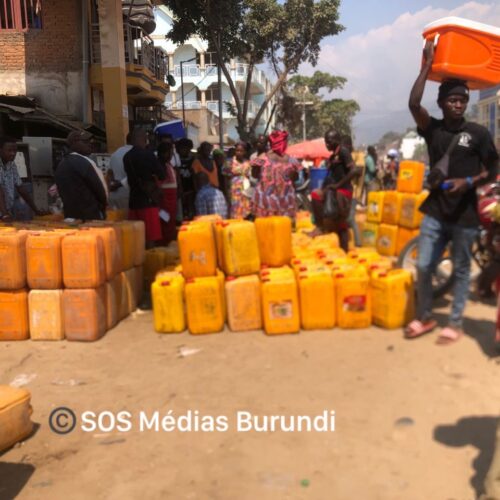
Uvira: the fuel crisis in Burundi is driving up its price in Congo
Since July 5, gasoline cost has gone up in Uvira, in the province of South Kivu, eastern DRC. A liter costs 8,000 Congolese francs, up from 3000 francs. For good
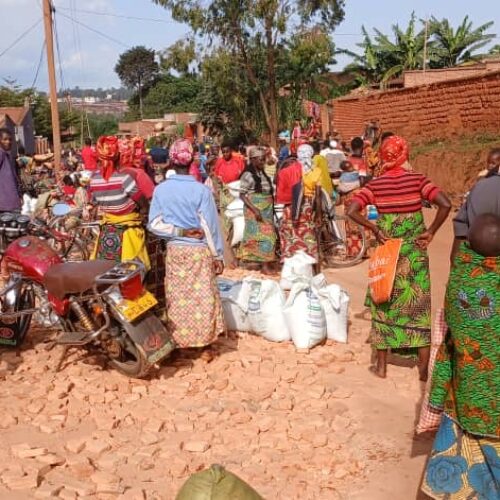
Gitega : the fertilizer shortage threatens crops and food security
SOS Médias Burundi Gitega, February 24, 2026 – As the planting season for the farming season B draws to a close, farmers in Gitega are denouncing insufficient, delayed, or incomplete


Rwanda : the UNHCR recruits refugees for Canada
UNHCR-Rwanda is in a sensitization phase in the refugee community for economic immigration to Canada. After Kigali, it is the turn of the Mahama camp. The aim is seeking qualified