
DRC – Uvira : Gatumba border closed, thousands of Congolese and Burundians affected
SOS Médias Burundi
Uvira, January 5, 2026 – Since December 10, 2025, the Gatumba border between the DRC and Burundi has remained closed, disrupting trade, education, and access to healthcare for people on both sides. This measure comes amid security tensions linked to the presence of the M23 and the persistent instability in eastern DRC.
A strategic border at the heart of social and economic exchange
Many Congolese and Burundian citizens are calling for the reopening of the Gatumba border, closed by Burundian authorities since December 10, 2025. This closure is severely impacting the sick, schoolchildren, students, and traders living between the Democratic Republic of Congo and Burundi.
The city of Uvira is located a few kilometers from Bujumbura, Burundi’s commercial capital, where United Nations agencies and the central government are concentrated. Uvira is considered the economic heart of this small east African nation : due to a fuel shortage that has persisted in Burundi for five years, Bujumbura residents turn to Uvira for supplies, while some traders resort to smuggling to compensate for the supply disruptions.
Located approximately 7 kilometers from the city of Uvira, the Gatumba border crossing is a vital artery for social and economic exchange between the two countries. Since its closure, many families have found themselves in difficult situations, particularly regarding healthcare.
Patients and families stranded
Paul M., a 70-year-old father, explains that the border closure prevents him from accessing specialized medical care in Burundi. “I had an appointment with a neurology specialist at Kira Hospital, but the border is closed. Here in Uvira, there are no specialist doctors or scanners, and medical care is very expensive compared to Burundi. We are asking the Congolese Minister of Foreign Affairs to engage in discussions with the Burundian government to reopen the Gatumba border crossing,” he pleads.
Education severely disrupted
The education sector is also severely affected. Several primary and secondary school officials say that many students and teachers are currently in Burundi and cannot return to Uvira.
“The second term is scheduled to resume on January 6, 2026, but many of our students and teachers are stuck in Burundi. We are asking the Burundian authorities to open the border so that our compatriots can return and resume their studies,” explains a school principal.
Burundian workers deprived of income
On the Burundian side, some workers who had been working in Uvira also say they are victims of this closure. Temporarily refugees in Burundi, they claim to have no source of income.
“Our colleagues who remained in Uvira are living in peace and continuing to work. We, who are in Burundi, have no money, because our jobs are in Congo. We are demanding the reopening of the Gatumba border,” one of them testified.
Security context : M23 and FDLR
As a reminder, the land border between Burundi and the DRC was closed on December 10, 2025, a few hours after the M23 rebels seized Uvira on the night of December 9-10. Despite the M23’s announcement of a withdrawal from the city, the border remains closed.
President Évariste Ndayishimiye addressed this closure on December 26 during a public broadcast. The head of state explained that this decision was also linked to the persistent insecurity in eastern DRC, an area partially controlled by the M23 rebel movement. He acknowledged that the situation negatively affects trade between the two countries, but stated that “the choice is clear between money and security,” adding that Burundi had chosen security.
Reactivated in 2021, the M23, composed mainly of Congolese Tutsis and integrated into the Congo River Alliance (AFC) led by Corneille Nangaa, former president of the Congolese Independent National Electoral Commission (CENI), now controls several strategic areas in North and South Kivu, including Goma and Bukavu, the capitals of the two Kivus, as well as the Rubaya mining site, one of the world’s largest coltan deposits. This strategic mineral provides a significant portion of the world’s tantalum used in the electronics industry and new technologies. The AFC/M23 advocates for the establishment of a federal state in the DRC. Kinshasa accuses Kigali of supporting the M23, while Rwanda denounces the alleged support of the DRC and Burundi for the FDLR, a Rwandan Hutu armed group whose members are accused of participating in the 1994 genocide against the Tutsi. Despite Rwandan denials, a report by the UN Group of Experts mentions the presence of 5,000 to 7,000 Rwandan soldiers alongside AFC/M23 fighters.
Burundian military deployment and human costs
On the ground, clashes continue despite the Washington Agreement, signed on December 4, 2025, between the DRC and Rwanda, under the US mediation. This agreement confirms the failure of diplomatic initiatives and the considerable human cost of a war for which Burundian soldiers continue to pay the price, in the shadows and in silence. Burundi participated in this agreement as an observer, represented by President Évariste Ndayishimiye.
Burundi has deployed more than 29,000 troops in eastern Congo, of which approximately 10,000 remain on the ground, according to an internal report from the Congolese Ministry of the Interior and Security consulted by SOS Médias Burundi. These Burundian troops are fighting alongside the FARDC, the Congolese loyalist army, and the Wazalendo militias, supported by Kinshasa, against the M23.
Recently, the Secretary General of the CNDD-FDD, the ruling party, Révérien Ndikuriyo, confirmed that Burundian soldiers are still present in the DRC, without providing precise figures on the withdrawal of some troops, and boasting that: “We return whenever we want, in accordance with the signed agreements; it’s practically our home.”
You might also like
Kakuma, Kenya : a Burundian refugee missing
SOS Médias Burundi Kakuma, March 27, 2026 — The family of Fabien Ndayegamiye is issuing a desperate plea : this Burundian refugee, originally from Makamba in Burunga province, southern Burundi,
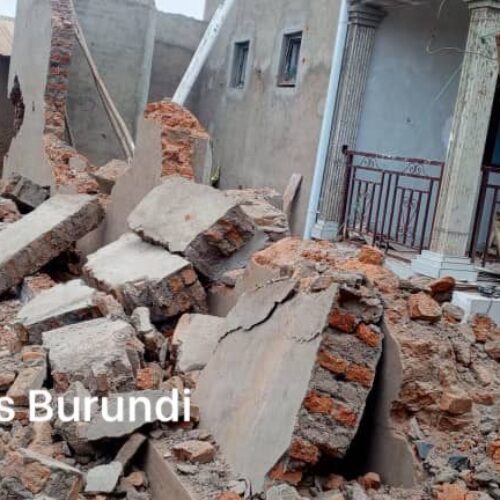
Malawi – Dzaleka : armed robbery of a Rwandan refugee, more than 800,000 kwachas stolen
SOS Médias Burundi Dzaleka, April 17, 2025 – An armed robbery was committed Tuesday night at the Dzaleka refugee camp, located in Dowa district, central Malawi. The victim, a Rwandan
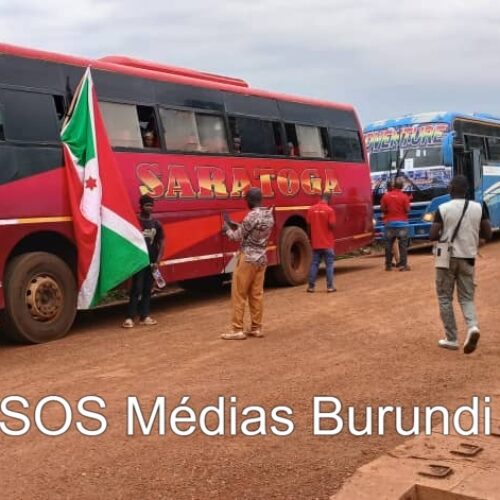

Tanzania : Nduta camp permanently closed
SOS Médias Burundi Nduta, April 30, 2026 — As of Thursday, April 30, the Burundian refugee camp in Nduta, Tanzania, is no longer operational. It has been officially closed, and