Busuma : attempts to return to DR Congo, Congolese refugees arrested and forcibly returned to the camp
SOS Médias Burundi
Ruyigi, January 28, 2026 — In recent days, several Congolese refugees from the Busuma camp, located in the district of Ruyigi, Buhumuza province, in eastern Burundi, have been arrested while attempting to leave the camp to return to the Democratic Republic of Congo (DRC). Driven by what they consider unbearable living conditions, these refugees are trying to return to their country of origin despite the official closure of borders and the lack of formal authorization from the United Nations High Commissioner for Refugees (UNHCR) and the Burundian government for facilitated returns.
According to information gathered from refugees and local sources, these return attempts are systematically thwarted by security forces. Refugees are being apprehended at police checkpoints in Ruyigi and Gitega in the center of the country, and in Kamenge, in the commercial capital Bujumbura, located just a few kilometers from the border with the DRC. Other arrests are also being carried out by members of the Imbonerakure, the youth wing of the CNDD-FDD, the ruling party in Burundi, particularly in the Kwisumo and Rusengo areas of Buhumuza province. After being apprehended, the refugees are forcibly returned to the Busuma camp.
An overcrowded and under-equipped camp
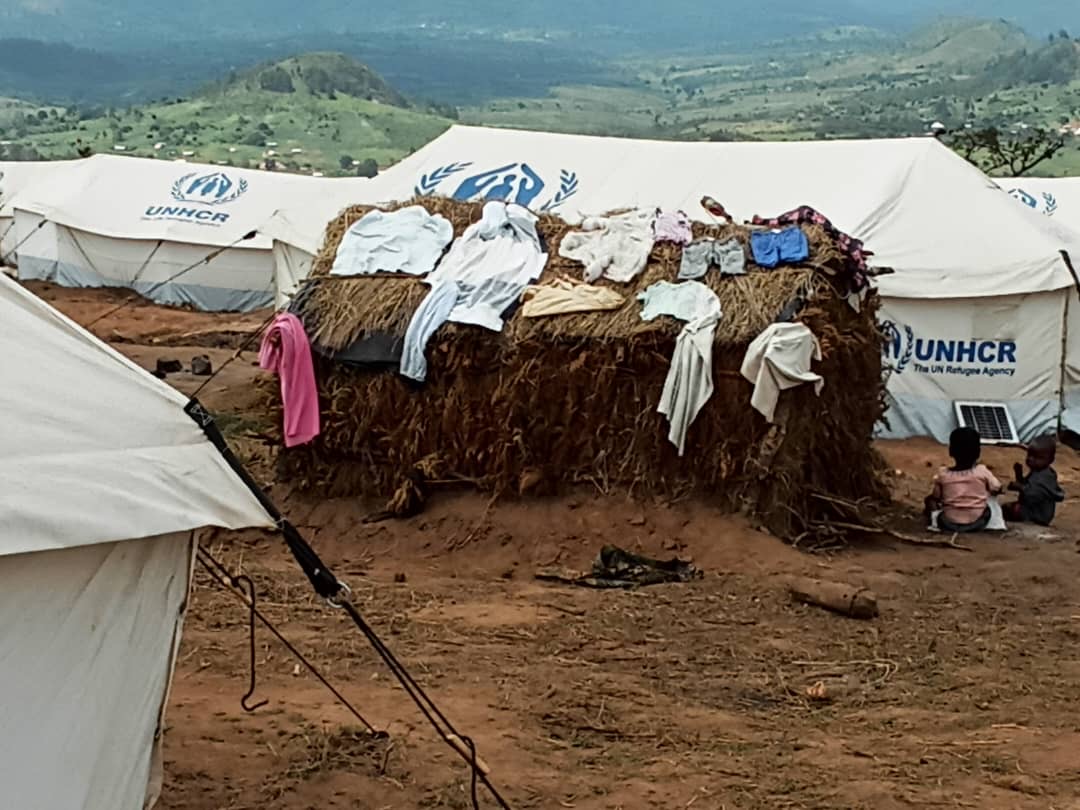
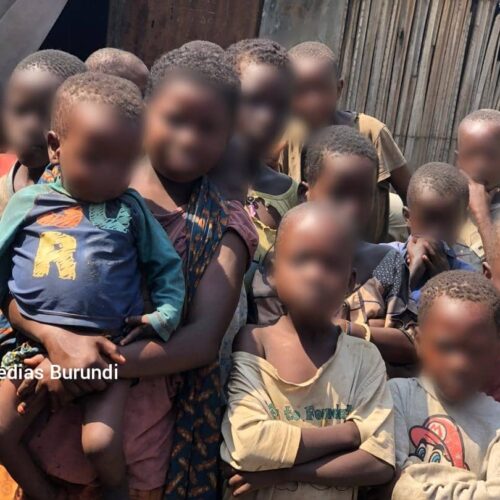
Emergency-set up to accommodate Congolese refugees previously hosted in various transit centers near the border, the Busuma camp now shelters more than 70,000 refugees. However, the available resources remain woefully inadequate given the scale of the humanitarian needs.
Living conditions there are described as extremely difficult. Refugees denounce insufficient food rations, precarious shelters that fail to adequately protect them from rain and cold, and limited access to drinking water and sanitation facilities, exposing the population to serious health risks. The camp’s health facilities are overwhelmed, lack medicine and staff, making it particularly difficult to treat the sick.
“Life here has become a daily struggle,” says Mutewa, a Congolese refugee who has been living in Busuma for over a month. “There isn’t enough food to feed our families, the shelters don’t protect us from the rain or the cold, and when our children get sick, there isn’t always medicine. We’re just surviving, not living.”
Arrests and concerns about fundamental rights
Other refugees describe the circumstances of their arrests when they try to leave the camp.
“We left very early in the morning to avoid the checkpoints,” says Emmanuel. “But when we arrived at the Ruyigi police checkpoint, they arrested us. They told us the borders were closed and we weren’t allowed to leave the camp. We were taken back to Busuma like thieves.”
These repeated arrests raise serious concerns about respect for the fundamental rights of refugees, including their freedom of movement and their right to dignified living conditions, guaranteed by international conventions on refugee protection.
A humanitarian crisis linked to the regional conflict
The refugees in the Busuma camp fled the violence that erupted in December 2025 in several towns and villages in South Kivu province, DRC. This violence pits the Congolese army (FARDC), supported by local Wazalendo militias and Burundian troops, against the M23 rebels, who reactivated in late 2021 and are predominantly composed of Congolese Tutsis.
The M23 is part of the Congo River Alliance (AFC), led by Corneille Nangaa, former president of the Independent National Electoral Commission (CENI). The movement controls several strategic areas in eastern Congo, including Goma and Bukavu, the respective capitals of North Kivu and South Kivu, as well as the Rubaya mining site, one of the world’s largest deposits of coltan, a key mineral for the electronics industry and new technologies.
According to an internal report from the Congolese Ministry of the Interior and Security, consulted by SOS Médias Burundi, the small East African nation deployed more than 29,000 soldiers in eastern DRC between August 2022 and December 2025. Kinshasa accuses Kigali of supporting the M23, while Rwanda denounces DRC and Burundi’s support for the Democratic Forces for the Liberation of Rwanda (FDLR), a Hutu armed group, some of whose members are accused of participating in the 1994 genocide against the Tutsis.
Despite the Washington Agreement, signed on December 4, 2025, under the US mediation between the DRC and Rwanda, clashes continue on the ground. Burundi participated as an observer, represented by President Évariste Ndayishimiye.
Growing despair
Meanwhile, despair continues to grow within the Busuma camp. Many refugees say they will try to leave the camp again, despite the risks of arrest and forced deportation, due to a lack of viable alternatives to ensure their survival and that of their families.
You might also like
Kobero, the border of shame : humiliation, extortion, and official silence in the face of Congolese ordeal
SOS Médias Burundi Muyinga, November 12, 2025 – At the Kobero border crossing between Burundi and Tanzania, Congolese nationals are recounting scenes of humiliation, extortion, and degrading treatment inflicted by
Bujumbura : a man found dead in a vehicle in Buyenzi
SOS Médias Burundi Bujumbura, August 5, 2025 – The lifeless body of Claver Nzeyimana, 50 years old, from Kayanza in Butanyerera province (north), was discovered on Tuesday morning inside a

Uvira : due to lack of schools for their children, some Burundian asylum seekers opt for repatriation
Burundians living in the transit camps of Kamvimvira and Sange in the province of South Kivu in the east of the Democratic Republic of Congo are asking the UNHCR to