
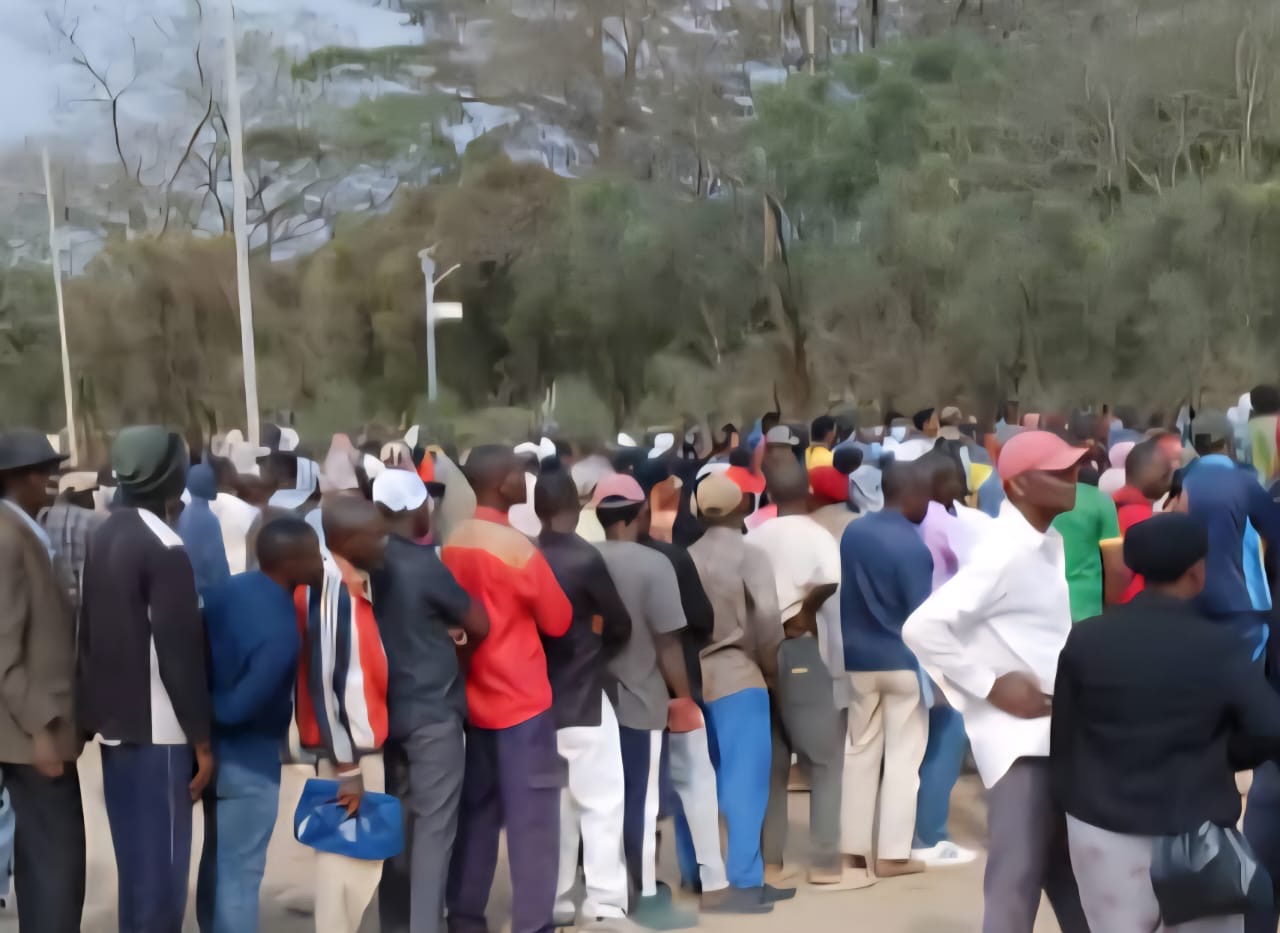
Nakivale : towards a mass repatriation of Burundians, between “voluntary return” and accusations of pressure
SOS Médias Burundi
Nakivale, April 14, 2026 — Ugandan authorities and the United Nations High Commissioner for Refugees (UNHCR) have launched a new awareness campaign to accelerate the repatriation of Burundian refugees living in the Nakivale camp. The initiative, presented as a voluntary return program, comes amid declining repatriation registrations and concerns expressed by refugees about security conditions in Burundi. Similar dynamics are also observed in the region, particularly in Tanzania, where Burundian refugees are denouncing forced return operations.
According to the organizers, this initiative is based on the argument of an improved security situation in Burundi, a perception contested by some of the refugees concerned, who cite persistent risks should they return.
Last weekend, a meeting brought together the UNHCR, the Ugandan Prime Minister’s Office for Refugees, and representatives of Burundian refugees. Discussions focused on the modalities of a program presented as a “voluntary, safe, and consensual return.” No representative of the Burundian government participated in this meeting.
At the heart of the discussions was a question shared by both organizations : the decline in the number of refugees voluntarily registering for repatriation since the beginning of 2026.
The refugees, for their part, emphasized their concerns related to security in Burundi. Some claim that returnees have been subjected to pressure or have disappeared after their return, fueling mistrust within the camp.
One specific case was raised by refugees’ representatives : that of a returnee identified as Fanny, who lived in the New Buja neighborhood of the Nakivale camp in southwestern Uganda, and who reportedly disappeared shortly after her return. No independent confirmation of this incident could be obtained.
“All these reasons make refugees hesitant to return, even though we love our country and would like to leave the difficult life in the camp,” refugees’ representatives confided.
For their part, the UNHCR and Ugandan authorities emphasized the need to expedite returns, citing in particular the financial constraints related to supporting refugees.
“Your country is calling for you, and peace and security prevail there,” the organizers stated, according to participants at the meeting.
A “Go and See” commission, composed of refugees, will be established soon. Its members will be tasked with traveling to Burundi, meeting with local authorities and returnees, and then reporting back to the refugee community.
This initiative, however, is raising concerns among refugees, who fear it will influence its conclusions.
The UNHCR is trying to reassure them, stating that no forced returns are planned.
“We know what is being done to your compatriots in Tanzania. Here, we will not resort to those methods. But we will do everything we can to encourage more returns in 2026,” a UNHCR representative in Nakivale stated.
The delegation also included a representative from the European Union in Uganda, who expressed his institution’s willingness to financially support a return program described as “consensual.”
The Nakivale camp currently hosts more than 150,000 refugees of various nationalities. Burundians, estimated at over 33,000, are particularly affected by this new repatriation strategy.
Regional situation
In neighboring Tanzania, more than 100,000 Burundian refugees living in the Nduta and Nyarugusu camps are facing forced repatriation operations that those affected, as well as several human rights organizations, describe as serious human rights violations.
Initially announced for the end of March and the end of June of this year, the closure of these camps has been slightly extended by one month. However, according to several sources, abuses continue on the ground, including the destruction of homes and infrastructure, as well as cases of abduction and arbitrary detention.
You might also like
Uvira : classes resume in public schools after more than two months of strike
Last week, some of the teachers in the province of South Kivu in the east of the Democratic Republic of Congo (DRC) started teaching again. They had been on strike
Zambia : a “wave” of Burundian refugees raises concerns, Lusaka warns of potential abuses
SOS Médias Burundi Lusaka, March 25, 2026 — Zambia is facing a rapid increase in the number of Burundian asylum seekers, now estimated at over 15,000. This figure has almost

Nduta (Tanzania) : five Burundian refugee women raped at the same time
Five women were victims of sexual violence last week near the Nduta camp in Tanzania. All Burundian refugees, they contacted the camp administration for investigations. INFO SOS Médias Burundi The