
Cishemere : the repatriation announcement revives hope among thousands of Congolese refugees
INFO SOS Médias Burundi
Cibitoke, May 18, 2026—Congolese refugees who have already been granted refugee status at the Cishemere transit center in Cibitoke district, Bujumbura province, western Burundi, will be the next to be repatriated to the Democratic Republic of Congo, scheduled to begin in about two weeks. This announcement comes after the official launch of the repatriation of Congolese refugees on April 23 at the Busuma site in the east of the small East African nation.
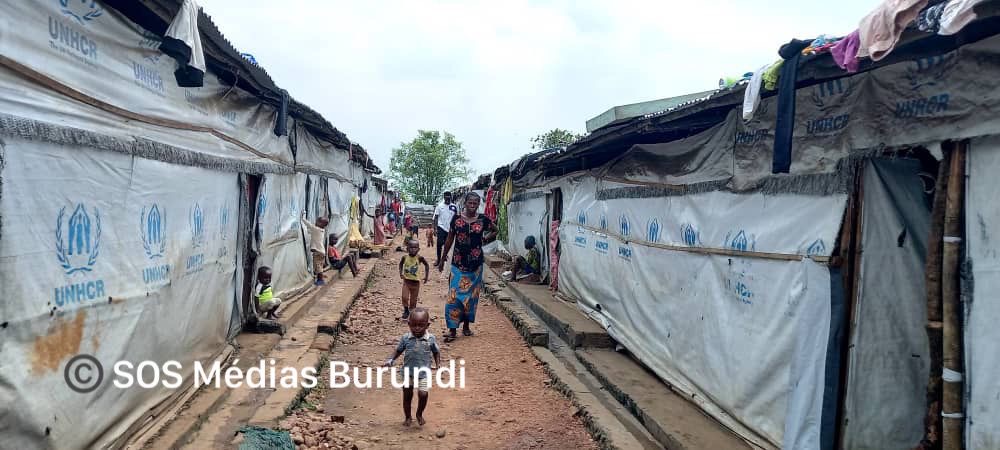
At the Cishemere transit center, this news was met with relief and emotion by many refugees who have been living for months, even more than a year, waiting for a lasting solution after receiving their refugee status.
Several asylum seekers say they are living in difficult conditions. They denounce hunger, a lack of shelter, inadequate healthcare, and hygiene problems in a center that has become overcrowded. The few available facilities are no longer sufficient to provide dignified accommodation for the thousands of people present at the site.
“We live in constant suffering. There are entire families who go nights without proper food. When it rains, some sleep on the bare ground or in shelters that are already full,” says Sifa, a refugee at the center.
Among the refugees who recently obtained the refugee status, many say they see this announcement as a real way out after a long period of uncertainty.
This is the case for Clotilde, a Congolese refugee who arrived in Burundi 16 months ago after fleeing insecurity in eastern DRC. She says she welcomed the announcement of the upcoming voluntary repatriation operations with joy.
“When we heard this announcement, we regained a little hope. We thought we would be transferred to refugee camps to continue living in the same hardships for a long time. Here in Cishemere, conditions are very harsh. We often lack food, children get sick, and the sanitation facilities are inadequate. If the repatriation goes ahead, many families will finally be able to reunite with their loved ones and try to rebuild their lives,” she says.
According to projections by the United Nations High Commissioner for Refugees (UNHCR), the Burundian government, and the Congolese government, nearly 15,000 Congolese refugees are expected to be repatriated between April and August from the Busuma site in eastern Burundi.
As of May 14, four convoys carrying approximately 4,000 refugees had already left Burundi for the Democratic Republic of Congo.
The Cishemere transit center currently hosts more than 5,000 people. Among them are numerous asylum seekers whose applications are still being processed, others awaiting transfer to camps, and refugees who have already been granted refugee status and are now eligible for the voluntary repatriation program.
Faced with this situation, many refugees hope that the announced operations will alleviate overcrowding at the center and improve the living conditions of those who remain.
Burundi still hosts approximately 200,000 Congolese refugees who fled insecurity in the east of the vast Central African country, the majority of whom are from South Kivu province. However, repatriation operations could be slowed by the new Ebola outbreak reported in North Kivu and Ituri provinces, also located in eastern Democratic Republic of Congo.
You might also like
Burundi-Rwanda tensions : Burundian police accuse Rwandan soldiers of incursion on Lake Cohoha
SOS Médias Burundi Kirundo, September 1, 2020—An exchange of fire broke out Monday evening between Burundian and Rwandan forces on Lake Cohoha in northern Burundi, following an alleged incursion by
South Kivu : the war in the east exacerbates tensions between Burundi and Rwanda
SOS Médias Burundi Bujumbura, December 9, 2025 — During a meeting Monday afternoon with diplomats accredited to Burundi and representatives of regional and international organizations, Burundian Foreign Minister Edouard Bizimana

Nyarugusu (Tanzania) : suspension of assistance for more than 200 Burundian refugees living with disabilities
Many Burundian refugees who live with disabilities have not received fuel assistance. More than 200 of them did not find their names on the assistance list. They cry out about