
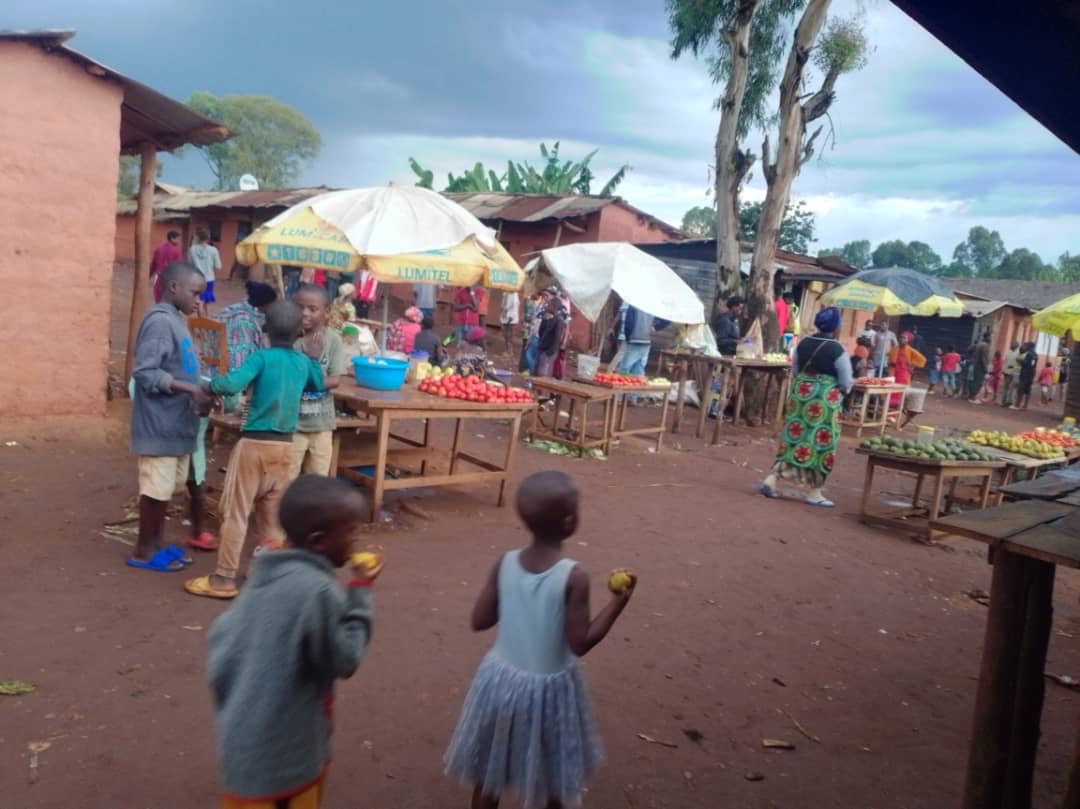
Muyinga : refugees gain greater freedom of movement, rules eased
SOS Médias Burundi
Muyinga, June 24, 2026 – Congolese refugees living in the Musasa and Kinama camps in Butanyerera province, northeastern Burundi, now benefit from a relaxation of the rules governing their movements. The decision was announced on June 20, 2026, by Gédéon Ntahokaja, representative of the National Office for the Protection of Refugees and Stateless Persons (ONPRA) for the camps in the north of the country. According to him, this measure originates from ONPRA’s leadership in Bujumbura, the commercial capital where the authority’s central office is located, and applies to all refugee camps and sites in the country.
New movement procedures
According to the new regulations, refugees can now move freely within the immediate vicinity of their camp without prior authorization or the need to present an exit permit.
For travel within the host district, they simply need to register in a logbook kept by the ONPRA administration, both upon departure and return.
However, for any travel beyond the host district, the exit permit system remains in effect. Refugees must continue to obtain this document before leaving the area.
Specific adjustments for Musasa and Kinama
At the Musasa camp, refugees can now move freely throughout the entire area without prior formalities. For travel within the greater Kiremba district, they simply need to register in a logbook kept by the camp administration, both upon departure and return.
The same measure applies to refugees at the Kinama camp. They can now move freely within the former district of Gasorwe, which became an administrative zone following the territorial reform of June 2025, without prior formalities. However, to travel to the entire expanded district of Muyinga, they must register with the camp administration.
Travel beyond the district remains subject to the issuance of an exit permit, in accordance with current regulations.
“We will no longer be stopped for not having a permit.”
At the Kinama camp, this decision has been welcomed by many refugees. Innocente, a refugee at the camp, believes that this measure will significantly reduce the difficulties they face daily.
“Before, we often had to queue very early in the morning in front of the administration offices to request an exit permit, even for short trips. This took a lot of time and adelayed our activities. For shopkeepers, it was particularly detrimental, as some lost customers or opportunities while waiting for authorization. This new measure will make our lives easier and reduce the risk of being arrested for not having a permit when traveling within the district,” she explained.
According to her, several refugees had already been stopped by law enforcement when they were outside the camp without the required documents, even for short trips.
A member of the refugee representatives committee at the Musasa camp, who requested anonymity, believes this decision represents significant progress achieved after numerous appeals to the authorities.
“For several years, we have been advocating for a relaxation of movement restrictions. Today, we are seeing a major step forward.” “While freedom of movement is not yet complete, being able to move freely within the district represents a significant step,” he explains.
According to him, the previous restrictions severely limited the economic and social activities of refugees outside the camps. He notes that the majority of them generally did not venture beyond a radius of about five kilometers in their daily travels.
“Refugees who go to the market, visit relatives, or travel to engage in small income-generating activities will now be able to do so more easily, without fear of being stopped within the permitted limits,” he adds.
It should be noted that the internal regulations governing refugees in Burundi authorize their movement throughout the entire district where their camp is located. In practice, however, this provision has long been applied restrictively by some authorities, citing security reasons. Many refugees were thus forced to limit their movements to a radius of approximately five kilometers around the camps, under penalty of being arrested for not having an exit permit.
You might also like
Burunga : Mutambara counts non-residents in the face of insecurity
SOS Médias Burundi Rumonge, October 12, 2025 – An operation to identify so-called “irregular” residents was launched on Monday in Mutambara village, located in the Gatete zone, Rumonge district, Burunga
Rwanda-Belgium : Kigali and its former colonial power reconcile after an 18-month rift
SOS Médias Burundi Kigali, September 23, 2026— Rwanda and Belgium decided to restore diplomatic relations on Tuesday, September 22, in New York, on the sidelines of the 81st session of

Tanzania : dozens of young refugees missing in the Nduta and Nyarugusu camps
SOS Médias Burundi Kigoma, December 5, 2025 – Concern is growing in the Nduta and Nyarugusu refugee camps in the Kigoma region of northwestern Tanzania, where dozens of young people