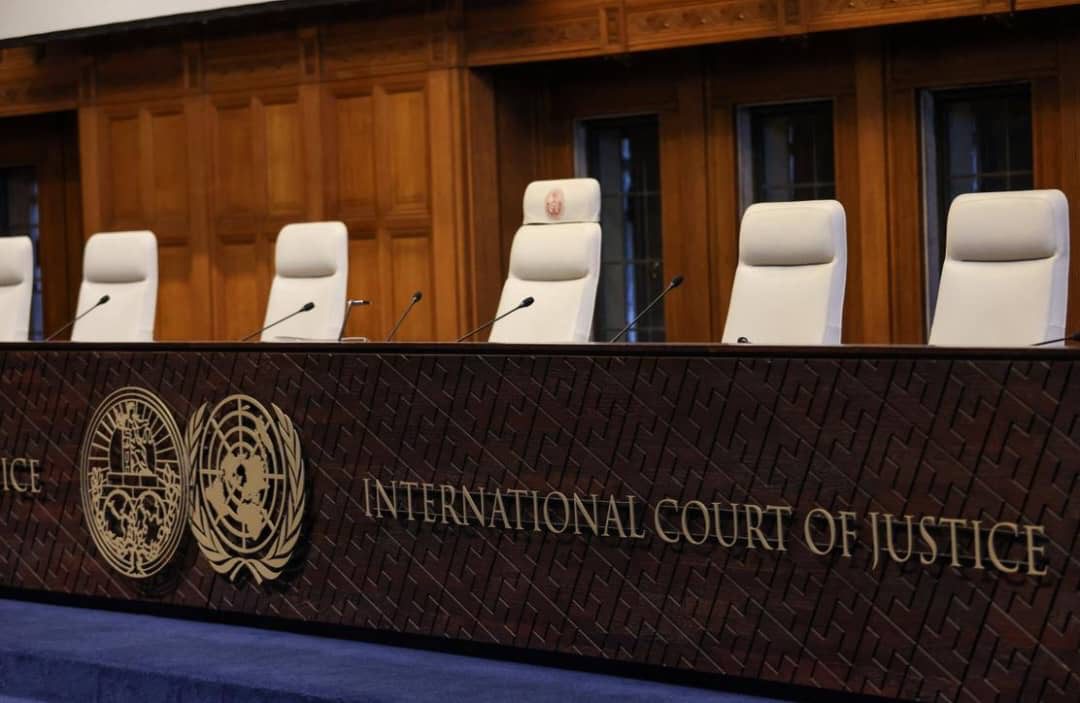
DRC : Kinshasa accuses Rwanda of three decades of atrocities before the International Court of Justice
SOS Médias Burundi
Kinshasa, June 29, 2026 – The Democratic Republic of Congo (DRC) has taken its dispute with Rwanda to the International Court of Justice (ICJ), accusing its neighbor of being responsible for three decades of serious violations of international law and human rights committed in the east of the country. The application was filed on June 26 with the highest court of the United Nations, based in The Hague.
According to a statement published by the ICJ, the complaint concerns alleged acts committed between 1996 and the present day. Kinshasa believes that the Court has jurisdiction to examine this case, particularly with regard to the Convention on the Prevention and Punishment of the Crime of Genocide.
In its petition, the DRC accuses Rwandan authorities of having conducted “a genocidal campaign and serious and widespread human rights violations in eastern Zaire, and subsequently in the Democratic Republic of Congo.”
Congolese authorities maintain that this violence initially targeted Hutu refugees in the Congolese territory following the 1994 genocide against the Tutsis in Rwanda, before spreading to several other Congolese communities. Kinshasa specifically cites the Nyindu, Bembe, Lega, Nande, Hunde, and Bashi as groups that were also allegedly victims of this violence.
The Congolese Ministry of Communication asserts that civilian populations in eastern DRC have suffered decades of massacres, extrajudicial killings, torture, sexual violence, forced displacement, and discrimination based on ethnicity and gender.
This new legal action marks a further step in Kinshasa’s legal offensive against Kigali. Before appealing to the International Court of Justice, the DRC had already filed a complaint with the East African Community (EAC) Court of Justice, also implicating Rwanda.
While Kigali accuses the Democratic Republic of Congo of equipping, arming, and providing logistical support to the Democratic Forces for the Liberation of Rwanda (FDLR), notably by supplying them with military uniforms, President Félix Tshisekedi continues to downplay the threat posed by this armed group. He describes it as a “residual force reduced to banditry,” believing it no longer poses a threat to the Rwandan territory.
At the time this new complaint was filed with the ICJ, the Rwandan authorities had not yet officially reacted. However, in September 2024, when Kinshasa brought the case before the Court of Justice of the East African Community (EAC), the Rwandan Minister of Foreign Affairs, Olivier Nduhungirehe, declared in New York, on the sidelines of the 79th session of the United Nations General Assembly, that the DRC must first “deliver justice to the victims of the FARDC (Armed Forces of the Democratic Republic of Congo) and to those of the Hutu genocidaires of the FDLR (Democratic Forces for the Liberation of Rwanda)” before “giving lessons in justice.”
This new legal offensive comes as fighting has subsided in several areas of eastern DRC, but the security situation remains volatile in the territories controlled or disputed by the Congo River Alliance (AFC/M23) and its allies.
The M23, which Kinshasa accuses Rwanda of consistently supporting, is a former Tutsi-dominated rebellion that resumed hostilities in late 2021, accusing Congolese authorities of failing to honor their commitments regarding the reintegration of its fighters.
Now part of the Congo River Alliance (AFC), led by Corneille Nangaa, former president of the Independent National Electoral Commission (CENI), the movement controls a large part of North Kivu and South Kivu provinces, including their respective capitals, Goma and Bukavu, as well as several strategic territories.
Rwanda regularly rejects accusations of supporting the M23 and maintains that its primary security concern remains the presence of the FDLR in eastern DRC. Kigali, in turn, accuses Kinshasa of collaborating with this Rwandan Hutu armed group, some of whose leaders are accused of participating in the 1994 genocide against the Tutsis.
This complaint before the United Nations’ highest court marks a new stage in the diplomatic and legal confrontation between Kinshasa and Kigali. Despite ceasefire agreements and various mediation processes undertaken under the auspices of the African Union, the East African Community (EAC), the Southern African Development Community (SADC), the United States, Qatar, and the African Union, the two sides continue to accuse each other of violating their commitments. Clashes persist in several areas of eastern DRC, where a conflict that has lasted for nearly three decades continues to fuel one of the worst humanitarian crises on the African continent.
You might also like
Butanyerera : two people condemned to life for desecration of graves
SOS Médias Burundi Matongo, June 24, 2026 – The First Instance Court of Matongo, in the province of Butanyerra, in the north of Burundi, sentenced two people to life imprisonment
Gitega : inheritance dispute turns tragedy, a man kills his older brother with a machete
SOS Médias Burundi Gitega, July 13, 2026 — What was supposed to be a family gathering to divide an inheritance turned into tragedy on the afternoon of Saturday, July 11,

Congolese refugees in Burundi : trapped between war, camps, and closed borders
SOS Médias Burundi Gitega, December 30, 2025 – Fleeing the escalating fighting in eastern Democratic Republic of Congo (DRC), tens of thousands of Congolese have been stranded in Burundi since