
Meheba : four years after silence, Burundian drums resonate again and win awards in Zambia
SOS Médias Burundi
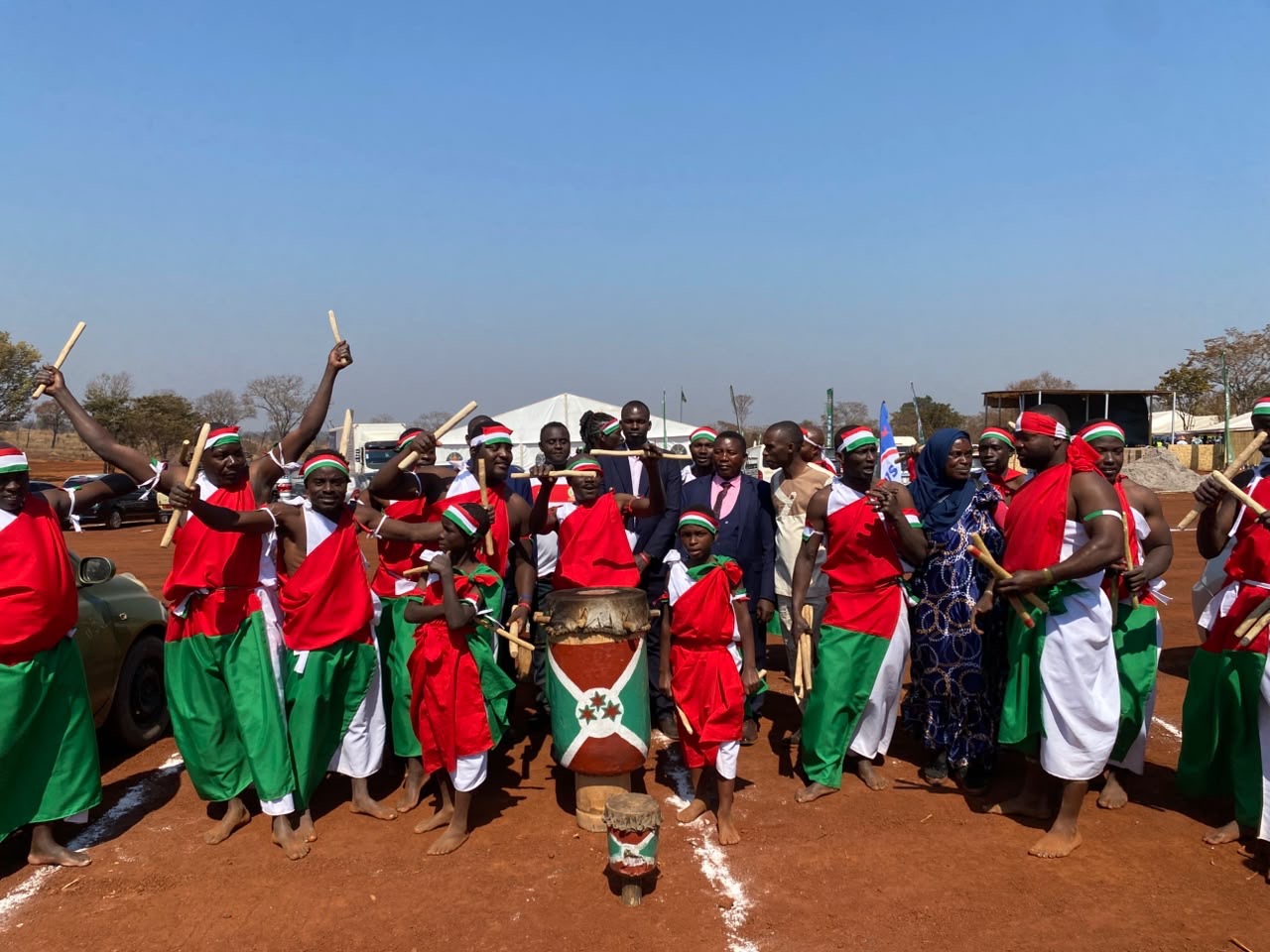
Meheba, August 3, 2026 — After nearly four years without an opportunity to perform in public, the Burundian drummers from the Meheba refugee camp in Zambia have returned to the cultural scene. Invited to participate in a large traditional ceremony of the Kaonde people, they captivated the audience and received an award of distinction presented by the traditional chief. They dedicated this recognition to Burundian refugees living far from their country.
Several Burundian refugees participated last weekend in a cultural exchange ceremony organized by the traditional chief of the Kaonde people, a majority community in the Northwest Province of Zambia, where the Meheba refugee camp is located.
The event, held annually in August, is a traditional ceremony intended to “honor the chief and present him with offerings in order to receive blessings for the crops and for the people,” according to Kaonde tradition.
Two Burundian cultural groups were invited to showcase their heritage: the drummers and the women dancers.
After nearly four years without an opportunity to perform, the Burundian drummers took advantage of this invitation to play their drums before thousands of attendees.
“They certainly made an impression. Everyone applauded with every drumbeat. We felt like we were somewhere in Burundi; we almost forgot we were in exile,” said a Burundian refugee who participated in the event.
According to participants, the Kaonde traditional chief himself praised the Burundian drummers’ performance before awarding them a prize of distinction.
The women dancers’ group, however, did not have the opportunity to perform due to time constraints. Many groups participated, with nearly one hundred cultural ensembles present, a fact lamented by several Burundian refugees.
A celebration of Kaonde heritage
Organized annually at the royal estate of Mumena, in the Kalumbila district of the Northwest Province, the traditional “Lubiinda Ntongo” ceremony celebrates the rich cultural heritage of the Kaonde people.
It pays tribute to traditional chiefs, ancestral wisdom, and the customs and values that have shaped generations.
Considered one of Zambia’s most cherished traditional ceremonies, “Lubiinda Ntongo” highlights the country’s cultural diversity while emphasizing the importance of preserving cultural heritage, a source of national pride and a driver of cultural tourism, according to several participants.
Offerings to the Royal Court
The Burundian community also presented offerings to the Kaonde traditional chief.
“We offered a can of our traditional banana-based drink, Insongo, two hens including a rooster, rice, sugar and two kinds of bananas. We wanted to let the chief taste our Burundian tradition as a community living under his territory,” explained Burundian refugees.
They are also considering organizing a pilgrimage to the royal court to present their concerns to the traditional chief.
Therole of traditional chiefs in the Zambian society
Even though they do not participate directly in public administration in Zambia, traditional chiefs hold an important place in society. They have official recognition and are regularly consulted on decisions concerning local communities.
“They have a social rank recognized in the Constitution, and the President of the Republic pays tribute to them,” explains a former Congolese refugee who obtained Zambian citizenship a few years ago.
According to him, traditional chiefs are “great influencers” because they are respected and followed by the communities that identify with their customary governance.
“Their advocacy can help advance certain causes, such as the protection of refugees or the recognition of some of their rights,” he adds.
Meheba, a camp that welcomes multiple nationalities
The Meheba camp currently hosts more than 30,000 refugees, including approximately 5,000 Burundians, as well as Congolese and people of other nationalities.
For these Burundian refugees, the distinction received at the “Lubiinda Ntongo” ceremony represents more than a cultural award. It illustrates the ability of their heritage to transcend borders and years of exile, while remaining a symbol of pride and attachment to their roots.
You might also like

South Kivu : refugees from Lusenda and Mulongwe camps without assistance for two months
Burundian refugees in Lusenda and Mulongwe camps in Fizi territory, South Kivu province have not received any assistance for two months. They indicate that they did not benefit from the
South Kivu : at least 500 Burundian refugees benefit from aid to start an agro-pastoral activity
These are people gathered in credit and savings cooperatives in the camps of Mulongwe and Lusenda in the province of South Kivu in the east of the Democratic Republic of

Burundi : Refugee families fleeing war, separated from loved ones and facing uncertainty
SOS Médias Burundi Ruyigi, January 14, 2026 – The war in eastern DRC has caused thousands of civilians to flee, often separated from their families. The small east African nation