
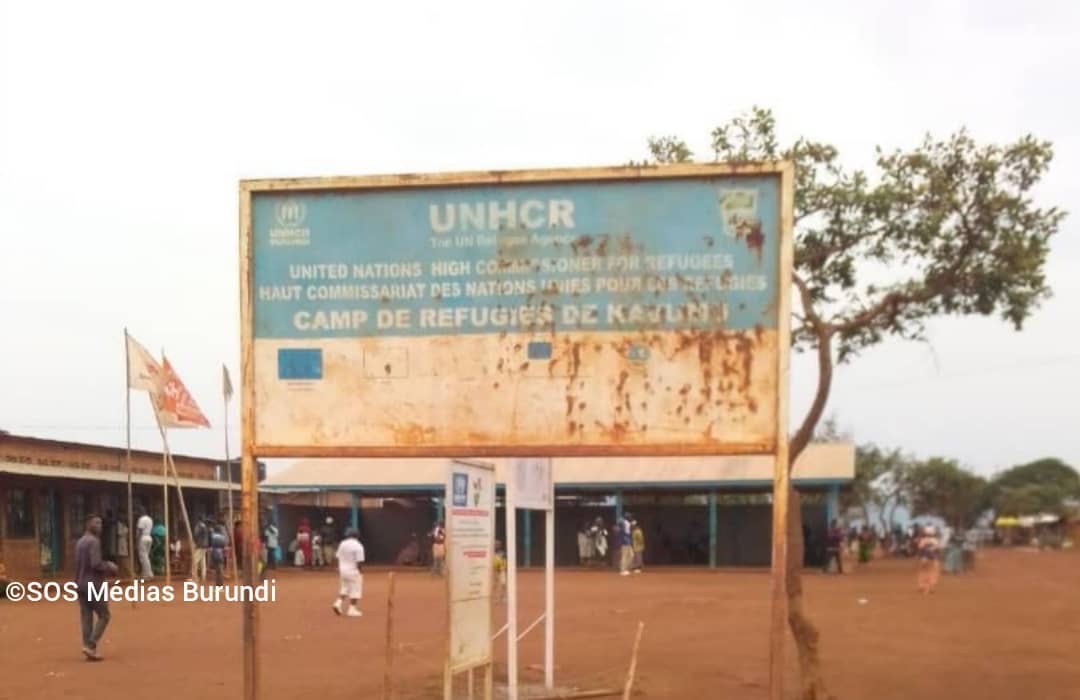
Burundi : 20 scholarships for hundreds of young refugees, DAFI rekindles hope
SOS Médias Burundi
Muyinga, August 11, 2026 — After a two-year hiatus due to funding difficulties, the DAFI (Albert Einstein German Academic Refugee Initiative) scholarship program is reopening its call for applications in Burundi. For the 2026-2027 academic year, only twenty young refugees will receive financial support to pursue undergraduate studies.
The program’s return offers renewed hope to many young refugees who have completed their secondary education in Burundi. After two years without recruiting new beneficiaries, the program has announced the resumption of its selection process for the 2026-2027 academic year.
According to the call for applications launched by the United Nations High Commissioner for Refugees (UNHCR) in collaboration with its education partner, the Jesuit Refugee Service (JRS), twenty new scholarship recipients will be selected this year.
They will receive financial support to enable them to pursue undergraduate studies for three years at participating national public institutions, including the University of Burundi (UB) and the Higher Teacher Training School (ENS).
A two-year wait
This resumption comes after a period of suspension in the recruitment of new beneficiaries.
According to information gathered from education officials in the refugee camps, this interruption was primarily due to funding difficulties the program faced.
For many young refugees, access to university remains difficult due to the cost of tuition, transportation, housing, and other expenses related to university life.
The resumption of the DAFI program thus represents a new opportunity for those who, after obtaining their state diploma, risk seeing their education cut short due to a lack of financial resources.
The call for applications is open to long-term refugees living in both camps and urban areas, particularly in Bujumbura, the commercial capital, and Rumonge, the port city in southwestern Burundi. It specifies that applicants must have arrived in Burundi no later than 2023.
“My only chance was to apply.”
Despite the significant reduction in the number of scholarships available compared to previous years, the announcement of the program’s resumption was welcomed by several young refugees contacted by SOS Médias Burundi in the camps in the north of the country.
For these young people, university represents both an opportunity to improve their personal future and a way to contribute to the development of their communities.
Among them is a young refugee who graduated from high school in 2024. He agreed to share his story on condition of anonymity. He got his diploma precisely during the period when DAFI had stopped recruiting new beneficiaries.
Coming from a family with limited financial resources, he didn’t see how he would finance his university studies.
“I graduated in 2024 and thought I could go straight to the university. But when I learned that the DAFI scholarship was no longer accepting applications, I lost a lot of hope. My family couldn’t afford to pay for my university studies, and I didn’t know how to continue my education. For me, the only option was to wait for a new opportunity and try my luck,” he explains.
The program’s return ultimately restored his confidence.
“When I learned that the program was open again this year, I was overjoyed. I decided to apply like everyone else and try my luck.” “I know there are many applicants for only 20 places, but I prefer to try rather than give up on my dream of continuing my studies,” he says.
“If I am selected, this scholarship will change many things in my life and will also give me the opportunity to one day contribute to the development of my community,” he adds.
Between studies and waiting for resettlement
The young refugee was also engaged in a resettlement process to the United States, a prospect that represented another possible future for him.
But the suspension of the American refugee admission program, decided at the beginning of Donald Trump’s second term, severely disrupted many resettlement cases.
This situation led him to consider his future more closely in Burundi.
“I was also in the resettlement process to the United States. But with the current situation and the suspension of the resettlement program, I no longer know when this possibility will materialize. Today, I have to think about my future here. The only chance I have left to avoid being idle is to study. That’s why this scholarship means so much to me,” he explains.
Only 20 places for many applicants
This year, only 20 young people will be selected. Competition is therefore expected to be fierce, particularly among graduates who have waited several years for the program to resume.
For applicants, this limited number of places is nonetheless a source of concern.
Many hope that the program will gradually increase the number of beneficiaries to allow more young refugees to access higher education.
More than three decades of support for refugees
Created in 1992, the DAFI program aims to enable refugees to access higher education in their country of asylum.
Funded by the German government and administered by UNHCR, the program is implemented in partnership with various local organizations and stakeholders.
In Burundi, DAFI has enabled hundreds of refugees, particularly from the Congo, as well as repatriated Burundians, to access higher education and receive training in various fields for more than a decade.
Some former beneficiaries have become teachers, nurses, lawyers, or agronomists.
For young refugees currently awaiting an opportunity, the resumption of DAFI represents much more than just a scholarship : it offers a chance to resume an interrupted education, gradually overcome dependency, and prepare for a professional future despite the challenges of exile.
You might also like

Makamba : we don’t care about the genocide (against Tutsis) and Congo also has the right to be supported (Révérien Ndikuriyo)
The secretary general of the CNDD-FDD, Révérien Ndikuriyo declared last Friday that he does not care about the genocide of Tutsis in Rwanda and that Congo also has the right
Nduta (Tanzania): several humanitarian NGOs will suspend their activity
At least four main humanitarian NGOs will no longer provide their services to refugees from January 2023. They will suspend their activity for lack of financial means. INFO SOS Médias
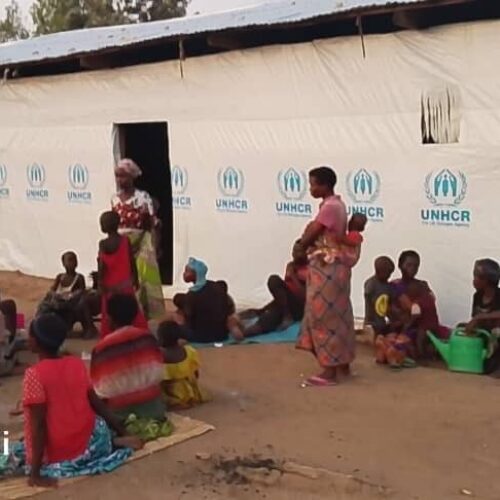

Photo of the week : Lack of aid for more than 2,000 Burundians newly admitted to the Mulongwe camp
More than 2,000 Burundian refugees have been transferred from the Kavimvira transit camp to the Mulongwe camp in the Fizi territory in the South Kivu province (eastern Democratic Republic of