
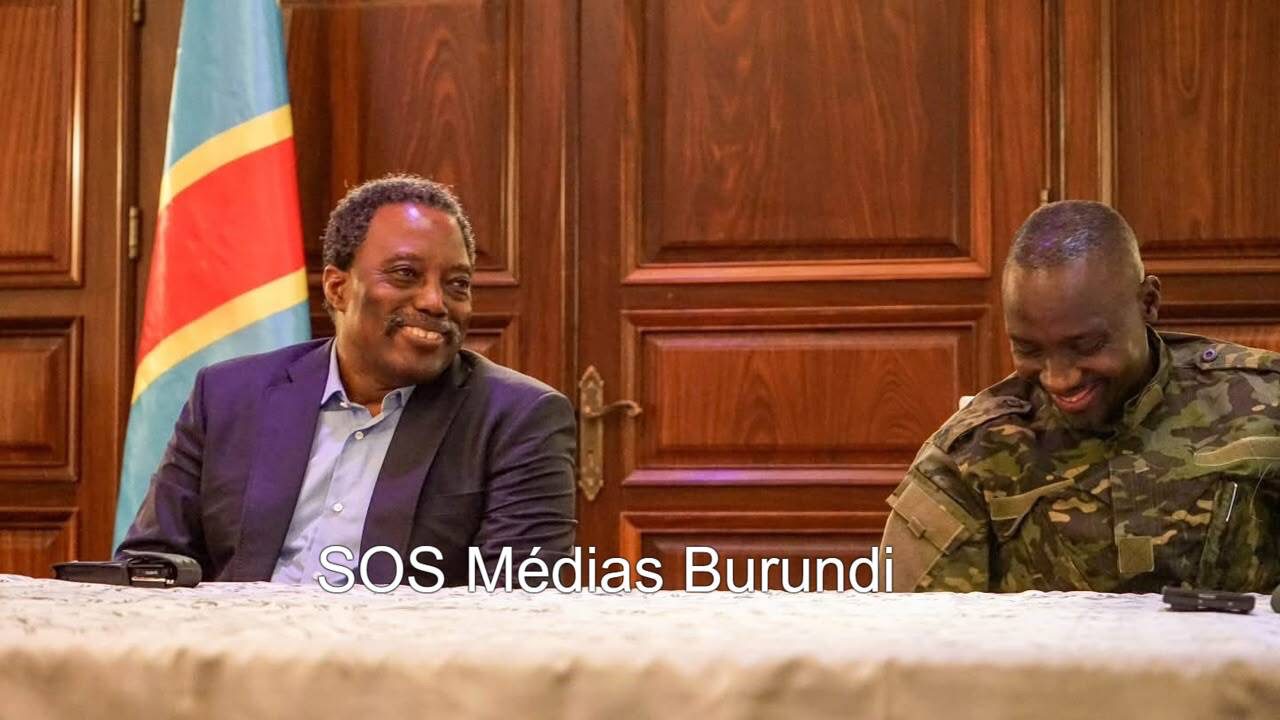
DRC : FRN claims capture of several positions in Rugezi after a week of fighting
SOS Médias Burundi
Fizi, October 28, 2026 — Fighters from the Front for the Refoundation of the Nation (FRN) claim to have captured several positions previously held by Congolese and Burundian armed forces in the Ngandja sector of Fizi territory, South Kivu, in eastern Democratic Republic of Congo (DRC). The clashes, which have been ongoing for about a week according to local sources, pit the FRN against the Armed Forces of the Democratic Republic of Congo (FARDC) and the Burundi National Defense Force (FDNB), supported by Wazalendo militias backed by Kinshasa and other armed groups present in the region.
According to reports on Tuesday, October 27, FRN fighters reportedly seized control of several positions, notably in Gipimo, Kuwamabuye, and Rugezi, as well as part of Kabanju. These positions were previously held by the FARDC and the FDNB.
Fidèle Rugabo, spokesperson for the armed group Twirwaneho, composed mainly of fighters from the Congolese Tutsi Banyamulenge minority and allied with the FRN, confirmed losses among the government and Burundian forces. According to him, several soldiers were killed and ammunition was abandoned at the lost positions.
Other reports indicate that FRN fighters were wounded during the clashes. The fighting reportedly involved heavy weapons and drones, demonstrating the intensity of the operations in this part of the Fizi territory.
Videos sent to SOS Médias Burundi show ammunition and bombs abandoned at positions, as well as several men killed, mainly among the Wazalendo militia. However, these images could not be independently verified at the time of publication, and the exact circumstances under which they were filmed could not be established.
A source within the Congolese security services, contacted by SOS Médias Burundi, also confirmed the loss of several positions and the deaths of Congolese and Burundian soldiers. This information, however, could not be independently verified.
A new offensive in the highlands
These clashes are occurring against a backdrop of persistent tensions in the highlands of South Kivu, a region marked by the presence of several armed groups, local rivalries, and repeated military operations. The territories of Fizi and Mwenga, as well as the area surrounding Minembwe, are strategic zones where government forces and armed groups are vying for control of several localities.
The current fighting comes after the military setbacks suffered by the FARDC (Armed Forces of the Democratic Republic of Congo) and the FDNB (Burundi National Defense Forces) at “Point Zero” last June. Following these events, the forces involved in the operations opened a new front south of Minembwe, in the Rugezi area, with the objective of advancing towards this town.
The presence of Burundian soldiers in the DRC is part of the military cooperation between Gitega and Kinshasa. The FDNB participates in operations alongside the FARDC against armed groups active in eastern Congo. In the highlands of South Kivu, these forces also receive support from the Wazalendo militias, pro-government armed groups mobilized against their adversaries.
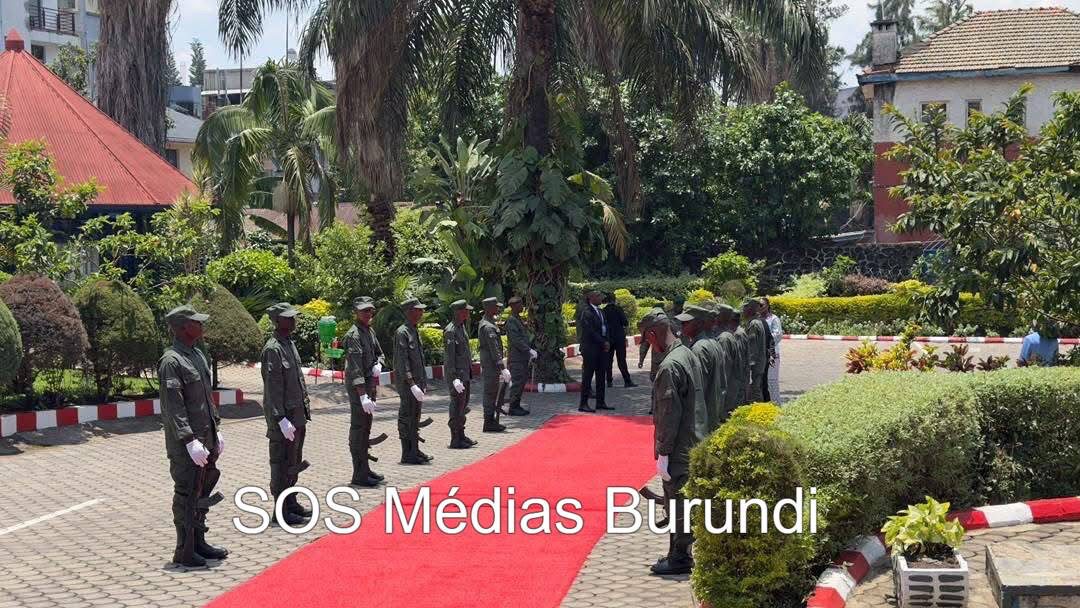
Fighters from the National Revolutionary Front (FRN), then members of the AFC-M23, form an honor guard to welcome a delegation from the African Union in Goma, in eastern Democratic Republic of Congo (SOS Médias Burundi)
These clashes are part of the broader conflict between Congolese government forces and the Congo River Alliance (AFC), whose main armed component was the March 23 Movement (M23). On October 12, in Goma, North Kivu, the coalition announced its dissolution and its replacement by the FRN, led by former Congolese President Joseph Kabila.
A demonstration planned in Uvira
In Uvira, civil society actors are planning a demonstration this Friday to denounce the security situation in the region. The organizers intend, in particular, to call on the FARDC (Armed Forces of the Democratic Republic of Congo) to intensify their operations in Katogota and to express their opposition to the creation of the FRN.
This port city in South Kivu occupies a strategic position on the northwest shore of Lake Tanganyika, near the Burundian border. It is located a few dozen kilometers from Bujumbura, Burundi’s commercial capital, where many United Nations agencies and Burundian central government institutions are concentrated.
Uvira was captured by AFC/M23 fighters in December 2025, before their withdrawal under international diplomatic pressure, particularly from the United States. The city was then at the heart of regional concerns, due to its proximity to Burundi and its importance for supply routes to forces engaged in eastern DRC.
Since the fall of Bukavu, the provincial capital of South Kivu, to the AFC/M23 in February 2025, Uvira had hosted officials and provincial administration services loyal to the Congolese government. The relocation of these authorities to Uvira strengthened the city’s political and administrative role, making it a fallback center for Kinshasa’s representatives in this part of the province.
Regional context
The security situation in eastern DRC remains marked by tensions between Kinshasa, Gitega, and Kigali. Congolese and Burundian authorities accuse Rwanda of supporting the M23, which became the main armed component of the AFC before the announcement of the creation of the FRN. Kigali rejects these accusations and maintains that its security concerns are linked in particular to the presence of armed groups hostile to Rwanda on the Congolese territory.
Burundi also accuses Rwanda of supporting the Burundian rebel group Red-Tabara, an accusation that Kigali denies. For its part, Rwanda accuses Burundi and the DRC of supporting the Democratic Forces for the Liberation of Rwanda (FDLR), a Rwandan Hutu armed group whose members are accused of participating in the 1994 genocide against the Tutsis.
Congolese President Félix Tshisekedi, for his part, described the FDLR as a “residual force reduced to banditry,” believing that they no longer pose a threat to Rwanda. This position contrasts with that of Kigali, which still considers the group a threat to its security.
These mutual accusations contribute to the deterioration of relations between the countries of the region and complicate efforts to find a lasting solution to the conflict in eastern DRC.
The advance of armed groups in South Kivu, particularly around Uvira and in the Fizi highlands, represents a major security challenge for Burundi. The proximity of the fighting to its border and the involvement of its forces alongside the Congolese army make Gitega more vulnerable to the consequences of the conflict.
In this context, the clashes around Rugezi could have repercussions beyond the Fizi territory.
…….
From left to right, Joseph Kabila, president of the Front for the Refoundation of the Nation (FRN), Major General Emmanuel Sultani Makenga, Chief of Staff of the Congolese Revolutionary Army (ARC), and Freddy Kaniki, Secretary General of the FRN, at the launch of the coalition in Goma, October 12, 2026 (SOS Médias Burundi)
You might also like
Kajaga : fishermen fear a possible introduction of Ebola from the DRC
SOS Médias Burundi Bujumbura, June 25, 2026 – In Kajaga, a town on the shores of Lake Tanganyika near the lake border with the Democratic Republic of Congo (DRC), on

Nyanza-Lac : a young man murdered in disturbing circumstances, his family demands justice
Louis Ndizeye, a young man from the Bukeye neighborhood in the town center of the Nyanza-Lac district in the Makamba province in southern Burundi, was found dead after disappearing for


Rumonge: Child Trafficking Network Active Along Lake Tanganyika Shores
SOS Médias Burundi Rumonge, June 18, 2025 — On the shores of Lake Tanganyika, Burundian children are falling prey to human traffickers promising them a better life abroad. Local authorities