Gitega : power cuts strangle small businesses in a country struck by a persistent energy crisis
SOS Médias Burundi
Gitega, October 28, 2026 — Gitega, the political capital of Burundi, is facing the consequences of an energy crisis that is affecting numerous economic activities across the country. Repeated power cuts are disrupting the work of artisans and small business owners, causing financial losses and weakening household incomes, in a context also marked by fuel shortages.
Small business owners are reporting delays in order fulfillment, losses of goods, and a drop in their income. As professional and family expenses continue to mount, they are calling on the Water and Electricity Production and Distribution Authority (Regideso) to guarantee a more regular supply and to communicate load shedding schedules in advance.
“We can go two or three days without being able to work because of the power cuts,” laments Ferdinand Ndimurukundo, 57 years old, a welder we met in his workshop in the Yoba neighborhood of Gitega. This situation prevents him from meeting the deadlines agreed upon with his clients and causes misunderstandings.
“The windows and doors I was supposed to deliver to my client within the agreed two-week timeframe are already late,” he explains. He is asking Regideso (the national electricity company) to publish a load-shedding schedule to allow tradespeople to better organize their work.
Insufficient income to support families
Beyond the delays in fulfilling orders, the consequences of the power cuts are felt even in households. For tradespeople, the irregular electricity supply jeopardizes their daily income and makes it difficult to meet their families’ basic needs.
“We are struggling to pay the rent, buy food, and send our children to school,” says Ezechiel Bigirimana, 38 years old, a carpenter we met in his workshop in the Magarama neighborhood of Gitega.
He explains that the workdays have become too short for him to meet his obligations. “Often, we only work two hours a day at most,” he specifies.
This decrease in business is also making it difficult to pay the workers who assist him. “It’s becoming difficult to pay our day laborers and carpentry assistants,” he laments, adding that he cannot easily dismiss them since he doesn’t know when the electricity supply will be restored.
The carpenter also emphasizes the difficulties in accessing healthcare. “As private sector workers, we have no health insurance,” he says, adding that this lack of coverage makes it difficult to care for their family members when they get sick.
Milk losses and mounting expenses
Dairy vendors are also affected by the repeated power outages. When electricity is out for extended periods, storing milk and yogurt in the refrigerator becomes difficult, resulting in financial losses.
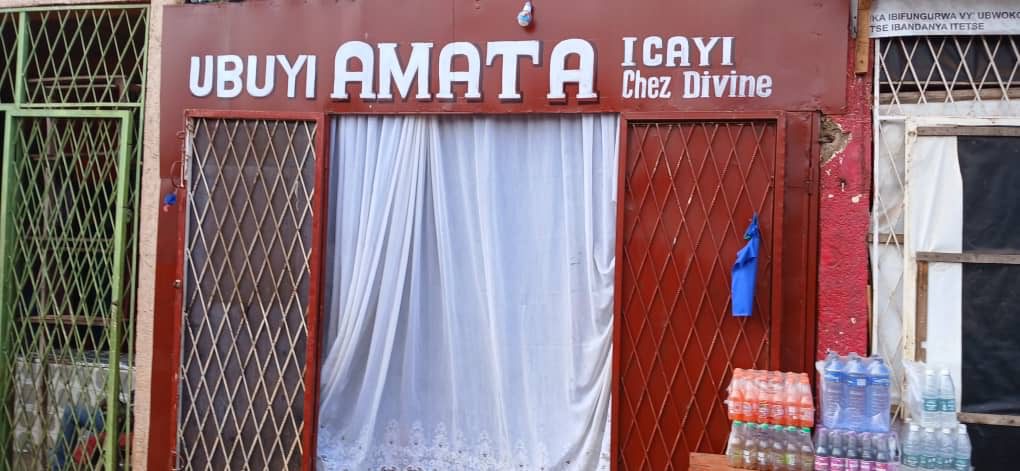
Divine Ininahazwe, 36 years old, a mother of three and a milk vendor on the Second Avenue in the Nyamugari neighborhood of Gitega, says she recently had to throw away a large quantity of milk.
“Look, I just had to throw away 20 liters of milk because of these power cuts,” she laments. For this vendor, these losses add to the expenses she still has to cover, even when her business is slow.
“How am I supposed to pay the rent on this house?” “Why?” she asks, explaining that her landlord demands monthly payment by bank transfer, regardless of power outages.
Milk suppliers must also be paid, even when the goods are lost. “Milk suppliers, too, must be paid no matter what, while I’m operating at a loss,” she laments.
An energy crisis that extends beyond Gitega
The difficulties don’t only affect welders, carpenters, and milk merchants. Other businesses that depend directly on electricity, such as mills and administrative offices, are also suffering the consequences of these outages.
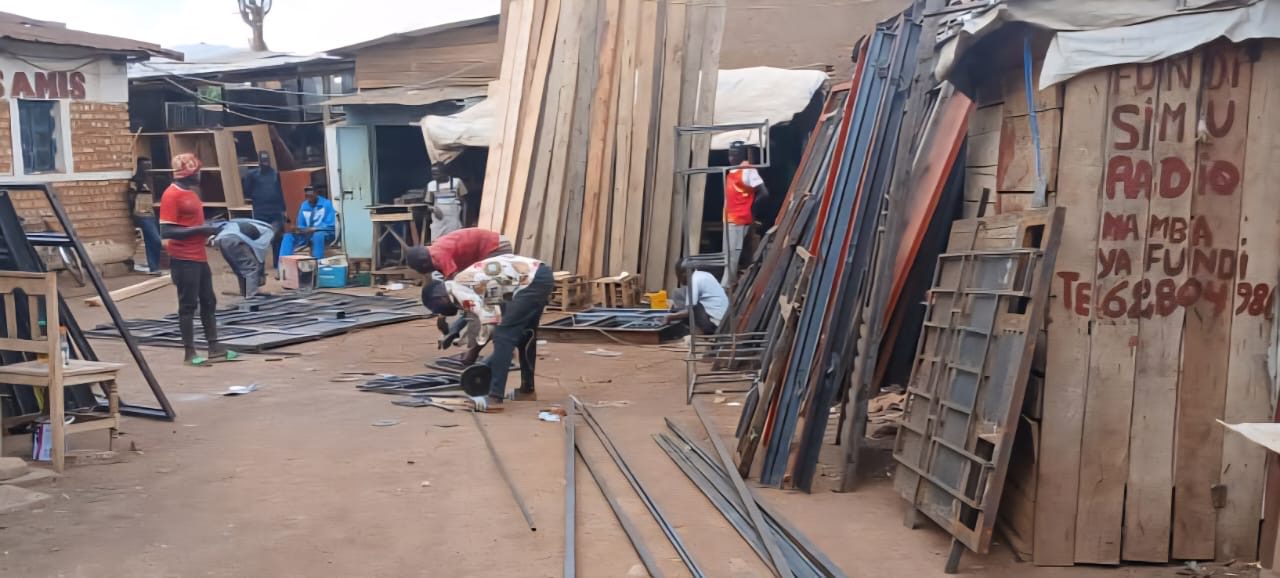
A welding workshop in Gitega, the political capital of Burundi, where repeated power outages slow down the work of artisans and disrupt their activities (SOS Médias Burundi)
The situation in Gitega is not unique. In several regions of Burundi, prolonged power outages and insufficient electricity supply are affecting households, businesses, industries, and public services. In Bujumbura, the economic capital, radio stations are also forced to interrupt their programming and broadcasts due to power disruptions.
The fuel crisis, which has lasted for nearly six months, is further exacerbating the situation. Using generators becomes difficult when the fuel needed to run them is scarce or too expensive. For small businesses and media outlets alike, this backup solution represents an additional expense that many struggle to bear.
Professionals without alternative means to power their equipment are forced to suspend their work. Those who can use generators, on the other hand, must bear additional costs that further reduce their profit margins.
Regideso cites low water levels
At a recent press conference, Regideso’s Director General, Jean Albert Manigomba, explained that the long dry season had led to a drop in water levels at almost all of the country’s hydroelectric power plants.
However, this explanation is hardly convincing, given that power outages have been recurring for several years. Local and international observers point instead to a lack of investment in energy infrastructure, governance failures, and insufficient production capacity, which limit the ability to meet growing electricity demand.
They believe that beyond the vagaries of the weather, the persistence of this crisis raises questions about energy sector planning and the resources mobilized to guarantee a regular supply.
Business owners in Gitega are calling on Regideso (the national electricity company) to take lasting measures to improve the reliability of the power supply and, in the meantime, to publish a load shedding schedule to allow them to better organize their operations.
For these small business owners, the issue goes beyond mere convenience : it’s about protecting their goods, honoring their commitments to their customers, retaining their employees, and continuing to provide for their families.
Without a sustained improvement in the electricity supply, small businesses risk continuing to bear the brunt of an energy crisis that is already weakening economic activity and the living conditions of many Burundians.
……
A stall selling porridge, milk, and tea in Gitega, the political capital of Burundi, where repeated power outages disrupt the activities of small traders (SOS Médias Burundi)
You might also like
Kirundo : the morgue out of service, hasty burials for the deceased
SOS Médias Burundi Kirundo, August 16, 2025 – The morgue at Kirundo Hospital, in Butanyerera Province (northern Burundi), remained out of service for almost a week, plunging families and medical

Nyanza-Lac: the former communal administrator and the communal secretary of the CNDD-FDD released
Jean Claude Nduwimana and Thadée Ndayishimiye, former administrator of Nyanza-Lac and secretary of the CNDD-FDD in the commune of Nyanza-Lac (province of Makamba, southern Burundi) were released on Wednesday. It


Burundi: the oil sector reorganized, Regideso “out”
With the rearrangement of the oil sector launched last Thursday, Regideso, the state company in charge of water and electricity distribution, had its license to import fuel from the port