Washington sanctions the Rwandan Ministry of Defense and a financial institution accused of supporting the M23
SOS Médias Burundi
Goma, October 29, 2026 — The United States announced Wednesday sanctions against the Rwandan Ministry of Defense and Zigama Credit and Savings Society, a financial institution linked to the Rwandan armed forces, accused of providing military and financial support to the March 23 Movement (M23), active in eastern Democratic Republic of Congo (DRC). Kigali rejects accusations of supporting the armed movement but affirms its readiness to implement the Washington Accords of December 4, 2025, provided that Kinshasa also respects its commitments, particularly the one concerning the neutralization of the Democratic Forces for the Liberation of Rwanda (FDLR), a Rwandan Hutu armed group, some of whose members are accused of participating in the 1994 genocide against the Tutsis.
Washington targets the Rwandan military
In a statement, the U.S. Treasury Department asserts that thousands of Rwandan soldiers have been deployed in the provinces of North Kivu and South Kivu, alongside M23 fighters. Washington also accuses Rwandan military authorities of providing the movement with weapons, ammunition, equipment, logistical support, and training.
According to U.S. authorities, the equipment provided includes missile and electronic jamming equipment that could pose risks to civil aviation.
These sanctions follow measures announced on March 2, 2026, against the Rwandan Defence Forces (RDF) and several high-ranking Rwandan military officials. Washington believes that the involvement of Rwandan military and financial structures contributes to prolonging the conflict in eastern DRC.
Kigali disputes the accusations of supporting the M23 and maintains that Rwanda’s security depends, in particular, on neutralizing the FDLR, whose presence in eastern DRC is one of the main points of contention between the two countries.
Zigama accused of facilitating M23 financing
The Treasury Department also accuses Zigama Credit and Savings Society of facilitating financial transactions benefiting the M23 and the Congo River Alliance (AFC), the politico-military platform to which the movement belonged before the creation of the Front for the Refoundation of the Nation (FRN).
According to Washington, the institution allegedly contributed to the financing of equipment purchases, notably in China and other countries. It also reportedly covered travel and accommodation expenses related to training programs.
US authorities claim that transactions worth tens of millions of dollars benefited the M23 and the AFC. Zigama is also accused of facilitating the transport of gold from areas of South Kivu controlled by the armed movement to Kigali.
These accusations place the financial sector at the heart of US measures targeting the alleged networks that provide the movement with resources and equipment.
Mineral resources at the core of the accusations
Washington also believes that minerals from areas controlled by the M23 transit through Rwanda. US authorities emphasize that the volumes exported by the country exceed its national mining production capacity, fueling suspicions about the origin of some of these resources.
In a report published on September 21, 2026, Amnesty International documented alleged human rights violations in mining areas of eastern DRC, including Rubaya, in the Masisi territory of North Kivu, an area known for its coltan deposits, and Lomera, in the Kabare territory of South Kivu, where gold mining is practiced.
The organization reports summary executions, torture, arbitrary detention, forced labor, forced recruitment, and looting. According to testimonies gathered by Amnesty International, 18 artisanal miners were killed : ten were reportedly beaten to death, two were shot, and six were abducted and later found dead. Some of the documented acts could constitute war crimes.
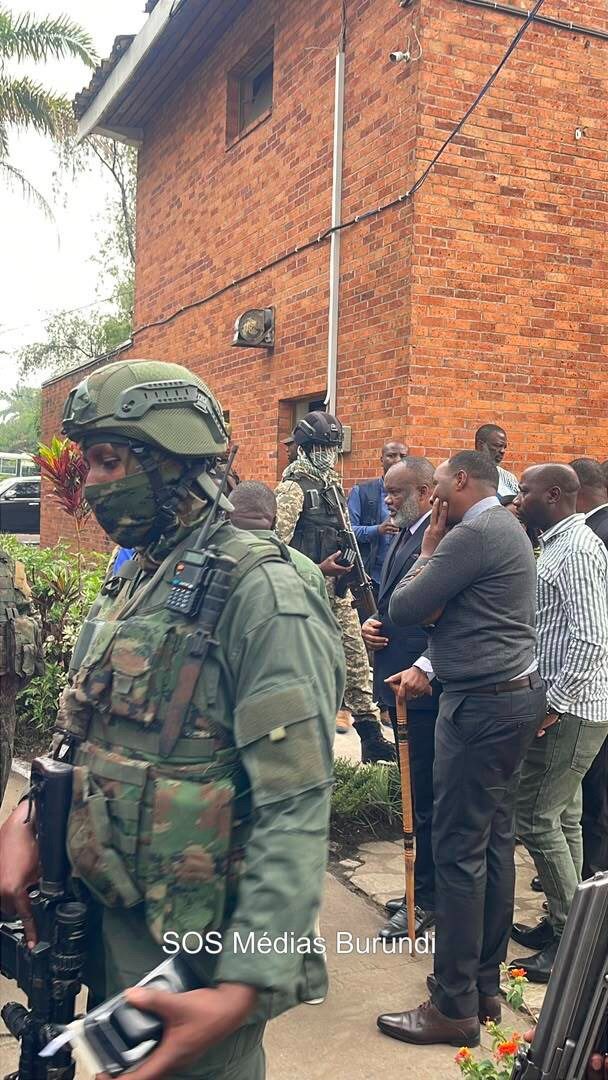
An M23 rebel provides security for AFC-M23 officials in the city of Goma, before the movement’s transformation into the Front for the Refoundation of the Nation (FRN) on October 12, 2026. On October 28, Washington announced sanctions targeting the Rwandan Ministry of Defense and a financial institution, accused of supporting the rebel movement (SOS Médias Burundi)
The report also mentions alleged gold smuggling networks. Some of the precious metal extracted in Lomera is reportedly transported by boat to Kamembe, Rwanda.
The M23 rejected Amnesty International’s accusations in a statement published on September 22. The movement maintains that the report does not constitute proof and calls for an independent investigation allowing various parties to present their evidence.
Interviewed by SOS Médias Burundi, two mining operators gave contrasting accounts of working conditions in the affected areas. One operator from Rubaya stated that operations are continuing normally and that he sees few children on the sites, believing they are probably at school. Another operator, interviewed in Numbi, in the Kalehe territory of South Kivu, believes that poverty can drive children to work in the mines. He claims that their presence already existed under the previous authorities and that M23 leaders are trying to restore order.
These individual accounts neither confirm nor refute the facts documented by Amnesty International.
Sanctions that restrict transactions
The measures announced by Washington include the freezing of assets and financial interests under US jurisdiction belonging to the sanctioned entities. As a general rule, transactions conducted by U.S. persons or involving frozen assets are prohibited, unless authorized or exempted by the relevant authorities.
Entities directly or indirectly owned 50% or more by a sanctioned person or organization may also be subject to freezing, in accordance with U.S. rules.
These restrictions aim to limit the access of these entities to the U.S. financial system and to complicate their international transactions.
Kinshasa welcomes the sanctions, Kigali invokes the Washington agreements
Congolese authorities welcomed the U.S. measures and called on Rwanda to respect the agreements reached in Washington, particularly by withdrawing its troops from the Congolese territory. Congolese officials believe these sanctions could increase pressure on Kigali.
The DRC-U.S. Friendship Group also called on the European Union to take similar measures against those responsible and entities it accuses of contributing to instability in the east of the country.
On the Rwandan side, government spokesperson Yolande Makolo reaffirmed that Kigali was ready to implement the Washington Accords of December 4, 2025, provided that the DRC also respects its commitments, particularly the neutralization of the FDLR.
Rwanda considers the FDLR a threat to its security. Their presence in the DRC remains one of the main points of tension between Kigali and Kinshasa.
AFC-M23 becomes the Front for the Refounding of the Nation
On October 12, 2026, the AFC-M23 announced the creation of the Front for the Refounding of the Nation (FRN), a politico-military coalition led by former Congolese President Joseph Kabila, who ruled the country from 2001 to 2019. This new structure is presented as the successor to the Congo River Alliance (AFC).
The March 23 Movement (M23), a former Tutsi-dominated rebellion that resumed hostilities in late 2021, accuses Congolese authorities of failing to uphold their commitments regarding the reintegration of its fighters and the ceasefire agreements.
Since its resurgence, the movement and its allies have seized vast territories in eastern DRC. Their advance extends from Bunagana, on the border with Uganda in North Kivu, to South Kivu, near the Burundian border, passing through areas along the Rwandan border.
Among the armed groups associated with this coalition is Twirwaneho, composed mainly of fighters from the Banyamulenge community, a Congolese Tutsi minority living primarily in the highlands of South Kivu.
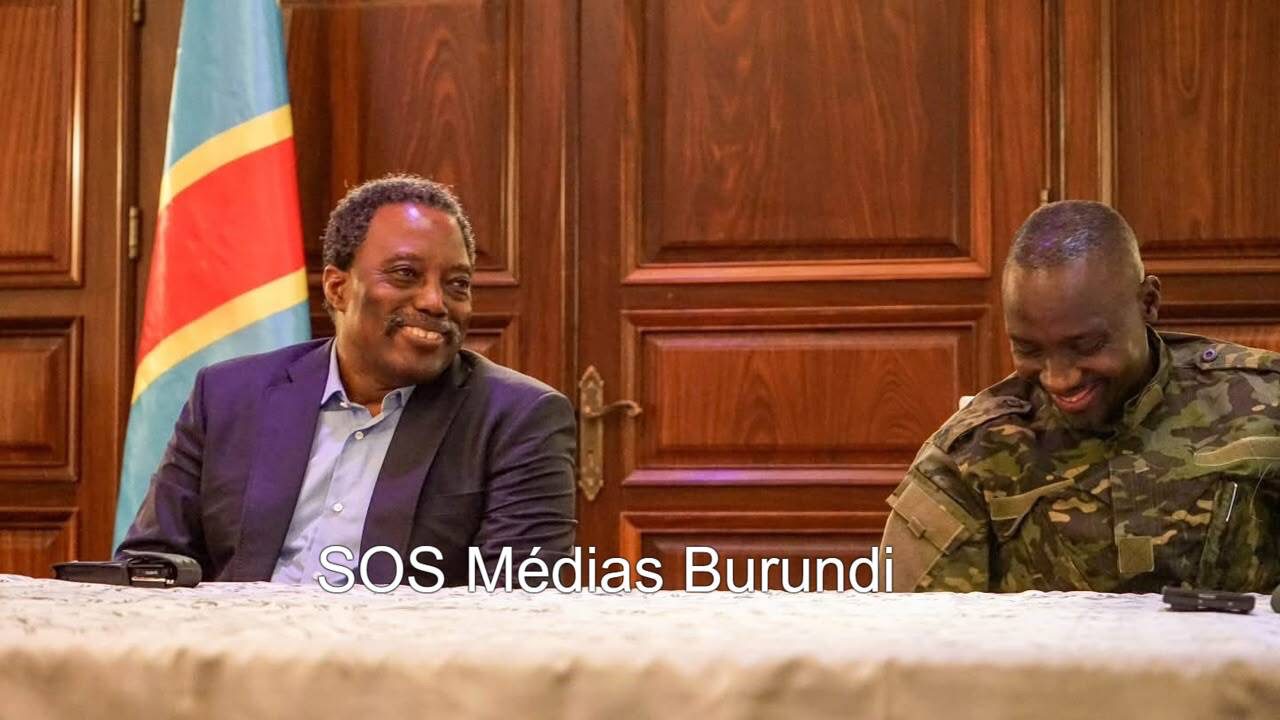
Joseph Kabila, president of the Front for the Refoundation of the Nation (FRN), and Major General Sultani Makenga, chief of staff of the Congolese Revolutionary Army (ARC), smile during the announcement of the movement’s creation on October 12, 2026, in Goma, eastern DRC (SOS Médias Burundi)
Before its dissolution, the AFC-M23 had established parallel administrations in the two provinces. Its fighters had controlled Goma, the capital of North Kivu, since January 2025, and then Bukavu, the provincial capital of South Kivu, which they conquered the following month. The Front for the Refoundation of the Nation (FRN), created on October 12, 2026, assumed the commitments and responsibilities of the AFC-M23, of which it presents itself as the successor.
Joseph Kabila is also subject to US sanctions, as are other civilian and military leaders of the coalition.
To try to contain the rebel advance, the Congolese government called upon regional forces. A force from the East African Community (EAC) was deployed first, before the Southern African Development Community (SADC) sent its own military mission.
Foreign mercenaries, including European nationals, were also hired by Kinshasa before the fall of Goma. They left the city following the rebel advance, as did fighters from the local Wazalendo militias who had been supporting government forces.
Since then, alongside the Armed Forces of the Democratic Republic of Congo (FARDC), Wazalendo fighters, and mercenaries still mobilized, particularly for drone operations, the Burundi National Defense Force (FDNB) remains officially engaged alongside Congolese government forces.
According to local sources and reports from international experts, Kinshasa’s forces also rely, in certain circumstances, on the FDLR.
The creation of the FRN thus comes in a context where the conflict remains a major obstacle to relations between Kinshasa and Kigali. The new US sanctions aim to increase pressure on the structures that Washington accuses of supporting the M23, while the future of negotiations and the respect for commitments made by various parties remain uncertain.
………
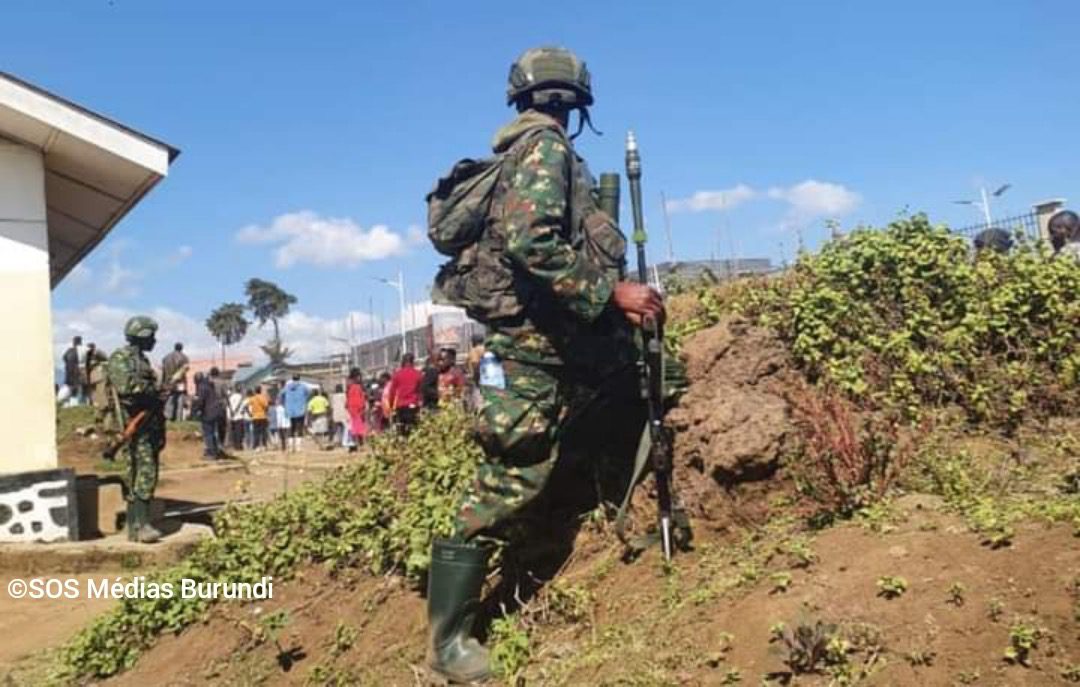
An M23 rebel during the capture of Bunagana, a town on the border with Uganda, in June 2022. On October 28, the US government announced sanctions targeting the Rwandan Ministry of Defense and a financial institution, accused of supporting the M23 in eastern DRC (SOS Médias Burundi)
You might also like

Kayanza : a woman accused of murdering her husband sentenced to five years in prison
Béatrice Yamuremye was sentenced to five years in prison. It was during a hearing on Tuesday at the First Instance Court of Kayansa (northern Burundi). She is accused of killing
Burundi : an open letter urges Burundi not to extradite Babunga Benjamin Watuna to the DRC
SOS Médias Burundi Bujumbura, May 31, 2026 – Citizens, intellectuals, humanitarian actors, and human rights defenders from the Great Lakes region have addressed an open letter to Burundian President Évariste


Gitega : more than 1,400 inmates starving in an overcrowded prison, alarm raised
SOS Médias Burundi Gitega, March 27, 2026 — In Gitega, the political capital of the small east African nation, the humanitarian situation at the central prison is causing grave concern.