
Burundi–Rwanda : rising military tensions at the border, the population of Butanyerera lives in fear
SOS Médias Burundi
Butanyerera, December 12, 2025 – A significant military buildup has been observed for several days along the Burundi-Rwanda border, particularly in the Gasenyi-Nemba zone, Busoni district, Butanyerera province in northern Burundi. Residents, local authorities, and security sources describe a climate of growing tension.
Massive deployment in Gasenyi-Nemba
According to several sources close to the Burundian defense forces, the military has established positions all along the border. “Heavy weapons have been deployed to counter a possible attack from Rwanda,” explains an officer of the FDNB (Burundi National Defense Force).
On the Rwandan side, a similar deployment is reportedly in place. “The soldiers are eyeing each other warily.” “No one speaks, no one moves, but everyone is ready,” reports a resident of Busoni.
This situation arises as regional tensions escalate, particularly in connection with the evolving war in eastern DRC.
A population on constant alert
In villages near the border, fear is pervasive.
“We sleep fully clothed, ready to flee if there’s gunfire,” confides a mother from Gasenyi.
A shopkeeper from Nemba adds : “A spark could ignite everything. We live as if war could break out at any moment.”
Night patrols and mobilization of the Imbonerakure
In several localities in Busoni and other districts of Butanyerera, the Imbonerakure—youth affiliated with the CNDD-FDD, the ruling party—have reportedly been reinforced.
“Night patrols have doubled or tripled. We see groups of young people accompanied by police officers going around the villages,” says a teacher.
According to witnesses, trucks full of soldiers also arrived to reinforce the troops already in place, particularly the 411th Battalion in Mutwenzi.
Statements still fresh in people’s minds
The capture of Uvira by M23 rebels this week has revived the sentiments expressed by President Évariste Ndayishimiye in early 2025. He had warned that if Uvira fell to the M23—a movement that Gitega and Kinshasa accuse of being supported by Rwanda—a Burundian offensive toward Kigali could be considered.
An unofficial, de facto curfew
In several border towns, an unofficial curfew appears to have taken hold.
“We’re told to be home before 8 p.m. It’s not written anywhere, but everyone knows what it means,” says a young man from Munzenze.
Cross-referential accusations between Kigali and Gitega
The war of words has escalated.
Earlier this week, Burundi’s Minister of foreign affairs, Édouard Bizimana, accused Rwanda of “provocations that we cannot tolerate.” He claims, in particular, that :
Kigali has deployed more than 8,000 soldiers in eastern DRC since November to attack Burundian and Congolese positions,
and that a significant Rwandan military buildup has been observed on Burundi’s northern and western borders.
On Wednesday, during the swearing-in ceremony of new officials, Rwandan President Paul Kagame responded by accusing Burundi of :
deploying approximately 20,000 soldiers on the Congolese territory,
and killing civilians in Minembwe using drones and artillery.
Referring to the Washington agreement of December 4, he emphasized the need to acknowledge each country’s responsibility :
“The DRC bears its share of responsibility in this crisis, as do Burundi and Rwanda.” But, he insisted, Rwanda should not bear the burden alone. According to him, “the pursuit of peace in the region requires a shared commitment and collective responsibility from all stakeholders.”
He also stated that he is no longer sleeping, explaining that “calls are pouring in day and night” in response to the threats targeting Rwanda.
Reactivated in 2021, the M23 is part of the Congo River Alliance (AFC), led by Corneille Nangaa, which advocates for the establishment of a federal state in the DRC.
The movement now controls several provincial capitals in North and South Kivu, as well as strategic mining areas.
Kinshasa has long accused Rwanda of supporting the M23—accusations that Kigali rejects. For its part, Rwanda accuses the DRC and Burundi of supporting the FDLR, a Rwandan Hutu group operating in eastern Congo and accused of participating in the 1994 genocide against the Tutsis.
The Washington agreement, signed on December 4 under the US mediation between Rwanda and the DRC—with Burundian President Évariste Ndayishimiye participating as an observer—includes the disarmament of these fighters, whom President Félix Tshisekedi describes as “a residual force reduced to banditry.”
Burundi, for its part, has deployed more than 10,000 soldiers to the DRC since 2023 to support the FARDC, the Congolese loyalist army, and the local Wazalendo militias maintained by Kinshasa.
An explosive geopolitical context
The Great Lakes region remains marked by persistent rivalries, the presence of multiple armed groups, and cross-accusations between states. Border populations live in suspense, anxiously awaiting developments in the DRC.
“We don’t know if tomorrow will bring peace or war. We’re waiting… but we don’t even know what we’re waiting for,” sums up a border resident.
You might also like
Rumonge : a mineral processing site under heavy military surveillance in Mutambara
SOS Médias Burundi Rumonge, April 21, 2026 — For over two years, a mineral processing site has been operating with near-total secrecy in Mutambara village, in the district of Rumonge,
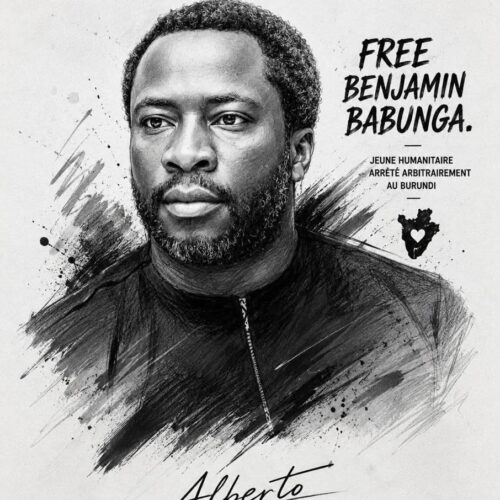
Burundi : an open letter urges Burundi not to extradite Babunga Benjamin Watuna to the DRC
SOS Médias Burundi Bujumbura, May 31, 2026 – Citizens, intellectuals, humanitarian actors, and human rights defenders from the Great Lakes region have addressed an open letter to Burundian President Évariste
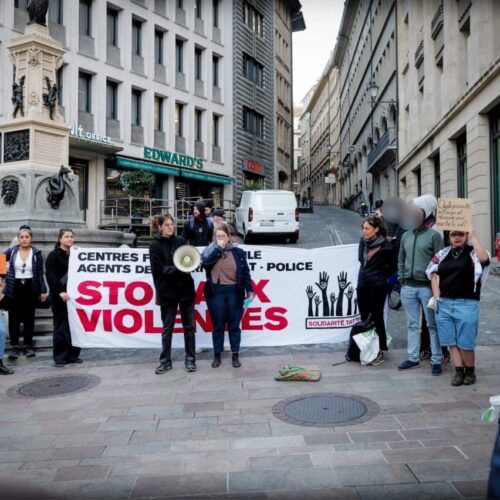

Burundi : forced deportations from Switzerland, tense returns, and accusations of persecution denounced by experts
SOS Médias Burundi Burundi, May 24, 2026 — The return to Burundi of several young people deported from Switzerland is raising concerns and questions among their families, in a context