
Gatumba–Uvira : A vital border reopened amid security challenges and economic survival
Gatumba, February 23, 2026 – Burundi officially reopened its land border crossing with the Democratic Republic of Congo (DRC) on Monday, after nearly three months of closure.
This closure, which occurred on December 10, 2025, followed the recapture of the city of Uvira by rebels of the March 23 Movement (M23), a situation that had reignited security tensions in the region and disrupted cross-border trade.
Relief and resumption of activities
From the very first hours, an atmosphere of relief prevailed at the border post. Traders, transporters, and citizens gathered to witness the resumption of crossings.
Among the first to cross the border were Congolese traders, the sick, and drivers who had been stranded in Bujumbura since last December.
“We are relieved. Three months without being able to return home or work was very difficult,” confides a Congolese driver.
In Uvira, small business owners also welcome this decision, which puts an end to several weeks of economic paralysis.
A strategic city for the Burundian economy
Uvira is located in the province of South Kivu, in eastern Congo, just a few kilometers from Bujumbura, Burundi’s commercial capital, where United Nations agencies and part of the central administration are concentrated.
A true economic engine for Burundi, Uvira plays a key role in supplying Bujumbura, particularly with fuel. In the context of a persistent energy crisis that has lasted for more than five years, many Bujumbura residents regularly cross the border to refuel.
The stability of Uvira is thus closely linked to the economic and security balance of Burundi.
The refugee issue remains sensitive
Some civil society organizations are calling on the authorities in Gitega and Kinshasa, as well as the United Nations High Commissioner for Refugees (UNHCR), to facilitate the voluntary return of Congolese refugees.
Refugees, particularly those residing in the district of Ruyigi in Buhumuza province, eastern Burundi, have recently expressed their desire to return to the DRC, denouncing difficult living conditions they face.
After nearly three months of paralysis, the reopening of the Gatumba border crossing has revitalized trade and reunited families separated by the closure. However, security challenges in eastern Congo continue to threaten the stability of this strategic border.
Regional context
Last January, the M23 rebels withdrew permanently from the city of Uvira, which, since the capture of Bukavu, the capital of South Kivu in early 2025, has become the provincial political capital, even though several Congolese officials—including Governor Jean-Jacques Purusi—spend their nights in Bujumbura.
Between August 2022 and December 2025, Burundi deployed more than 29,000 soldiers in eastern Congo to support the FARDC, the Congolese loyalist army, as well as the local Wazalendo militias. In some situations, the coalition against the M23 also included the FDLR, accused of participating in the 1994 genocide against Tutsis.
Congolese authorities accuse Rwanda of supporting the M23, while Kigali denounces an alleged support from the DRC and Burundi for the FDLR. Despite repeated denials from Kigali, a report by the UN Group of Experts confirmed in December 2025 the presence of 5,000 to 7,000 Rwandan soldiers alongside the M23 rebels.
The M23, composed primarily of Congolese Tutsis, is currently affiliated with the Congo River Alliance (AFC), led by Corneille Nangaa, former president of the Congolese Independent National Electoral Commission (CENI), which advocates for a federal state in the DRC. The coalition controls several strategic areas in North and South Kivu, including their respective capitals, Goma and Bukavu, as well as the Rubaya mining site, one of the world’s largest coltan deposits, a strategic mineral supplying a significant portion of the world’s tantalum used in the electronics industry and new technologies.
Despite the Washington Agreement signed on December 4, 2025, between the DRC and Rwanda, hostilities continue. Burundi participated as an observer, represented by President Évariste Ndayishimiye.
The clashes continue to force thousands of families to flee to neighboring countries. Burundi alone took in more than 100,000 Congolese refugees between December 2025 and January 2026, in addition to more than 70,000 other refugees who arrived earlier in the year.
You might also like
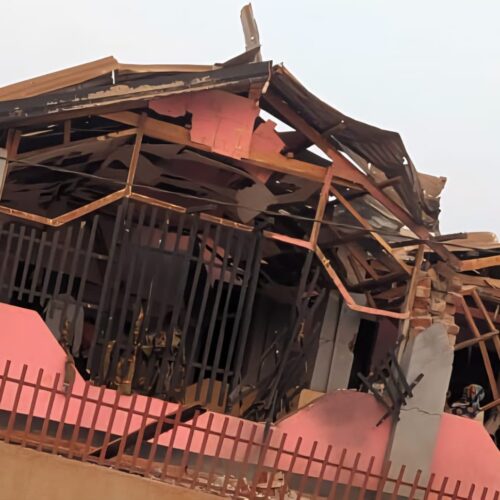
Fizi : targeted M23 strike in Mwalu, soldiers under intelligence surveillance
SOS Médias Burundi Fizi, August 23, 2026 — A drone strike attributed to the M23 targeted the Mwalu Hotel in the Fizi territory of South Kivu, in eastern Democratic Republic
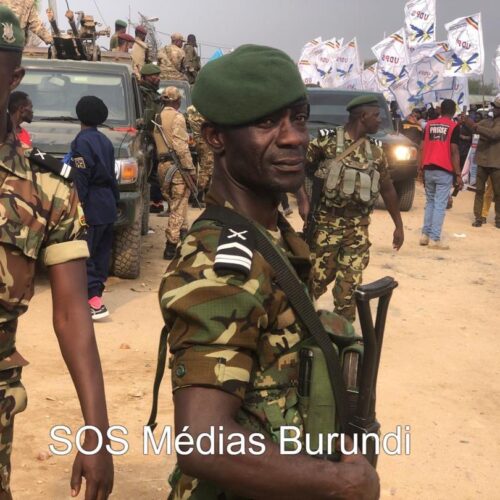
Burundi : 21 soldiers transferred to an unknown destination after refusing to join the front in the DRC
SOS Médias Burundi Rumonge, October 22, 2026—Twenty-one Burundian soldiers detained at Murembwe Central Prison in the port town of Rumonge, Burunga Province, southwestern Burundi, were transferred on Thursday to an
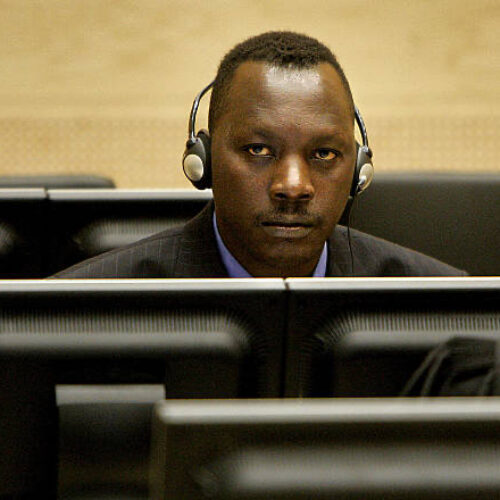

DRC : Thomas Lubanga announces the creation of the “Convention for the Popular Revolution” (CRP)
Thomas Lubanga, a former warlord convicted by the International Criminal Court, has formalized, from Uganda, the creation of a politico-military movement in Ituri, in the eastern Democratic Republic of Congo