Photo of the week-Kirundo : the State accused of abandoning thousands of citizens to a protracted water crisis with serious health consequences
Residents of Kiri, Kiyonza, and Ruhehe face a chronic drinking water shortage
A severe drinking water shortage has been affecting residents of the Kiri, Kiyonza, and Ruhehe areas in Kirundo district, Butanyerera province, northern Burundi, for several years. In these localities, residents denounce a situation that has become chronic and accuse the authorities of allowing a crisis with increasingly worrying health consequences to continue.
Access to drinking water has become extremely difficult in these villages. According to several testimonies gathered on site, the price of a jerrycan of water varies between 2,000 and 2,500 Burundian francs, an amount considered unaffordable for the majority of rural households.
“We have been abandoned.” A jerrycan of water now costs between 2,000 and 2,500 Burundian francs. “Many families can’t afford to buy it every day,” laments a resident of the Kiyonza zone.
Abandoned water infrastructure
Faced with this situation, many residents are turning to the waters of Lakes Cohoha and Gacamirinda, despite the known health risks. Meanwhile, the population says that several reservoirs have been built in the region but have never been put into service for over seven years.
“The reservoirs are visible everywhere, but they’ve never been filled. We’ve been waiting for water for years without any results,” testifies an official from the Ruhehe zone.
He recalls that promises were made by the authorities to permanently resolve the problem, but without any concrete action.
Local and national authorities under pressure
Residents are also denouncing the lack of response from local and national elected officials to this protracted situation.
“We never see our members of parliament or our senators. They never come to see our living conditions, even though we are suffering terribly,” says a resident of Kiri.
An increasingly worrying health crisis
The health consequences are becoming visible. Several residents report an increase in illnesses linked to the consumption of unsafe water.
“Almost everyone suffers from intestinal worms. We drink water from the lakes because we have no other choice,” explains a father.
Mothers are also raising the alarm about cases of illnesses particularly affecting young children.
“Diseases caused by poor hygiene are common, and some children die before the age of five,” testifies a resident of Ruhehe.
Women and children exposed to daily risks
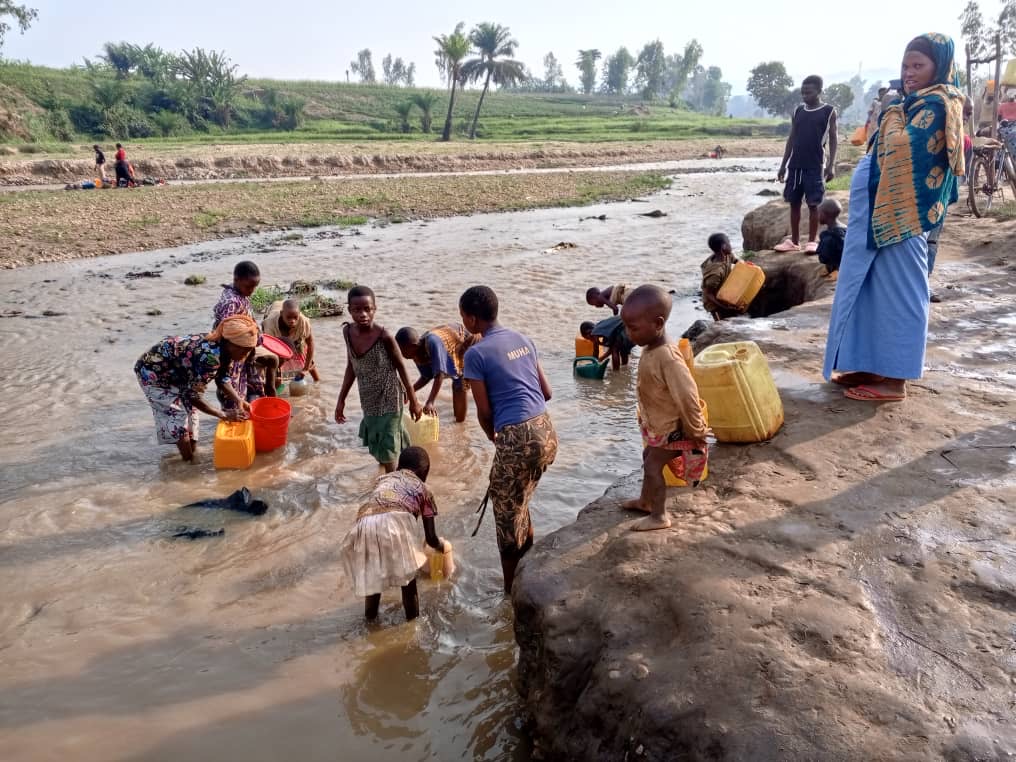
To find water, women and children travel long distances to nearby lakes, exposing themselves to various dangers.
“Our women and children walk long distances to fetch water. We fear for their safety and health,” says a resident of Kiyonza.
Suspicions surrounding a past water supply project
Among the population, questions persist regarding a past water supply project from Mutumba, in the former district of Vumbi, located more than 60 kilometers away.
Some residents are alleging embezzlement of funds intended for this project, citing former provincial officials among those implicated. However, these accusations could not be independently verified, and those named could not be reached for comment.
A crisis also affecting the city of Kirundo
The water shortage is not sparing urban areas. In several neighborhoods of Kirundo, residents are also facing prolonged outages.
“We haven’t had water for almost six months. We’re forced to live like this,” says a resident of the Bushaza neighborhood.
The public water fountains installed by the organization Africa Water had raised high hopes, but according to residents, they have not been working for several months.
“The maintenance contracted to the district has failed. Today, these infrastructures are useless,” laments a resident.
Residents now fear the outbreak of epidemics such as cholera.
Regideso under fire
Residents are also accusing Regideso of a lack of transparency and inefficiency in managing the crisis.
“We often hear about pump breakdowns, but how can this last for months when entire neighborhoods are without water?” asks a resident.
Regideso, the only state-owned company responsible for water and electricity distribution, is also being called upon to address this ongoing crisis.
Boarding schools in difficulty
The crisis is also affecting the education sector. Several boarding schools are experiencing serious water supply problems.
At the Kanyinya High School and the Kirundo District High School (Lycée Ndadaye), pupils are regularly forced to leave the school grounds to fetch water from the surrounding area.
“Some return late, sometimes in alarming conditions.” “Girls are particularly vulnerable, but we have no alternative,” a school official confided.
An urgent appeal to the authorities
Faced with the scale of the crisis, residents of Kiri, Kiyonza, Ruhehe, and the city of Kirundo are calling on the authorities for urgent intervention.
They are demanding the rehabilitation of existing infrastructure, the resumption of water supply projects, and improved management of equipment to end a situation that threatens the health, education, and safety of thousands of people.
Our photo : women and children searching for water in a river in Kirundo illustrate the difficulties of accessing drinking water in several localities in the region
You might also like
Photo of the week-Lake Tanganyika : more than a lake, a life threatened by inaction
Lake Tanganyika, one of the world’s largest freshwater lakes, benefits from exemplary cooperation between Burundi, the DRC, Tanzania, and Zambia through the Lake Tanganyika Authority (LTA). However, in Burundi, inaction
Bujumbura : the Secretary General of the CNDD-FDD returns to the country after a hospitalization abroad
Révérien Ndikuriyo arrived at the international airport of Bujumbura (commercial capital of Burundi) in the afternoon of this Thursday, February 20, 2025. This happens after the hospitalization in Dubai and

Photo of the week : a Musasa refugee representative behind bars after allegations of abuse, relatives denounce harassment
Matabaro Ntawigira, a representative of the Barundi community from the Rusizi Plain among Congolese refugees in Burundi, has been detained since July 17, 2026, in the central prison of Ngozi,