Bubanza : amid cholera outbreak, drinking water becomes a luxury
SOS Médias Burundi
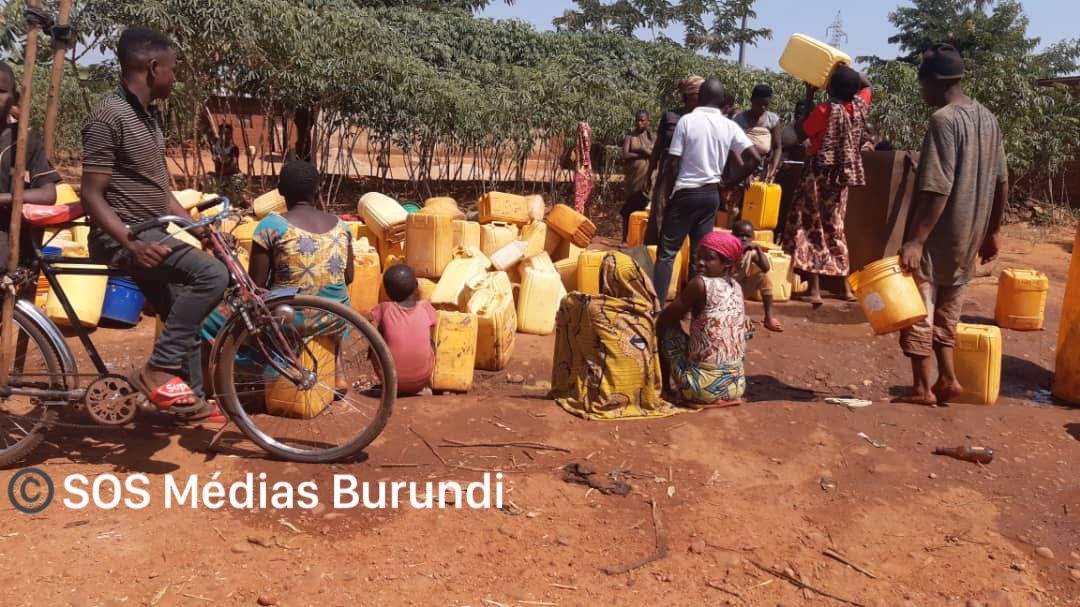
Bubanza, August 17, 2026 — In several neighborhoods of the Bubanza zone, in Bubanza district, Bujumbura province, western Burundi, access to drinking water is becoming increasingly difficult. Residents say they can go up to five days, or even longer, without a single drop of water coming from their taps.
This shortage comes as cases of cholera were detected about three weeks ago in patients from the Bubanza and Ruvumvu neighborhoods, among others. This situation is increasing residents’ concerns, as the lack of water makes hygiene difficult and could facilitate the spread of disease.
Water no longer sufficient for a growing population
According to information gathered on site, the neighborhoods of Bubanza are experiencing significant growth, while the water supply infrastructure has not kept pace.
The Water and Electricity Production and Distribution Authority (REGIDESO) reportedly has only one water tower to supply the center of Bubanza. This tower, insufficiently supplied, can be emptied in a single day, without all neighborhoods having been served.
To try to distribute the available water, distribution workers are forced to regularly adjust the valves. According to residents, this situation leads to an irregular distribution : some neighborhoods receive water while others remain dry for several days.
Cholera reignites concerns
The shortage comes amid a worrying health situation. The recent detection of cholera cases in the Bubanza and Ruvumvu neighborhoods raises concerns about a worsening situation if residents do not have sufficient water to meet basic hygiene needs.
For residents, it becomes difficult to maintain basic hygiene while they have to travel long distances to find water or wait several days for supplies to return.
The administrator acknowledges the problem
The administrator of the Bubanza district, Sabbas Niyokindi, says he is aware of the problem. He believes the solution lies in increasing the number of water intake lines and constructing a new water tower capable of meeting the growing demand.
The administrator is asking REGIDESO (the national water utility) to provide necessary pipes for the construction of new intakes. According to him, there is no shortage of water sources in the Bubanza zone. It is primarily the lack of sufficient infrastructure that prevents their full utilization.
Residents turn to other sources
Faced with this shortage, residents have no choice but to seek alternatives. Some obtain water from developed springs or boreholes located around the center of Bubanza.
Others rely on bicycle taxis to transport water to their homes. In this case, the price can reach 1,000 Burundian francs per jerrycan, an additional expense for families already struggling with daily hardship.
In Bubanza, the issue now goes beyond mere household comfort. In a context marked by the recent detection of cholera cases, regular access to drinking water has become both a public health emergency and an essential need for the population.
You might also like
Burundi : the cost of sanitary pads, a persistent burden for low-lncome families
SOS Médias Burundi Bujumbura, June 2, 2026 – Following the World Menstrual Hygiene Day, celebrated on May 28, many Burundian women and parents continue to denounce the high price of
Kirundo : a hospital without a director for two months, operations paralyzed
SOS Médias Burundi Kirundo, October 28, 2025 – Since the departure of Dr. Prosper Nimubona, former director of Kirundo Hospital in Butanyerera Province, northern Burundi, at the beginning of August

Rumonge : at least 5 cases of monkeypox discovered at the provincial hospital
At least 5 patients showing signs of monkeypox were reported on Wednesday at the Rumonge hospital (southwest Burundi). Among them, a mother and her child. INFO SOS Médias Burundi The