Kavumu : schools so-called free, but funded by refugees already deprived of everything
SOS Médias Burundi
Kavumu, November 9, 2026 — At the Kavumu refugee camp in Cankuzo district, Buhumuza province, eastern Burundi, education now survives only thanks to parental solidarity. Since October, each household has been asked to contribute financially to teachers’ salaries to prevent school closures. This is an additional burden for families already facing reduced humanitarian aid and a rising cost of living.
This survival measure comes in a context marked by two interconnected crises.
On the one hand, the drastic reduction in international humanitarian aid. Since Donald Trump’s return to the White House, budget cuts imposed on American foreign aid have led to a reduction in funding for humanitarian programs in several countries. With the United States being among the largest donors of refugee assistance, these cuts have weakened the interventions of the UNHCR, the World Food Program (WFP), and their partners. The consequences are particularly evident in the distribution of food aid, access to healthcare, and support for education—sectors essential to the survival and protection of refugees.
On the other hand, the cost of living in Burundi has become particularly high. Inflation and soaring prices of basic necessities are hitting the most vulnerable populations hardest, including the approximately 20,000 refugees living in the Kavumu camp.
The education sector is one of the first to suffer the consequences of this situation. With a monthly salary of 115,000 Burundian francs, or about $20, deemed insufficient given their workload and the overcrowded classrooms, where there are sometimes more than 60 pupils, many qualified teachers have left their posts. Some classes were thus left without teachers.
To avoid jeopardizing the future of more than 7,000 pupils enrolled in preschool, primary, and secondary school, the parents’ committee, in consultation with the Jesuit Refugee Service (JRS), the main education partner in the camp, decided to implement a supplementary funding mechanism.
Since October, JRS has continued to pay teachers a base salary, while parents are responsible for supplementing their income. They have also recruited new teachers from the community, whose salaries and logistical needs are entirely covered by parental contributions.
The established scale provides for a monthly contribution of 2,000 Burundian francs per child in preschool, 3,000 francs in primary school, and 5,000 francs in secondary school.
This initiative has been praised for its objective, but its cost is becoming difficult for many families to bear.
“Although we, as parents, have decided to supplement teachers’ salaries and hire additional teachers to maintain our children’s education, this will place a heavy burden on large families,” says Youssef, father of nine children in school, from kindergarten to secondary school.
For the month of October alone, his contribution amounted to 38,000 Burundian francs. “That’s the equivalent of one child’s food allowance. I have to choose between feeding my family and sending my children to school,” he laments.
Another parent considers this situation unacceptable. He points out that each refugee receives monthly assistance of 38,000 Burundian francs per person, an amount intended to cover basic needs, including food and school-related expenses.
“Each month, we receive 38,000 Burundian francs per person, and we have to do everything with that amount, including paying school fees. How can we survive on such a small sum when all prices have gone up?” he asks.
He is particularly outraged by this situation, given that the UNHCR and the National Office for the Protection of Refugees and Stateless Persons (ONPRA) present education as free for refugee children. He doesn’t understand why parents now have to bear the costs of keeping their children in school when these institutions officially advocate for free education.
In a camp where most households rely heavily on humanitarian aid, which is itself dwindling, these new expenses risk exacerbating inequalities in access to education. Large families are especially vulnerable and may be forced to withdraw some children from school.
For now, classes continue in Kavumu thanks to parental contributions. But can this solidarity be sustained in the long term? Families are demanding that education be placed back at the heart of humanitarian priorities. They fear that without sufficient support, an entire generation of refugee children will be deprived of future prospects.
…….
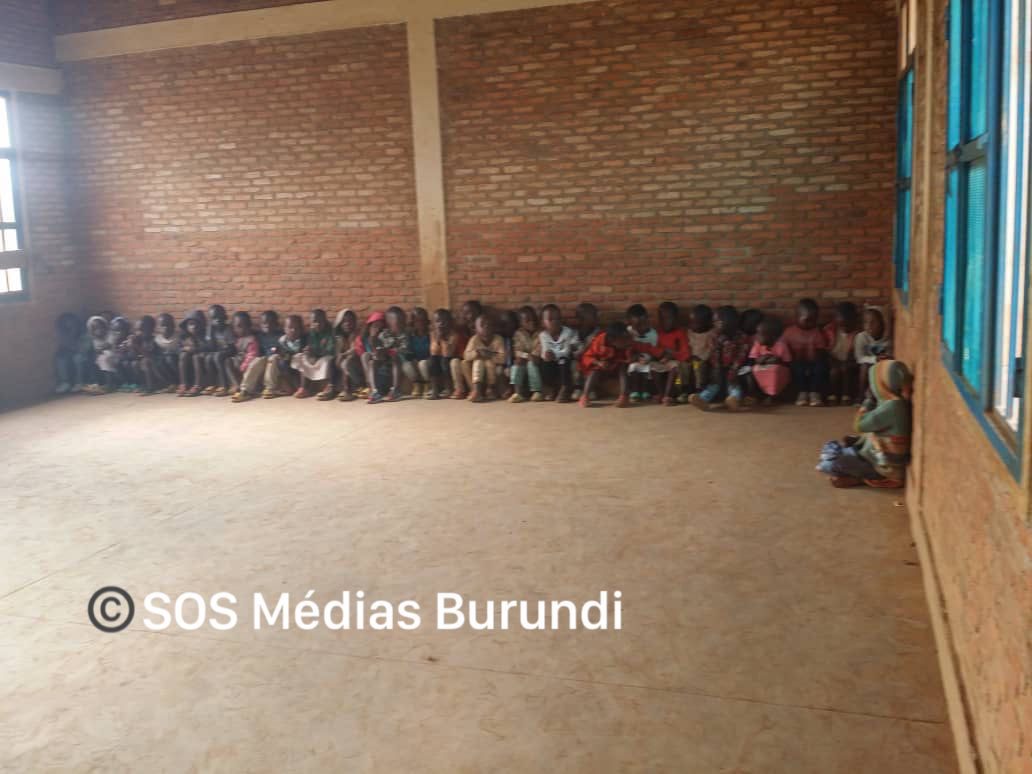
Children participate in learning activities at a preschool in the Kavumu refugee camp in eastern Burundi, where families struggle to afford their children’s education (SOS Médias Burundi)
You might also like
Nakivale (Uganda) : cardiovascular diseases kill many elderly people
Medical Team International (MTI) wants to curb deaths from cardiovascular diseases in the Nakivale refugee camp in Uganda. This NGO which deals with the health aspect calls on everyone, especially
Meheba: Refugees struggle for integration over lack of language skills
At the Meheba refugee camp in northwestern Zambia, thousands of refugees—mainly Burundian and Congolese—are denouncing integration difficulties following the language barrier. They are calling on the UNHCR and the Zambian


Five Green Hills International College pupils jailed in Gitega Central Prison
SOS Médias Burundi Gitega, November 1, 2025 — Five pupils from Green Hills International College, located in downtown Gitega, the political capital of Burundi, have been jailed since Thursday, October