
Ruyigi : increase in cases of arrests of Congolese refugees
Cases of arrests of Congolese refugees have increased recently in Ruyigi province (eastern Burundi). A police roadblock has been set up there. These cases are reported due to exits from the camp without authorization, due to the insufficient issuance of exit tickets by the camp administration. This restriction forces refugees to face heartbreaking choices to ensure their survival.
INFO SOS Médias Burundi
Cincerned refugees are settled in the Nyankanda and Bwagiriza camps in Ruyigi province as well as in Kavumu, in the neighboring province of Cankuzo. Refugees speak of “heavy procedures”.
“To get a ticket, we have to write a request letter and queue up at the administrator’s office, but few of us manage to get one,” says a refugee from Nyankanda camp.
Tickets are only issued three days a week: Monday, Wednesday and Friday, noted an SOS Médias Burundi reporter. Faced with this situation, some refugees choose to go out without a ticket, which leads to arrests.
A man from Bwagiriza camp says, “I spent two days in the police cell after being arrested for going out without a ticket. I was going to Rumonge (southwestern Burundi) to look for a small job in order to find money to feed my family, because life in the camp is becoming unbearable.”
There are many reasons why refugees leave the camps without authorization. In addition, life has become difficult in recent times, and problems can arise at any time.
“If authorizations were more accessible, no one would go out without them,” says a refugee in Kavumu camp. The lack of flexibility in granting authorizations contributes to refugees finding themselves in risky situations.
“The problem lies with those who issue permits. If they were easily accessible at all times, no one would leave without permission,” he complains.
Refugees are making a pressing request to the National Office for the Protection of Refugees and Stateless Persons (ONPRA) and to the UNHCR, asking them to facilitate their free movement to other provinces. The need to move to find resources is becoming crucial, especially at a time when food aid provided by the WFP (World Food Program) has decreased.
“We need freedom of movement to seek livelihoods for our families,” pleads a representative of refugees in these camps.
It is important to note that in order to travel to other provinces, outside those hosting the camps, refugees are required to apply for an exit ticket from the camp administration.
The need for easy access to exit tickets is essential to enable refugees to seek opportunities and improve their situation.
Recently, refugees’ representatives raised the issue with a regional official who is responsible for managing refugees’ issues as well as with administration and police authorities. They were reluctant to advocate on behalf of the refugees.
The provinces of Ruyigi and Cankuzo further east in Burundi are home to over 40,000 Congolese refugees, mainly from South Kivu in eastern Congo and made up of members of the Banyamulenge community.
——
Part of the Kavumu camp in Cankuzo province in eastern Burundi (SOS Médias Burundi)
You might also like

Meheba (Zambia) : refugees welcome the introduction of school meals
SOS Médias Burundi Meheba, February 10, 2026 – Since January, all primary schools in the Meheba camp in northwestern Zambia have been integrated into a school meal program funded by

Meheba (Zambia) : the UNHCR evades burial rights for refugees
For some time now, the UNHCR has not helped refugees to bury their dead as usual. Refugees who say they live in very difficult conditions are asking this UN agency
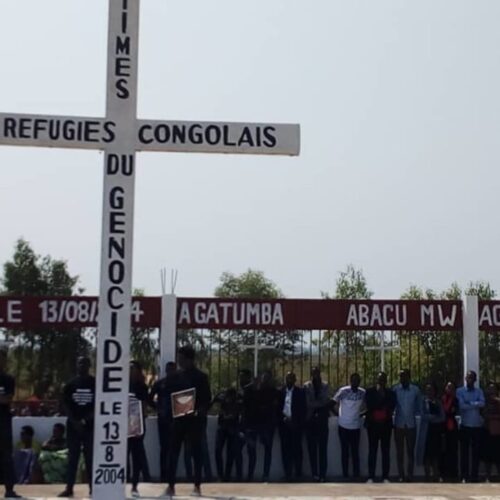

Gatumba : 166 refugees massacred, 22 years of impunity, the Banyamulenge speak out
SOS Médias Burundi Bukavu, August 13, 2026 — Twenty-two years after the Gatumba massacre, which claimed the lives of 166 Congolese refugees in western Burundi, the Banyamulenge community of Bukavu