
Kavumu (Cankuzo) : Congolese refugees deprived of essential medical care in Burundi’s largest camp
SOS Médias Burundi
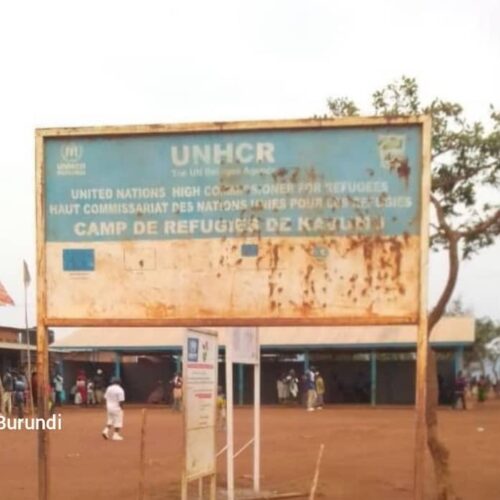
Cankuzo, September 15, 2025 – Kavumu camp, located in the Cankuzo region of Buhumuza province in eastern Burundi, hosts more than 20,000 Congolese refugees and is the largest reception site in the country, which has a total of more than 100,000 refugees. Despite this large population, the camp has only one health center, which is largely insufficient to meet the growing needs.
Between a shortage of medicines, a lack of diagnostic equipment, and geographic isolation, refugees are often left to fend for themselves when faced with illness. Some are forced to turn to alternative solutions : buying medicines from a private pharmacy or going to a clinic in Kumuheto, a town near the camp, despite the cost and difficulty of travel.
Inadequate care for a vulnerable population
Every morning, the queues at the health center grow longer, but patients rarely find treatments adapted to their needs.
Crispin, a Congolese refugee, testifies :
“I suffered from severe stomach pains accompanied by diarrhea. When I went to the health center, they only gave me four tablets and told me to come back if it didn’t go away. I was forced to buy medicines from a private pharmacy, but with what money? We have nothing.”
Healthcare staff overwhelmed
A health leader in the camp, who requested anonymity, sounds the alarm :
“Every day, we receive dozens of patients suffering from various illnesses. The most difficult thing is when we don’t have the necessary medication to treat them. Sometimes we give two tablets for illnesses that require a full course of treatment. This seriously compromises their recovery.”
He also highlights the problem of malaria, which is endemic in the region :
“During the rainy season, we see a spike in cases requiring screening equipment and antimalarial medication. But we often run out of supplies. This situation is very worrying. We are asking the UNHCR and its partner HealthNet TPO to build a second health center, increase medication stocks, and send more medical staff.”
The camp’s isolation : a major obstacle
The situation is exacerbated by the camp’s distance from the referral hospitals of Cankuzo, Kayongozi, and Ruyigi. The roads connecting the camp to Bweru’s National Road 13 are in very poor condition. Only officially referred cases can benefit from an ambulance. For others, getting to the hospital is a real obstacle course, endangering the lives of the most vulnerable, particularly children and the elderly.
Healthcare needs exceed resources
Despite assistance from HealthNet TPO, in partnership with the UNHCR, the needs of the Kavumu camp far exceed available capacity. The refugees are making an urgent appeal : the construction of a second health center, increased medicine stocks, and better logistical support for the transfer of serious cases.
In this fragile context, health needs remain a major humanitarian challenge, even as international aid becomes increasingly scarce.
You might also like
Kavumu (Cankuzo): Wakimbizi wa Kongo wamenyimwa huduma muhimu ya matibabu katika kambi kubwa zaidi ya Burundi
SOS Médias Burundi Cankuzo, Septemba 15, 2025 – Kambi ya Kavumu, iliyoko katika eneo la Cankuzo katika mkoa wa Buhumuza mashariki mwa Burundi, inahifadhi zaidi ya wakimbizi 20,000 wa Kongo
Muyinga : refugees gain greater freedom of movement, rules eased
SOS Médias Burundi Muyinga, June 24, 2026 – Congolese refugees living in the Musasa and Kinama camps in Butanyerera province, northeastern Burundi, now benefit from a relaxation of the rules
 : Congolese refugees deprived of essential medical care in Burundi’s largest camp)
Mahama camp : the distress of children turns into suicides
SOS Médias Burundi Mahama, September 18, 2025 – In the last three months, five suicide cases, several involving children, have been recorded in Mahama camp in eastern Rwanda. Most are