
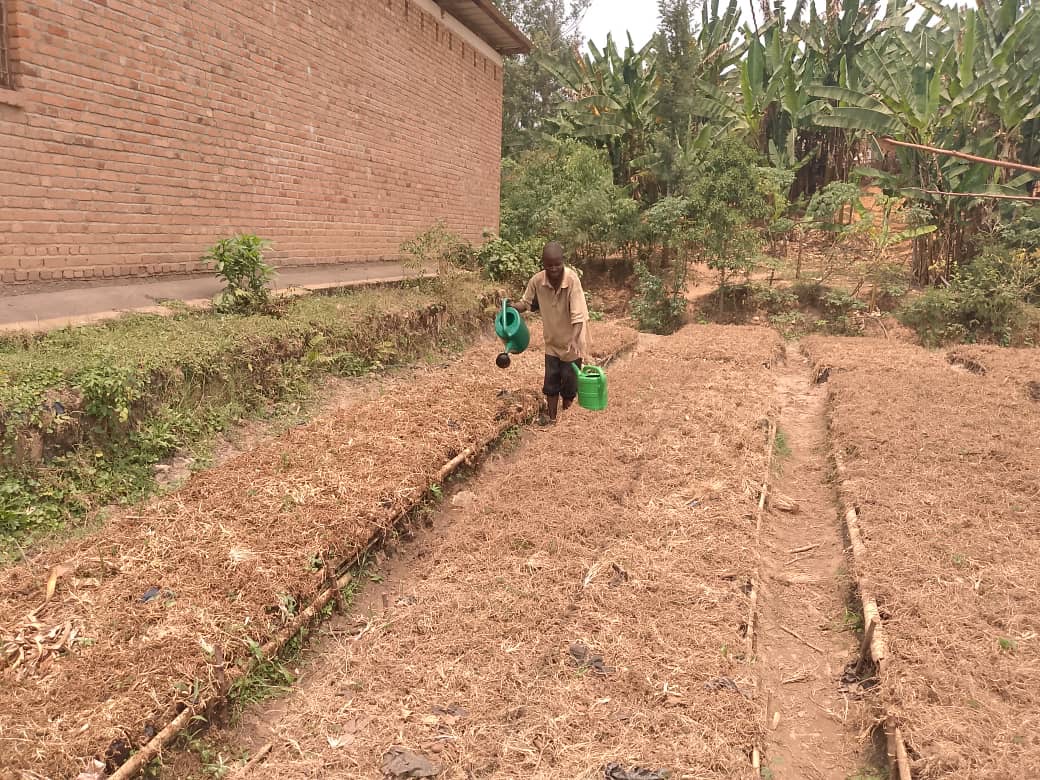
Bubanza : farmers worried about delayed rains and seed shortages
SOS Médias Burundi
Bubanza, October 22, 2025 — Although the first agricultural season was supposed to begin several weeks ago, farmers in Bubanza still haven’t seen any rain. Between unpredictable weather, unobtainable agricultural inputs, and distributions deemed unfair, fears of a lost year are growing in this region of western Burundi.
Farmers in the district of Bubanza, in Bujumbura province, western Burundi, are sounding the alarm. As of October 21, no significant rain had yet watered their crop fields. A month-long delay is already jeopardizing the A farming season. Added to this are difficulties in supplying agricultural inputs, plunging farmers into growing anxiety.
Scarce and poorly distributed seeds
According to several farmers we met, the PAN53 maize seeds, distributed only once by the agricultural services, proved largely insufficient.
“Some received only one kilogram, others nothing at all,” confided a farmer from the center of Bubanza. The scarce quantities available were reportedly snapped up by large landowners and people close to the ruling CNDD-FDD party, to the detriment of small farmers.
Urea-type chemical fertilizers, expected since the C season, have still not been distributed to everyone. Here again, the distribution is said to be selective, according to several testimonies collected on site.
Subsidized but misused products
While the government subsidizes these inputs to support producers, some of the seeds and fertilizers end up on the black market.
A kilogram of PAN53 maize seed, officially sold for 4,500 Burundi francs, sells clandestinely for up to 30,000 francs.
As for a 50-kg bag of chemical fertilizer, its official price of 65,000 francs climbs to 250,000 francs on the black market.
“Nothing surprising,” sighs a farmer. “Everyone knows that some officials turn a blind eye to this speculation.”
Endless queues for meager quantities
On distribution days, scenes of stampedes and long queues have become commonplace. “To get a single kilogram of corn or a small bag of fertilizer, you sometimes have to spend all day there,” says a visibly discouraged farmer.
Using local seeds
For lack of anything better, many farmers are now resorting to traditional seeds, which are cheaper but also less productive and less resistant. This survival solution risks seriously affecting the season’s agricultural yields.
Authorities acknowledge the shortage
Officials at the provincial agriculture department acknowledge the shortage of inputs. They say the quantities are insufficient to cover all the region’s needs.
But farmers are demanding greater transparency and greater fairness in the distribution of subsidized products.
“If nothing is done quickly, the farming season risks being lost,” warns a local farmer representative.
Between delayed rains, seed shortages, and fertilizer speculation, Bubanza’s farmers fear a difficult year, marked by poor harvests and growing food insecurity.
You might also like
Cibitoke : cessation of activities at OTB Buhoro following lack of electricity and fuel
Since last Thursday, the activities of the Burundi Tea Office in Buhoro in Cibitoke province (Northwestern Burundi) have been paralyzed due to the severe lack of electricity and fuel. The

From Burundi to Rwanda : a harrowing journey that puts lives in danger
SOS Médias Burundi Kobero, July 14, 2025 – The persistent border closure between Burundi and Rwanda is profoundly disrupting the lives of many citizens, particularly those who need to travel

Price surge in Cibitoke : an end-of-Ramadan celebration weighed down by the high cost of living
While Muslims in Cibitoke (northwestern Burundi) celebrated the end of Ramadan on March 30, the widespread rise in the prices of basic necessities is weighing heavily on households. Rice, beans,