
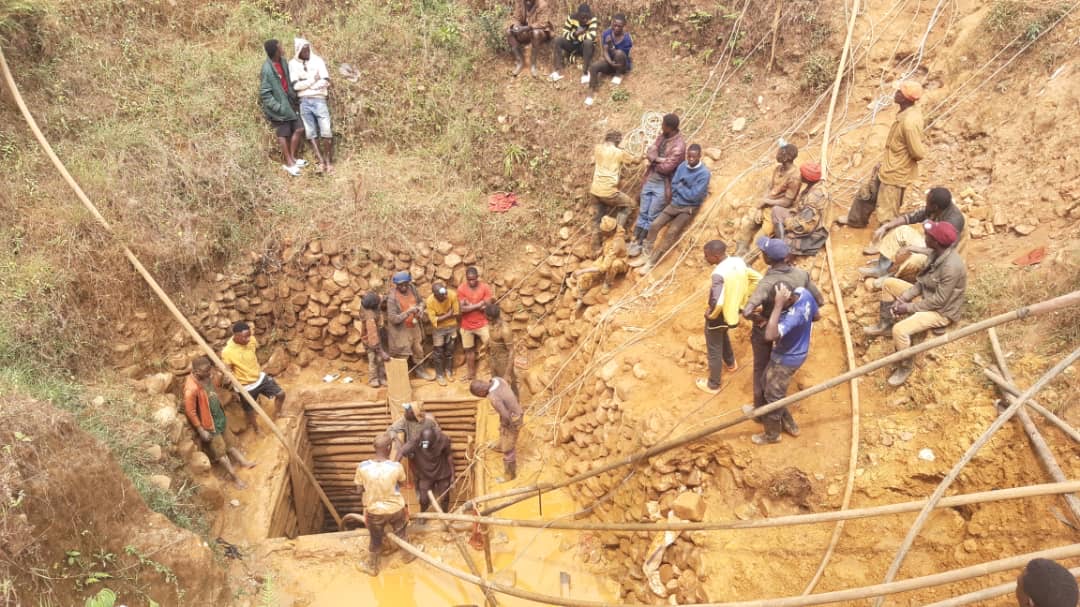
Burundi: over $6 million expected from mineral exports to China, the civil society demands transparency and a change in attitudes
SOS Médias Burundi
Bujumbura, November 20, 2025 – Over $6 million : this is the amount the Burundian government hopes to earn from the sale of minerals recently exported to China. The announcement was made last week by President Évariste Ndayishimiye, who nevertheless specified that the Bank of the Republic of Burundi (BRB) had not yet received the revenue from these exports.
The Head of State was speaking after the shipment of a third convoy of minerals to China.He indicated that, during the 100 days dedicated to prospecting, 29 mining sites were identified, 13 of which are already being exploited. Exports are managed by the Burundian Office of Mines and Quarries (OBM), but several questions remain regarding the actual process and the transparency of the transactions.
Questions about transparency and governance
These announcements have sparked criticism within the civil society. Faustin Ndikumana, national director of Parcem (Words and Action for the Awakening of Consciences and Mentalities), denounces a lack of clarity regarding the selection of purchasing companies and the entities responsible for marketing the minerals.
“Saying that the State is selling, very well. But which administrative body is actually in charge? The BRB? The OBM? How was it chosen? Is this a de facto monopoly?” he asks.
For the civil society, it is crucial that Burundi join the Extractive Industries Transparency Initiative (EITI), an international framework for tracking and publishing revenues from natural resources.
“A government that wants to embrace transparency in the mining sector must join the EITI. It’s a specialized international agency capable of publishing reliable figures and showing citizens where these revenues actually go,” insists Faustin Ndikumana.
Expected economic and social bqenefits
Beyond money, the civil society is calling on the government to demonstrate tangible results in citizens’ daily lives and to foster a shift in attitudes.
“From 2026 onward, we should no longer see endless lines at petrol stations, overcrowded parking lots where passengers wait for hours, or people forced to walk home due to a lack of transportation,” emphasizes Faustin Ndikumana.
Burundi, ranked by the World Bank as the poorest country in the world, is experiencing the worst crisis in its history, exacerbated by a fuel shortage that has lasted for nearly five years. In this context, the transparent and responsible management of mineral exports has become crucial for the country’s development and for building public trust.
You might also like
Bubanza : farmers’ anger and concerns over a persistent urea shortage
SOS Médias Burundi Bubanza, May 18, 2026 — Farmers in the district of Bubanza, in Bujumbura province, western Burundi, are denouncing a persistent shortage of urea-type chemical fertilizers, despite having

Burundi: the Central Bank ends the paralysis of the Ecocash system
Super agents and agents using the Ecocash e-money system can withdraw any amount they want, an exemption the Central Bank has just granted them. The BRB (Banque de la République


Kira Hospital case : Burundi faces serious consequences
The major shareholder of Burundi’s most prestigious clinic, Kira Hospital, wrote to the Burundian Minister of Justice to denounce the deliberate blocking of the dispossession file of the majority private