
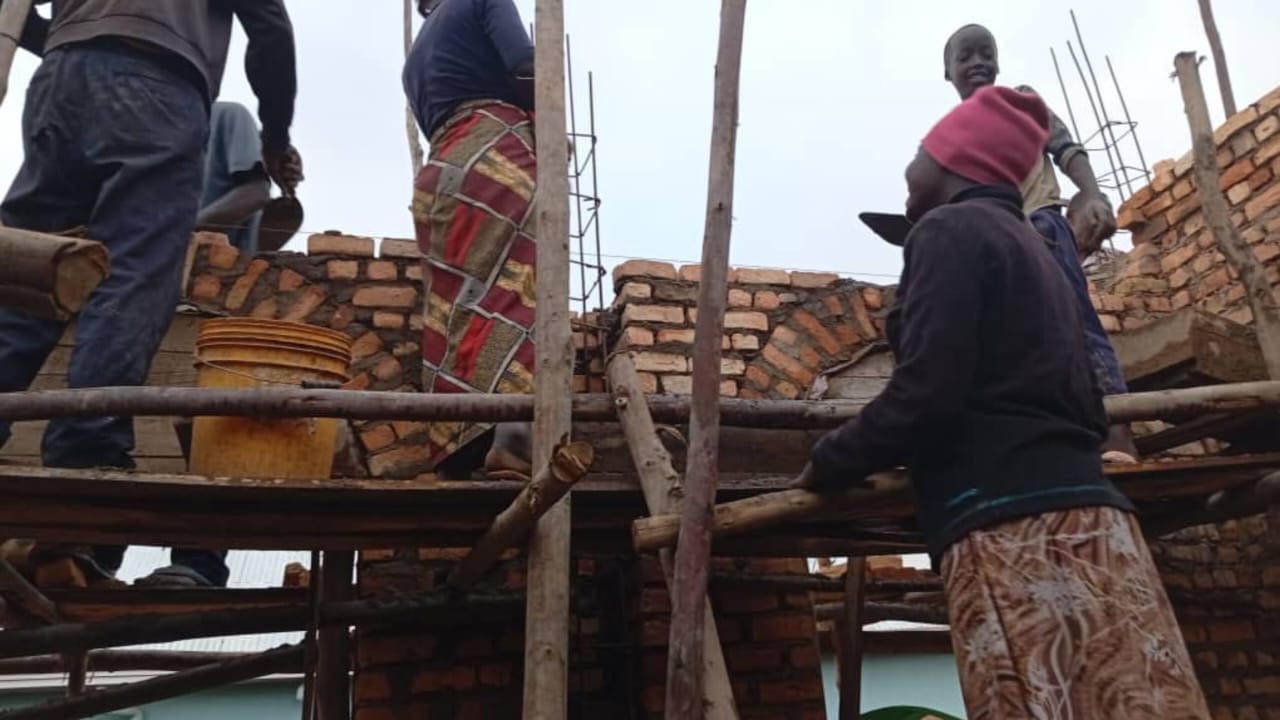
Construction in Burundi : an expert warns of collapse risks due to non-compliance with standards
SOS Médias Burundi
Bujumbura, June 13, 2026 – Failure to comply with building construction standards, particularly for multi-story buildings, could expose Burundi to preventable disasters. This is the warning issued by Burundian building construction expert Libère Nitunga at a press conference held Tuesday, June 10, in Bujumbura, Burundi’s commercial capital and home to United Nations agencies and the central government. He denounced the lack of systematic testing of the strength of materials used on many construction sites.
The problem doesn’t primarily stem with the soil
Contrary to some preconceived notions, Libère Nitunga believes that soil characteristics in Burundi are not the main obstacle to construction. According to him, the country generally has suitable land for construction.
He specifies that when geotechnical studies are properly conducted and interpreted according to technical standards, the risks associated with the land remain limited and manageable.
Concrete strength, the main weakness of buildings
For this expert, the real problem lies in the failure to comply with technical standards related to construction materials, particularly concrete.
He points out that internationally, the minimum compressive strength of concrete used in buildings is set at 25 megapascals (MPa).
However, he regrets that in Burundi, this requirement is rarely checked on construction sites.
“The major problem is that we don’t verify whether this strength is actually achieved,” he stated.
According to him, in many public and private projects, including within certain institutions, concrete strength tests are almost never carried out, even though equipment exists to measure the strength of structures already built.
A concerning case study
To illustrate his point, Libère Nitunga cites the case of a property owner who asked him to test the concrete strength on a construction site.
The tests revealed values of 17, 15, and 18 MPa, well below the recommended minimum threshold of 25 MPa.
According to the expert, such a situation exposes the buildings in question to a high risk of structural failure, potentially leading to collapse.
Increased risks with the development of multi-story buildings
Libère Nitunga believes that Burundi remains relatively unaffected, as the majority of buildings are still simple dwellings.
However, he warns against the gradual increase in multi-story buildings without strengthened technical and regulatory controls.
He also emphasizes that Burundi is located in a seismic zone, which requires greater rigor in the design, dimensioning, and monitoring of structures.
According to the expert, strict adherence to building standards and widespread technical inspections are essential measures to prevent potential human and material disasters.
You might also like
Kayanza : 1,600 tons of minerals exported, MPs question revenue destination
SOS Médias Burundi Kayanza, June 12, 2026 – The management of revenues from mining operations in the former district of Kabarore, now part of the district of Kayanza, in Butanyerera

Bujumbura : FOMI fertilizer shortage, Bubanza farmers cry out for abandonment
SOS Médias Burundi Bubanza, February 11, 2026 – The distribution of FOMI (Industrial Organo-Mineral Fertilizers) organo-mineral fertilizers, organized on Wednesday in Bubanza district, in Bujumbura province in western Burundi, is


Bujumbura : AWALA, a Women’s group at the heart of social solidarity
SOS Médias Burundi Bujumbura, January 27, 2026 – In Bujumbura, women’s solidarity is taking a concrete and structured form. Awaken Lady (AWALA), a group of committed women, has gradually moved