Burundi : Congolese refugees under suspicion and increased security pressure
SOS Médias Burundi
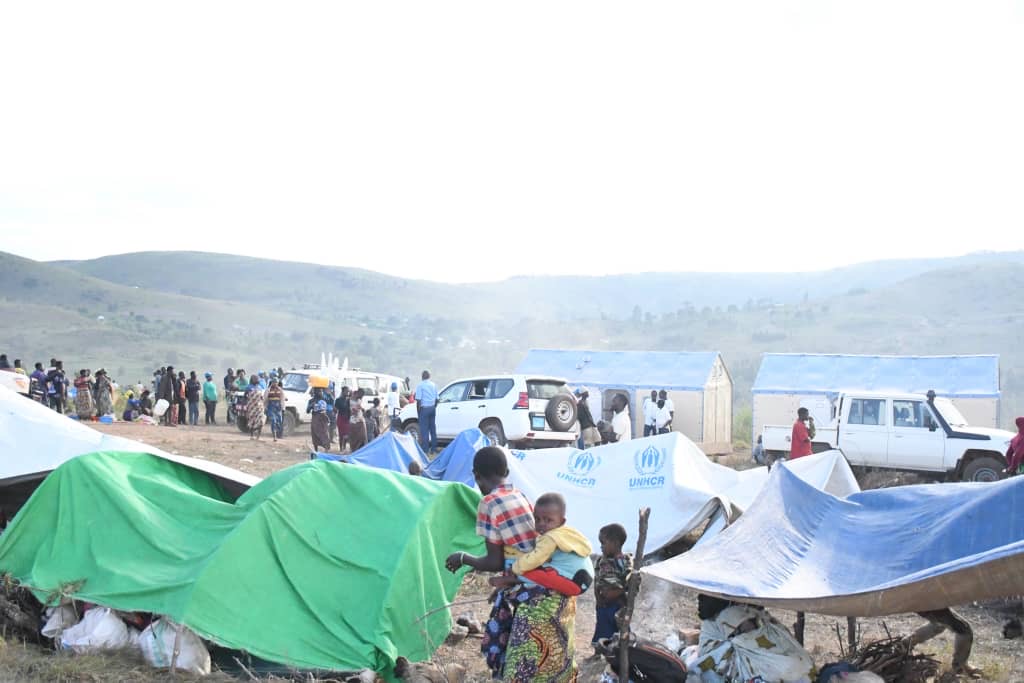
Bujumbura, December 15, 2025 – As refugee arrivals from the Democratic Republic of Congo (DRC) continue, numerous accounts gathered in the provinces of Bujumbura (west), Burunga (south), and Gitega (center) report a widespread tightening of security controls, including searches, suspicions of rebel infiltration, and practices amounting to extortion.
Repeated searches and intimidation
According to several concurring sources, the Burundian police, often accompanied by members of the ruling party’s youth wing, the Imbonerakure, are conducting systematic searches of hotels and shelters hosting Congolese refugees.
Nighttime raids have been reported, with doors being violently banged on, rooms searched, and a deterrent presence of Imbonerakure members stationed at entrances, equipped with radios. Hotel managers and residents say these raids sometimes take place in an intimidating atmosphere.
Increased road checks and heightened surveillance
Police checkpoints have been reinforced, day and night, on the main roads connecting the different provinces. The checks are particularly targeting Congolese nationals, whether on public transport or in private vehicles.
Meanwhile, messages circulating on WhatsApp groups attributed to the Imbonerakure are reportedly urging increased vigilance toward Congolese people throughout the country, thus reinforcing a climate of mistrust and widespread surveillance.
Transfers to camps and suspicions of extortion
Despite an official directive ordering the transfer of all refugees to reception camps, its implementation appears inconsistent. According to several sources, only refugees unable to pay sums of money—starting at 5,000 Burundi francs and above—are reportedly forced to leave the accommodations, while those with the financial means are allowed to remain. Some observers describe these practices as alleged extortion.
Suspicions of rebel infiltration and regional tensions
Some actors involved in these controls equate Congolese refugees with disguised M23 rebels, suspected of having infiltrated the country under the guise of asylum seekers to prepare potential attacks against Burundi. This perception contributes to increased surveillance and mistrust of all refugees.
These tensions are unfolding within a complex regional context, marked by the escalating conflict in eastern DRC, where the M23, now part of the Congo River Alliance (AFC), continues to control several strategic locations. Burundi’s geographical proximity to the areas affected by the fighting has heightened security pressures, leading Burundian authorities to fear potential infiltration and disruption within their territory.
Call for respect for refugee rights
At this stage, no official reaction has been recorded from the relevant authorities. Human rights organizations reiterate that refugees must be protected, not criminalized, and call for Burundi to respect its international commitments regarding asylum and the protection of displaced persons.
Since the beginning of the month, the small east African nation has taken in more than 40,000 Congolese refugees, adding to more than 100,000 other Congolese refugees who have been living in Burundi for a long time, some of them for several years. In the southern and western provinces, where the refugees first arrive before being transferred to camps in the east, administration authorities have banned homeowners from renting out their properties or hosting Congolese refugees, citing security concerns and threatening anyone who resists.
Regional context : the role of the M23 and neighboring powers
Reactivated in 2021, the M23 is part of the Congo River Alliance (AFC), led by Corneille Nangaa, which advocates for the establishment of a federal state in the DRC.
The movement now controls several provincial capitals in North and South Kivu, as well as strategic mining areas.
Kinshasa has long accused Rwanda of supporting the M23—accusations that Kigali rejects.
For its part, Rwanda accuses the DRC and Burundi of supporting the FDLR, a Rwandan Hutu group operating in eastern Congo and accused of participating in the 1994 genocide against the Tutsis.
The Washington Agreement, signed on December 4 under the US mediation between Rwanda and the DRC—with Burundian President Évariste Ndayishimiye participating as an observer—includes the disarmament of these fighters, whom President Félix Tshisekedi describes as “a residual force reduced to banditry.”
Burundi, for its part, has deployed more than 10,000 soldiers in the DRC since 2023 to support the FARDC, the Congolese loyalist army, and the local Wazalendo militias maintained by Kinshasa.
You might also like
Burundi : schools in refugee camps paralyzed by delayed teacher’s salaries
SOS Médias Burundi Muyinga, March 17, 2026 — School activities are severely disrupted in several refugee camps in northern and eastern Burundi. The cause : delayed teachers’ salaries, with teachers
Bukinanyana – Violent clashes in Kibira : at least 12 FLN rebels killed by the Burundian army
SOS Médias Burundi Cibitoke, May 30, 2025 – A large-scale operation conducted by the Burundi National Defense Forces (FDNB) in the natural forest of Kibira, on the border with Rwanda,

Musenyi : Congolese refugees in distress amid a wave of nighttime robberies
Musenyi, September 1, 2025 – In southern Burundi, at the Musenyi refugee site, insecurity is worsening. Congolese refugees, having fled the violence in eastern DRC, are now facing a series