

Nduta–Nyarugusu : when Tanzania razes camps to force the return of Burundian refugees
SOS Médias Burundi
Nduta, January 8, 2026 – The destruction of Burundian refugee camps continues in Tanzania, raising serious concerns among human rights organizations and the refugees themselves. After Nyarugusu, the Nduta camp is now targeted: two of its sections have been demolished since Wednesday, leaving hundreds of families homeless and reinforcing accusations of forced repatriation disguised as voluntary return.
Nduta Hit Next
The demolition equipment arrived at the Nduta camp on Wednesday. Its deployment had been delayed the previous day by a “working meeting” intended, according to the authorities, to “fine-tune the operation and avoid resistance.”
As promised, almost all the houses located in sections 17 and 18 have been razed. “Even schools and health centers haven’t been spared,” report sources on the ground.
The choice of these areas is not accidental. For the past three weeks, many refugees from Zone 17 have been registering en masse for a return described as voluntary, while Zone 18 is perceived as more resistant.
“First, it’s to ‘help’ those returning to destroy their homes, then to show the opposition that anything is possible,” analyzes a local leader, who denounces an “unprecedented” situation in terms of refugee rights violations.
“We’ve seen it all! They’re building tents to house those waiting for return convoys while others are destroying their homes,” he exclaims, describing the scene as a “deplorable spectacle.”
Hundreds homeless and arrests
Several hundred Burundian refugees are now homeless. The police and civilian guards are nevertheless allowing the occupants to retrieve their belongings.
Ironically, “the homes of the Burundian civilian guards in both areas were also destroyed. Our compatriots should understand that they are not welcome in Tanzania either,” refugees confided.
According to a medical source, the Doctors Without Borders (MSF) hospital in Nduta admitted about ten women who had lost consciousness, victims of trauma related to the demolition of their homes. Young people who attempted to resist were arrested and detained in police cells.
The exact number of houses destroyed is not yet known, but local sources mention more than 4,000 homes razed in the two areas.
Operation launched in Nyarugusu
Two days earlier, a similar operation had been launched in the Nyarugusu camp. More than 3,000 houses were destroyed there in areas 12 and 13, leaving hundreds of Burundian families homeless.
Under the guise of “voluntary” repatriation, many refugees denounce an imposed return and call on the UN to intervene in what they consider a serious violation of their fundamental rights.
A possible violation of the 1951 Convention
These demolitions and pressures exerted on Burundian refugees raise serious questions regarding international law. The 1951 Geneva Convention relating to the Status of Refugees, to which Tanzania is a party, prohibits all forms of direct or indirect refoulement, including coercive measures aimed at forcing refugees to return to their country of origin when their safety cannot be guaranteed.
According to several human rights organizations, the destruction of homes, the lack of viable alternatives, the climate of fear, and the restrictions imposed in the camps can constitute forms of coercion tantamount to forced repatriation, even when it is officially presented as “voluntary.”
Burundian refugees interviewed stated that these conditions leave them with no real choice, exposing them to a forced return, in contradiction with Tanzania’s international commitments.
Exodus to other countries
On the Kenyan, Ugandan, and Zambian borders, sources report gatherings of Burundian refugees attempting to reapply for asylum. Some manage to reach camps like Kakuma, in northwestern Kenya, by using clandestine routes, while others are stopped at the borders.
Meanwhile, the UNHCR, along with the Tanzanian and Burundian governments, estimates that more than 97% of Burundian refugees in Tanzania no longer require international protection, arguing that “peace and stability prevail in Burundi.” This assertion is widely contested by the refugees, who say they remain “unsafe” should they return.
The tripartite commission has decided that the Nduta and Nyarugusu camps will be permanently closed on March 31, 2026, after which “no one will be allowed to remain.”
Tanzania still hosts more than 110,000 Burundian refugees, most of whom fled the 2015 political crisis triggered by the controversial third term of the late President Pierre Nkurunziza.
You might also like
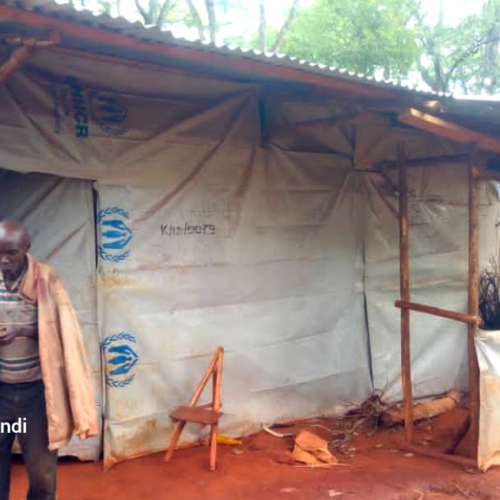
Tanzania: wakimbizi wa Burundi wanaomba mwaka huu uwe mwaka wa mateso kupungua
Mwaka wa 2022 wakimbizi wa Burundi wanaoishi katika kambi za Nyarugusu na Nduta wanasema kuwa walikabiliwa na changamoto nyingi na kuathiriwa na manyanyaso mengi. Wanaomba HCR na viongozi wa Tanzania
Bubanza : a teacher threatened with death because of his ethnicity
A teacher from the Gitsira primary school was the victim of death threats on his way home. The attack, which is said to have an ethnic motive, raises questions and

15,000 francs for a single trip : Bwagiriza refugees strangled by rising transport costs
SOS Médias Burundi Ruyigi, July 21, 2026—For Congolese refugees in the Bwagiriza camp, located in the district of Ruyigi, Buhumuza province, in eastern Burundi, as well as for the surrounding