
Butanyerera : traders and civil servants forced to finance the army and the Imbonerakure
SOS Médias Burundi
Kirundo, January 8, 2026 – Since last Tuesday, a fundraising campaign has been underway in the expanded district of Kirundo, in Butanyerera province, northern Burundi. According to several local sources, this contribution is presented as support for the military battalions being reinforced and for the Imbonerakure, members of the youth wing of the CNDD-FDD, the ruling party, deployed along the Burundi-Rwanda border.
The expanded district of Kirundo encompasses the former districts of Kirundo, Vumbi, Bugabira, and Ntega. The operation is targeting both traders and some state employees.
Collections conducted by officials of the ruling party
According to testimonies gathered by SOS Médias Burundi, the collections are being carried out by local CNDD-FDD officials, supported by groups of Imbonerakure from downtown Kirundo and the surrounding hills.
“They go from house to house, shop to shop. We are clearly told that it’s mandatory,” confided one shopkeeper, speaking on condition of anonymity.
Another added : “These aren’t municipal agents; they are party officials accompanied by the Imbonerakure.”
Varying amounts, but widespread pressure
The sums demanded vary according to socio-professional category. Shopkeepers and some civil servants claim to be forced to pay between 10,000 and 250,000 Burundian francs, or even more. Those holding presidential decrees or orders for their positions are reportedly being particularly targeted.
“We’re told that if you have a decree, you have to pay hundreds of thousands, sometimes even millions. There’s no room for discussion,” laments a local official.
Lack of receipts and a climate of fear
One of the most worrying issues remains the lack of receipts to prove contributions. Several taxpayers confirm having handed over money without any written proof.
“They give the money in cash, without a receipt. Tomorrow, no one will be able to prove they’ve already paid,” worries a shopkeeper. The situation is exacerbated by threats made against those who refuse to pay.
Threats related to access to administrative services
According to several sources, those who refuse risk being deprived of essential administrative services at the municipal or zonal level.
“They tell us clearly that if you don’t contribute, you won’t get any more documents from the district or zonal office,” reports a resident of Vumbi.
This situation is creating a climate of fear and resignation among the population, caught between economic obligations and political pressures.
Concentration of forces in the Murehe natural reserve
Meanwhile, reports indicate a heavy concentration of soldiers and Imbonerakure (youth wing of the ruling party) in the Murehe Nature Reserve, in Busoni district. This forest, located on the border with Rwanda, has reportedly become a strategic point for the deployment of forces. Residents report regular movements of armed groups in and around the reserve, heightening security concerns.
Tense regional context
On the Rwandan side, a similar deployment is also reportedly in place.
“The soldiers are eyeing each other warily. No one speaks, no one moves, but they are all ready,” reported a Busoni resident in December 2025.
This situation is occurring within a particularly tense regional context, marked by the evolving war in eastern Democratic Republic of Congo (DRC). Since mid-August 2022, more than 29,000 Burundian soldiers have been deployed alongside the FARDC, the Congolese loyalist army, and the Wazalendo militias against the M23. After heavy losses recorded in December, a new redeployment via Lake Tanganyika, from Rumonge, the port city located in southwestern Burundi, is underway.
Burundi and Rwanda have been keeping a watchful eye on each other since 2015, in a climate of persistent mistrust between Gitega and Kigali, each accusing the other of supporting hostile armed groups. Burundi’s land borders with Rwanda have remained closed since January 2024. President Évariste Ndayishimiye and the Secretary General of the CNDD-FDD, Révérien Ndikuriyo, have confirmed that the border will remain closed as long as Rwanda harbors coup plotters implicated in the 2015 coup attempt.
The M23, composed mainly of Congolese Tutsis, is part of the Congo River Alliance (AFC), led by Corneille Nangaa, former president of the Congolese Independent National Electoral Commission (CENI), which advocates for a federal state in the DRC. This coalition now controls several strategic territories in North and South Kivu, including the capitals of both Kivus, Goma and Bukavu, as well as crucial mining sites, including Rubaya, in the Masisi territory (North Kivu), one of the world’s largest coltan deposits, supplying a significant portion of the world’s tantalum, a strategic mineral used in the electronics industry and new technologies.
Kinshasa accuses Kigali of supporting the M23, while Rwanda attributes support to the DRC and Burundi for the FDLR, a Rwandan Hutu armed group, some of whose members are accused of participating in the 1994 genocide against the Tutsi.
A recent report by UN experts, whom Rwandan authorities have dismissed as “imposters,” confirms the presence of 5,000 to 7,000 Rwandan soldiers alongside the M23 rebels, despite repeated denials from Kigali. On the ground, clashes continue despite the Washington Agreement, signed on December 4, 2025, under US mediation between Rwanda and the DRC, in which Burundi participated as an observer, represented by President Évariste Ndayishimiye.
The agreement notably provides for the disarmament of the FDLR, which President Félix Tshisekedi describes as “a residual force reduced to banditry,” no longer posing a threat to Rwanda.
The Great Lakes region remains marked by the presence of multiple armed groups and persistent interstate tensions. Border populations are anxiously awaiting developments in the DRC, with the recent arrival of nearly 90,000 Congolese refugees, exacerbating the humanitarian crisis in the small East African nation, which had already taken in more than 70,000 other Congolese refugees earlier in the year.
You might also like
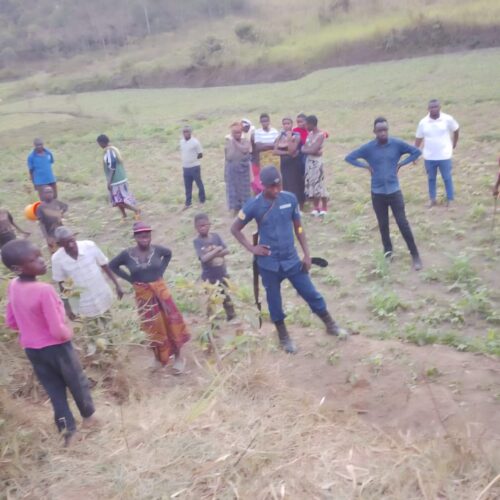
Gitega : two more bodies found in less than 24 hours, vigilante justice raises concerns
SOS Médias Burundi Gitega, August 26, 2026 — Two more bodies were discovered on Monday, August 24, in two locations in Gitega province, in central Burundi. The first was that
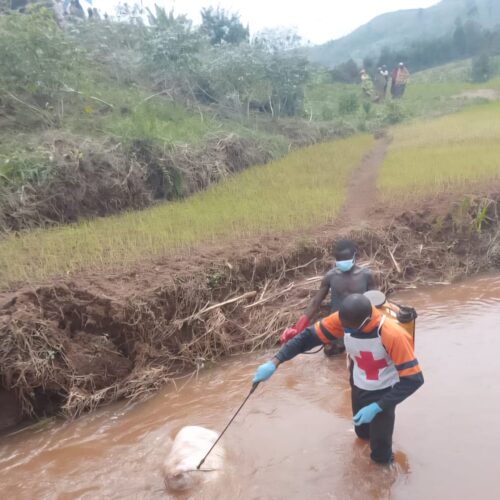
Burundi : two gruesome discoveries reignite fears of a climate of impunity
SOS Médias Burundi Gitega, March 4, 2026 – Two deaths this week in the districts of Bugendana, Gitega province (central Burundi), and Matana, Burunga province (southern Burundi), have sparked concern
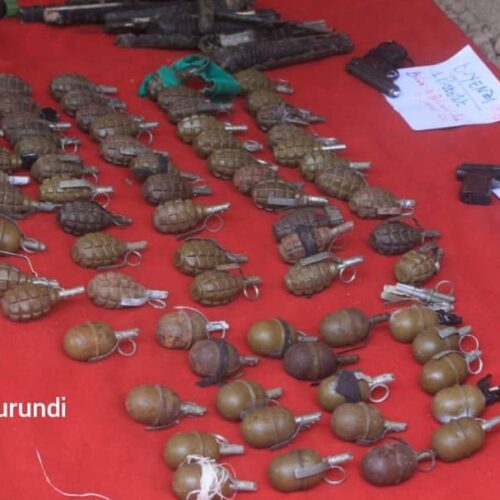

Rutana : two brothers die after a grenade found at their family home exploded
SOS Médias Burundi Rutana, July 24, 2020—Two teenagers, aged 17 years and 14 years, died Thursday when a grenade they were handling exploded at their family home in the town