
Gitega seeks to attract its diaspora, but trust remains fragile
SOS Médias Burundi
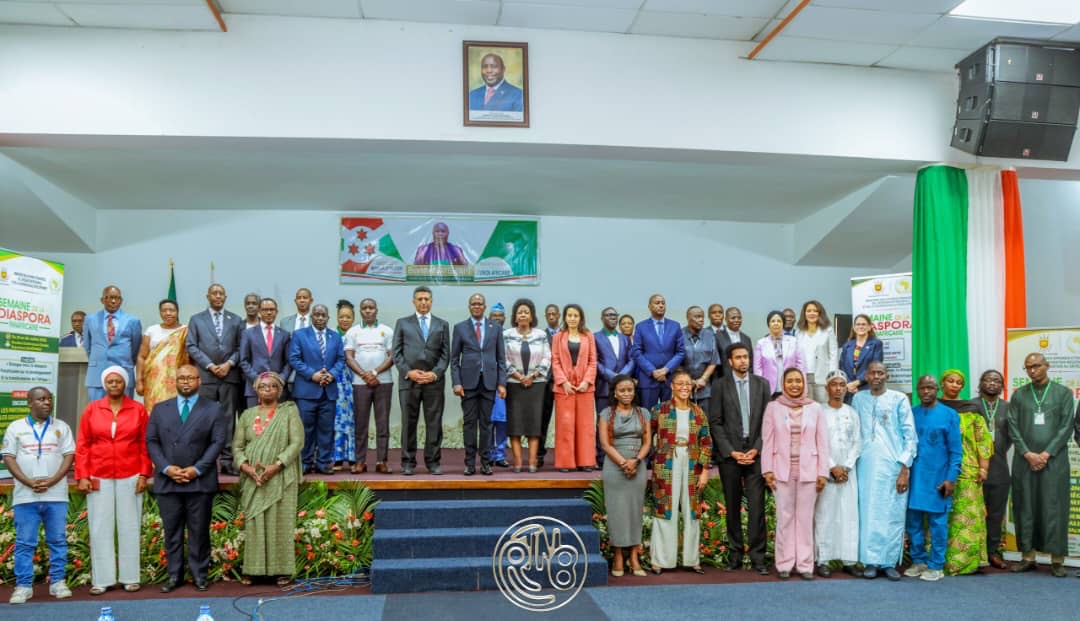
Bujumbura, July 31, 2026 — Burundi’s commercial capital hosted the Pan-African Diaspora Week from July 29 to 30, 2026, under the theme : “Dialogue with the Pan-African Diaspora on the Development and Transformation of Africa.” Delegations from thirteen countries participated in this meeting dedicated to the strategic role of the diaspora in the continent’s development. But behind the official calls for increased mobilization of Burundians living abroad, several participants highlighted the obstacles that continue to hinder investment and undermine trust.
The main objective of this meeting was to strengthen ties between African states and their diasporas, promote productive investments, facilitate the transfer of skills and expertise, encourage entrepreneurship and innovation, and consider ways to better integrate the diaspora into the continent’s development strategies.
At the opening of the proceedings, Burundian Prime Minister Nestor Ntahontuye presented the diaspora as a major player in Africa’s economic transformation. He emphasized the skills, experience, and financial resources available to Africans living abroad.
“We need a more organized and united diaspora,” he declared, echoing the vision of Burundian President Évariste Ndayishimiye, the current Chairperson of the African Union.
The Prime Minister did, however, express regret that investments by Burundians living abroad are primarily focused on infrastructure and real estate. He called for greater commitment to productive sectors capable of creating jobs and supporting sustainable growth, including agriculture, industry, new technologies, energy, and services.
A diaspora marked by divisions
The Burundian diaspora, however, remains divided by its history. It is composed of people who left the country at different times and for a variety of reasons : political crises, conflicts, studies, economic reasons, or family reunification.
This diversity of backgrounds is accompanied by differing sensitivities, sometimes mirroring the divisions that characterize the Burundian political class.
A Burundian living in the United States believes that the politicization of the diaspora, particularly since the 1990s, has limited its capacity to contribute effectively to the country’s development. He proposed strengthening sectoral associations to better mobilize available skills and resources.
For his part, Samuel Ndayiragije, president of the Burundian diaspora, stated that it is now “clearly and non-politicizedly organized,” with a federation already established.
Investors face several obstacles
During the discussions, several members of the diaspora emphasized the need to establish a one-stop shop to facilitate their procedures, protect their assets, and support their projects.
Some investors cited difficulties related to bureaucratic hurdles, corruption, land disputes, the risk of dispossession, and intimidation. According to them, these problems discourage some Burundians abroad who wish to invest in their country of origin.
These concerns have also been voiced by President Évariste Ndayishimiye on several occasions. The head of state denounced shortcomings within certain public services and called on government agencies to facilitate investment.
Access to foreign currency is another major challenge. Several business operators report difficulties obtaining foreign currency, even after making deposits with financial institutions, which slows down some commercial activities.
A business climate that struggles to convince
Human rights and good governance organizations have regularly expressed concerns about the transparency of institutions, the fight against corruption, and the legal security of investments in Burundi.
These observations, combined with testimonies from some investors, fuel the hesitation of a segment of the diaspora, which sometimes chooses to direct its assets to other countries in the sub-region where administrative procedures are considered more predictable and more digitized.
Infrastructure also remains a significant challenge. While several neighboring countries are accelerating the digitization of their public services, internet access remains limited in Burundi. Frequent power outages also affect the economic activity, including in Bujumbura, where many national institutions and international agencies are concentrated.
Added to this is the persistent fuel shortage that has affected transportation, businesses, and households for several years. Despite measures announced by the authorities, supply disruptions continue to be reported throughout the country.
Restoring confidence
The Pan-African Diaspora Week allowed Burundian authorities to reaffirm their commitment to making Burundians living abroad a strategic partner in national development.
However, for many participants, the diaspora’s engagement will depend primarily on the authorities’ ability to improve the business climate, strengthen investor protection, guarantee better governance, and establish a more reassuring environment.
Between calls for the return of assets and persistent concerns, Gitega will still need to convince others to transform promises to mobilize the diaspora into concrete investments.
You might also like
Civilians turned into alleged combatants? The return of 39 Congolese reignites the FDLR case
SOS Médias Burundi Goma, August 8, 2026 – The return of 39 Congolese to the Democratic Republic of Congo (DRC) after several months in Rwanda as part of the Disarmament,
Pollution of Lake Tanganyika : a silent ecological disaster looms on Burundi’s shores
SOS Médias Burundi Bujumbura, June 22, 2026 – The discharge of untreated wastewater, the uncontrolled exploitation of lakeside resources, and inadequate environmental protection mechanisms are increasingly threatening Lake Tanganyika, one


Gitega : hunted, detained, and sent back to camps : the ordeal of Congolese refugees
SOS Médias Burundi Gitega, September 7, 2026 — Approximately one hundred Congolese refugees living in Gitega, the political capital of Burundi, were forced to leave the city on the evening