
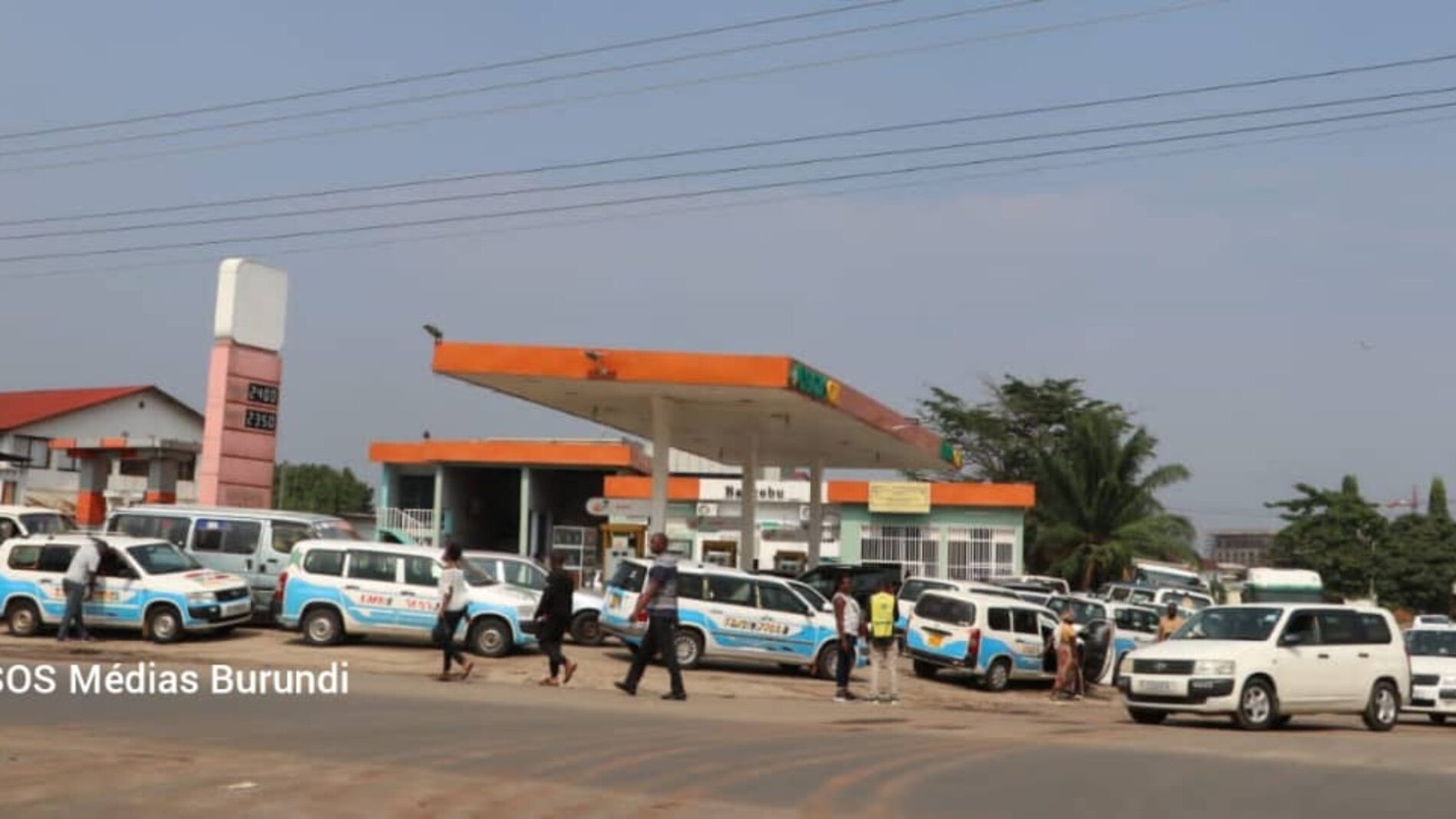
Burundi : in Bujumbura, the public transportation crisis exacerbates residents’ ordeal
SOS Médias Burundi
Bujumbura, June 24, 2026 – The chronic lack of public transportation buses continues to plunge Bujumbura’s residents into an increasingly precarious situation. Between long hours of waiting, delays to work, forced marches, and physical exhaustion, city dwellers denounce a daily ordeal that seems to have no lasting solution. This crisis is closely linked to the fuel shortage that has plagued the small East African nation for over five years.
Bujumbura, Burundi’s commercial capital, is living with a persistent public transportation crisis. Every day, thousands of residents face significant difficulties getting around due to a lack of sufficient transportation. This situation fuels discontent and a feeling of abandonment among the population.
In the city center parking lot, scenes of desolation are repeated. It is not uncommon for commuters to wait for several hours before a bus arrives. When a vehicle finally appears, it is quickly swarmed by a crowd of passengers exhausted by the wait.
According to several stakeholders in the sector, this shortage is primarily due to fuel supply difficulties that regularly affect transport operators. Without fuel, many vehicles remain immobilized, significantly reducing the city’s transport options.
The consequences are felt in all aspects of daily life. Pupils required to be on time for exams, civil servants, shopkeepers, and many other workers struggle to keep to their schedules. Delays become the norm, disrupting both economic activity and the operation of certain public services.
In parking lots, the wait often takes place in trying conditions. Lacking adequate shelter, commuters are exposed for hours to the scorching sun that characterizes the city of Bujumbura. The elderly, the sick, and women with young children are among those most affected.
“I arrived here at 11 a.m. and at 3 p.m. I’m still waiting,” a woman in her sixties told SOS Médias Burundi indignantly in the downtown parking lot.
A few meters away, a young mother carrying her baby on her back expressed her distress : “I can’t walk home with this child because my neighborhood is very far from the city center. Unfortunately, I have no other choice but to wait.”
Another breastfeeding mother told SOS Médias Burundi that it takes her more than an hour each day to get home to Mutanga Nord, north of the commercial capital. Employed in the south of the city, she explained that she has had to adapt her lifestyle to this reality.
“When I leave work, I have to change into workout clothes so I can walk long distances,” she said. She described a grueling situation that physically exhausts her every day.
In several outlying neighborhoods, the streets are crowded every morning and evening with pedestrians forced to travel long distances. Pupils in uniform, workers, and parents with their children try to reach their destinations despite the difficulties. For many families already struggling with economic hardship, premature wear and tear on their shoes, additional expenses, and physical fatigue represent an increasingly heavy burden.
The transportation crisis, however, is not limited to Bujumbura. It affects the entire country, even though the commercial capital remains the hardest hit city. As Burundi’s main administrative, economic, and diplomatic center, it hosts main institutions of the central government, several United Nations agencies, and the country’s only international airport. This concentration of activity significantly increases the need for mobility and makes the consequences of the shortage particularly visible.
Faced with this situation, many deplore the lack of communication and concrete measures from the relevant authorities. No clear timeline or lasting solution appears to have been presented to a population now oscillating between resignation and resilience.
Fuel shortage at the heart of the problem
The current crisis is part of a broader context marked by the chronic fuel shortage that Burundi has been experiencing for over five years. This situation is attributed in particular to the lack of foreign currency needed to finance oil product imports, the weakness of foreign exchange reserves, and the economic difficulties facing the country.
The NGO Word and Action for Awakening Consciences and Changing Mindsets (PARCEM) is calling for urgent measures to address this crisis.
Its president, Faustin Ndikumana, believes that the fuel shortage continues to slow the national economy while fostering inequitable practices in access to this strategic commodity.
The head of Parcem denounces a situation where certain categories of citizens benefit from privileged access to fuel, while others are forced to spend days and nights in queues, with no guarantee of being served.
According to him, the government should consider raising fuel prices if this measure can help improve its availability on the market.
“Burundi is a landlocked country. There is no justification for fuel prices here to be lower than those in Tanzania,” argues Faustin Ndikumana.
Parcem also recommends that the government secure emergency loans from external partners to finance the importation of sufficient quantities of fuel. The organization also advocates for encouraging investors capable of supplying the country with petroleum products.
These statements come as Prime Minister Nestor Ntahontuye recently announced, during a public broadcast with journalists, that the government is preparing new measures to improve fuel availability at service stations across the country.
While awaiting the implementation of these measures, the residents of Bujumbura continue to suffer the consequences of a crisis that is affecting their mobility, productivity, and living conditions. Many voices are now calling for swift and effective responses to end a situation that, year after year, seems to be worsening.
You might also like
Skyrocketing rents in Burundi’s major cities : a silent crisis strangling households
SOS Médias Burundi Bujumbura, April 29, 2025 – Since last year, house rents in Burundi’s major cities, including Bujumbura, Gitega, and Ngozi, have seen a dramatic increase, sometimes doubling in
Bubanza : farmers face a persistent shortage of chemical fertilizers
SOS Médias Burundi Bubanza, September 3, 2026 — Farmers in Bubanza, in Bujumbura province, in western Burundi, are sounding the alarm in the face of a shortage of chemical fertilizers


Kayanza: the provincial court pronounced heavy sentences against three men who were going to sell minerals in Rwanda
The court of Kanyanza (northern Burundi) ruled in flagrance on Tuesday in the case of selling of Wolframite and gold. Three people, charged with illegal trading, received a sentence of